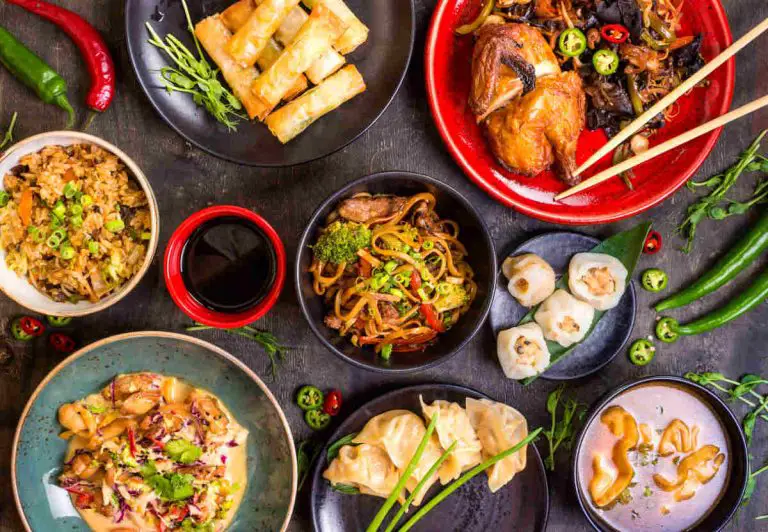
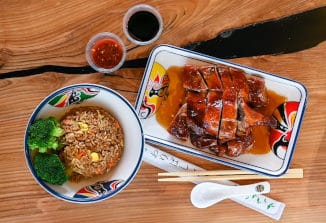
Chinese cuisine is a unique culinary style on its own with various techniques, some of them are unique for Chinese cooking. Most Chinese cooking techniques are mainly focusing on preserving (and enhancing) the flavor of fresh ingredients with fairly minimal preparations compared to Western cooking, and here are 10 of the most popular Chinese cooking methods:
1. Stir-frying
We can say that stir-frying is the signature Chinese cooking technique that has been around since ancient times.
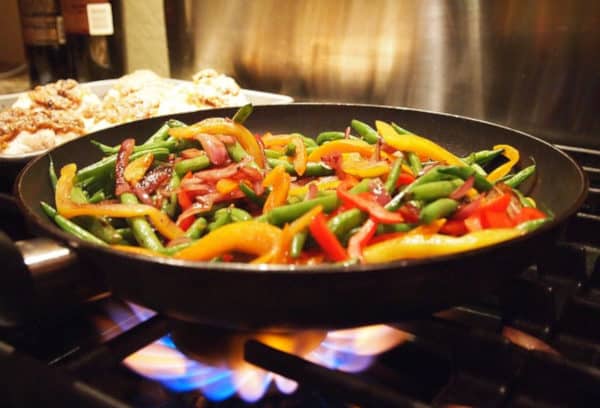
Equipment you need for this technique:
- Wok
- Wok spatula
- High-pressure gas stove, but you can also use electric stove preheated to a very high heat (aff.links)
Famous Chinese dish with this technique:
Step-by-step:
- Prepare all the ingredients before preheating the wok. This will vary depending on the dish but in most cases, the ingredients are thinly sliced or cut in a cube-shape
- Preheat the wok, and when it’s very hot, add a small amount of cooking oil
- Quickly stir the meat (or seafood) ingredients until semi-cooked and then remove them from the wok and let them rest
- Add slightly more oil, and stir-fry vegetables, egg, and tofu
- Add the meat/seafood midway while cooking the vegetables and adjust the seasoning
2. Deep Frying
Not a technique exclusive to the Chinese cooking, but is often used to cook ingredients with batter or a sheet for wrapping ingredients (like in spring roll).
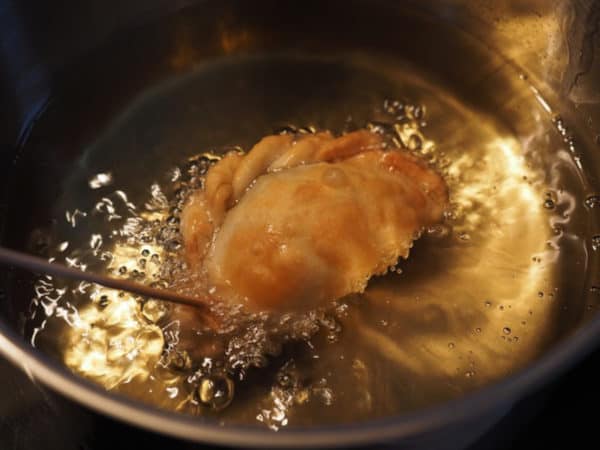
Equipment you need for this technique:
- Deep saucepan or deep fryer
- Scoop strainer (to remove the oil from the ingredients)
- Long chopsticks or long spatula
Famous Chinese dish with this technique:
Step-by-step:
- Put enough oil in the saucepan or fryer. The deeper the saucepan, the better so you won’t get splattered with the hot oil
- Preheat the oil until it’s very hot
- Slide the ingredients slowly and don’t drop them to avoid splatter, use smaller fire
- Don’t overcrowd your pan which may lower the temperature of the oil, and might cause the ingredients to be cooked unevenly
Related reading: “What Makes a Wok Special? All You Need To Know About Chinese Wok“
3. Pan Frying
Pan-frying allows the ingredients to have direct contact with the pan by using low to medium level of oil. Due to the partial oil coverage, the food must be turned at least once.
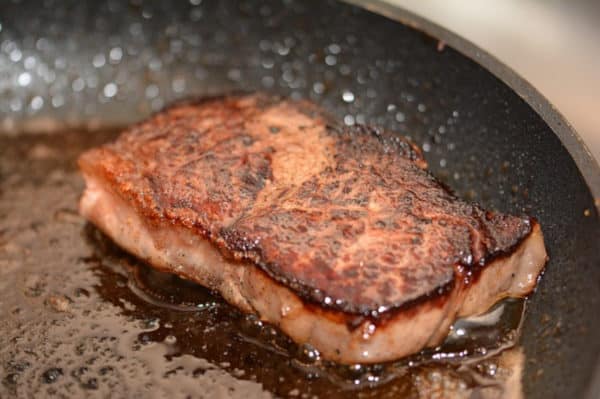
Equipment you need for this technique:
- Frying pan
- Spatula
- Cooking tongs
- Cast-iron skillet
- Splatter screen
- Thermometer (optional)
- Cooling rack
- (Aff.links)
Famous Chinese dish with this technique:
Step-by-step:
- Get the pan pre-heated with a medium to high heat. The oil should be around 350 degrees F.
- Add the food into the oil with a wooden spoon or chopstick, the oil should bubble
- Maintain the correct temperature of the oil so don’t overcrowd the pan. For thicker foods, you might want to lower the temperature
- Wait until the food is browned and toasty, and turn the food.
- Because the side you put down first in the pan will likely look the nicest, place the food side down.
Do you want to learn more about Chinese cuisine? Check out these cooking books – Aff.link
4. Braising
Braising is a classing Chinese cooking technique that involves browning the food and then simmering it in a small amount of seasoned liquid (mainly water or broth).
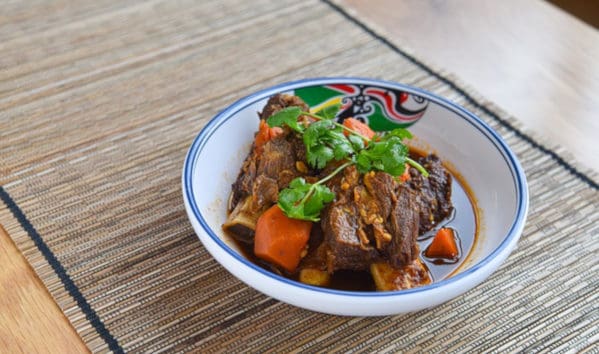
Equipment you need for this technique:
- Wok, saucepan, or stew pot
- Spatula
Famous Chinese dish with this technique:
Step-by-step:
- Add a small amount of water or broth to a saucepan
- Add the foods, ingredients, seasonings, and spices to the liquid
- Boil everything together at a high temperature, then simmer it at a lower temperature
- Simmer all the foods and ingredients thoroughly, typically this will take more than an hour
Check out some special Chinese ingredients for your cookery. – Aff.link
5. Stewing
Another classic cooking technique used to transform less tender meat into a more tender, melt-in-your-mouth cuts. Another version called red cooking or red stewing is stewing with soy sauce.
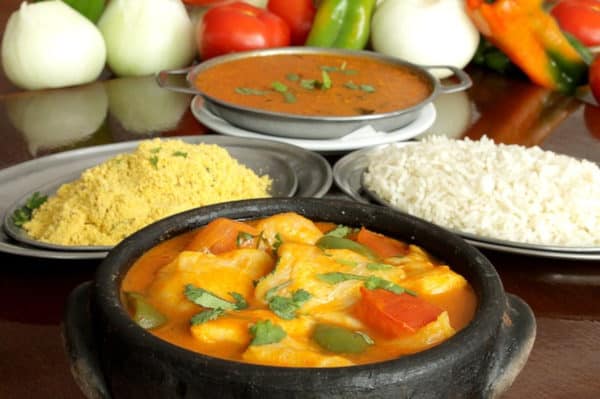
Equipment you need for this technique:
- Stew pot
- Slow cooker (Aff.link)
- Spatula
Famous Chinese dish with this technique:
- Red-cooked spare ribs
- Chinese beef stew
- Red-cooked pork belly
Step-by-step:
- Add water or broth into a stew pot or slow cooker
- Add other ingredients and seasonings (soy sauce, sugar, ginger, five-spice powder, wine or sherry, chili powder, cilantro, and other seasonings)
- If you use meat, brown the meat first before adding it into the water/broth
- Cook all of these very slowly over a low flame
- It may take up to several hours before the meat is very tender as desired
Related reading: “Basic Chinese Food Ingredients You Should Know To Start Chinese Cooking“
6. Boiling
A very common cooking technique used in many Chinese dishes. While boiling is often considered as the simplest cooking technique, but there are still various variations involved in the technique:
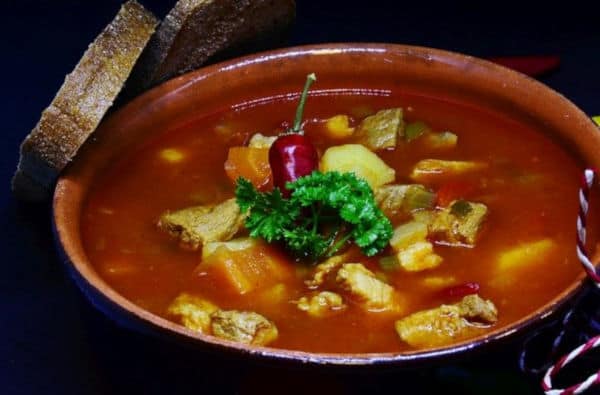
- Quick boiling: Cuān or Zhá, where we add adding ingredients and foods to boiling water, and immediately serving the dish with the cooking liquid
- Blanching: Chāo or Tàng, a quick immersion of raw ingredients in boiling water, and followed by immersion in cold water
- Gradual simmering: Dùn, adding all the foods and seasonings to cold liquid (water or broth), and then they are slow-cooked until all the contents come to a prolonged boil.
- Slow red cooking: Lǔ, cooking in a soy sauce-based liquid over prolonged and constant heat. Quite similar to braising, but with more liquid and more prolonged boiling
Equipment you need for this technique:
- Scoop strainer
- Slow cooker
- Stew pot
- Wok
Famous Chinese dish with this technique:
- Various vegetable-based dishes
- Sapo tofu
- Chinese Broccoli with oyster sauce
- Various Chinese soups
Step-by-step:
Will vary based on the techniques used, as discussed above, but make sure all the ingredients are washed/cleaned and cut properly before we plunge them into the boiling liquid. Make sure to use constant temperature (depending on the technique) to preserve the texture and nutrients of the food.
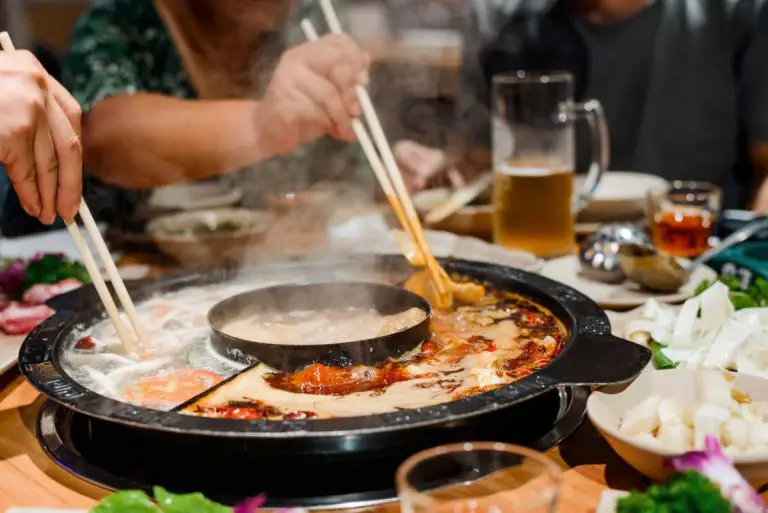
Related reading: “Hot Pot: Unveiling the Interactive Charm of Chinese Fire Pot” – Opens in new tab
7. Steaming
A very popular technique in Chinese cooking, and one of the signature methods of Chinese cooking. As the name suggests, this method involves cooking the food via steam. Water is continuously boiled with constant temperature to create steam, which will cook the food. The food and ingredients are raised and won’t touch the water directly.
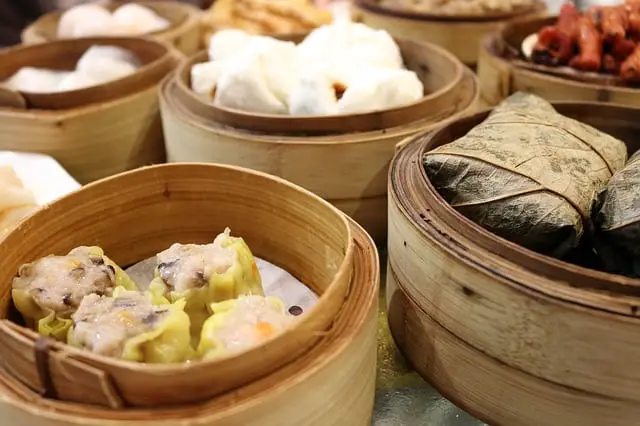
Equipment you need for this technique:
- Metal steaming rack (to place the food on and raised above the boiling water)
- Metal clipper to handle the plate
- Bamboo steamers
- Slow cooker
- Stew pot
Famous Chinese dish with this technique:
Step-by-step:
Steaming involves a very simple technique where the food is placed above the boiling water. The most important thing in this technique is how we arrange the foods via bamboo steamers or other forms of steaming racks.
Keep the water at a slow boil at a constant temperature until the food is cooked as desired.
8. Roasting
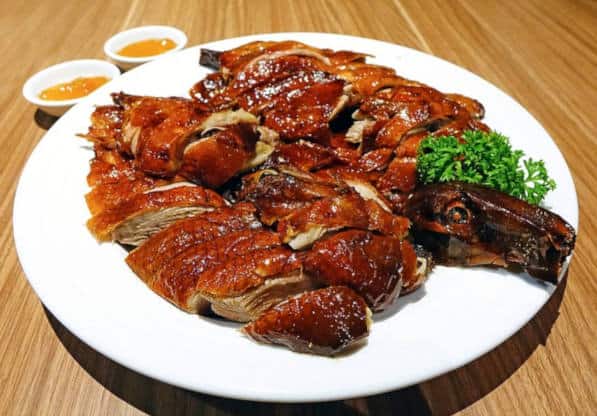
While ovens aren’t really common in China, roasting is a common cooking technique in Chinese cuisine, mainly by utilizing open flames outdoors or in hung ovens. The famous Peking duck, for example, is commonly roasted in hung wood-burning ovens that can roast up to 20 ducks simultaneously.
Related reading: “23 Chinese Cooking Utensils You Should Know“
Equipment you need for this technique:
- Oven
- Wood-burning wood oven
Famous Chinese dish with this technique:
Step-by-step:
- Chinese roasting is typically done with moderate heat (325-350 degrees F) and reasonably long cooking time. Higher heat might be applied at the beginning and/or the end of the cook cycle to add extra crisps to the foods.
- If the cut is already tender enough, the higher temperature might be applied to brown the outside of the food
- The meat should be removed from the heat before it has finished cooking and left to rest for at least a few minutes. This is to allow the inside of the meat to cook further from the residual heat.
Related reading: Chinese Dining Etiquette and Table Manners – Opens in new tab
9. Smoking
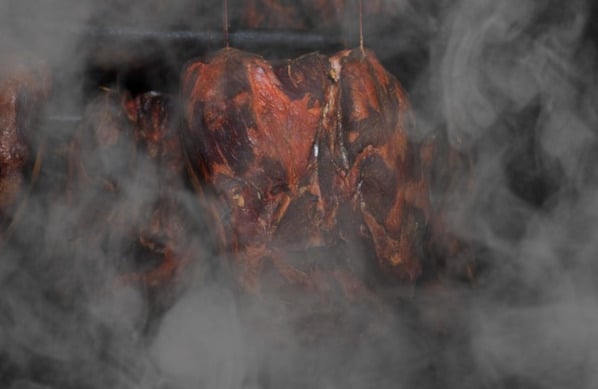
There are two different methods of smoking in Chinese cooking:
- Raw smoking: applies to raw meats. The meat is blanched and then smoke-roasted from a raw condition
- Mature smoking: smoking already cooked food with burning materials, to add extra flavor and also to improve the appearance of the dish
Equipment you need for this technique:
- Wok with lid (or extra foil to lock in the smoke)
- Foil layers to allow hanging above the wok
- Wire rack or steamer
Famous Chinese dish with this technique:
- Shanghai smoked fish (Shanghai Xun Yu), only the sauce is smoked
- Chinese smoked chicken
- Smoked/cured pork belly (Chinese bacon)
Step-by-step:
- Line the wok with 4 layers of foil, while allowing the edges to overhang.
- Spread the smoking ingredient (i.e. tea mixture or wood) over the base. Use sufficient amount so it can smoke properly
- Heat until it smokes properly
- Place food on the wire rack around 2 inches above the mixture. Allow enough space for smoke to circulate and avoid over-smoking.
- Cover the work with a wok lid or extra foil to trap the smoke
Related reading: Exploring China’s Culinary Diversity: China’s Regional Delicacies – Opens in new tab
10. Marinating or Pickling
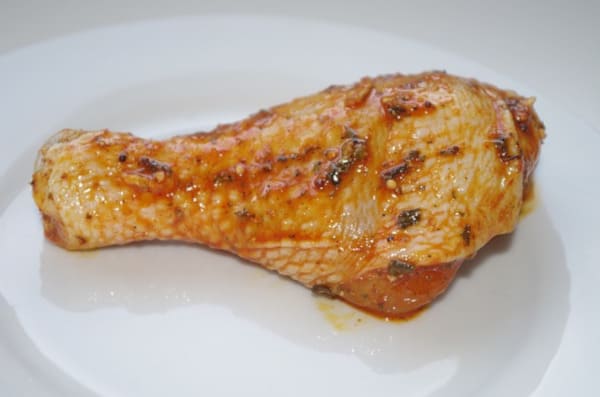
An important method in Chinese cuisine is to marinate the meat to add extra flavor and also to tenderize the meat. The marinade can also be used for making the sauce or as an extra ingredient.
Common ingredients used in Chinese marinating:
- Oil: used to preserve the tenderness of meats and other foods
- Salt: to add extra saltiness and improve texture. Can also act as a tenderizer
- Soy sauce: an important Chinese ingredient, to add savory flavor and brown coloring
- Sugar: flavor enhancer and speed up the browning process of a meat
- Fish sauce: has a strong and unique Chinese aroma.
- Cooking wine: especially Shaoxing wine, add a unique Chinese flavor to any meat dishes
- Herbs: like garlic, ginger juice, and pepper
Famous Chinese dish with this technique:
- Chinese char siu
- Chinese BBQ chicken
- Chinese pickle
Do you want to learn more about Chinese cuisine? Check out these cooking books – Aff.link
Stay in Touch
 Join our newsletter by using the forms on this website or click here!
- Follow us on Google News
- Follow us on Facebook



Featured Image by Sunday133 from Pixabay
Share it!