

When people think of the Great Wall of China, the first image that comes to mind is often a majestic ribbon of stone weaving over mountaintops, stretching endlessly toward the horizon. It’s the postcard-perfect face of China, a must-see stop for travelers, and one of the world’s most recognizable landmarks. Yet to view the Wall only as a breathtaking tourist attraction is to miss its deeper, more complicated story.
The Great Wall is not just an achievement of ancient engineering—it is also a mirror reflecting the struggles of an entire civilization. Rising from centuries of conflict, ambition, and sacrifice, this monumental structure stands as both a protector and a silent witness to the very human costs behind its creation. For many, it has come to embody strength and endurance, showcasing the determination of rulers who sought to guard their lands and the resilience of the people who labored on it.
But the Wall carries another, more somber legacy. It is not merely a stone boundary against invaders; it also symbolizes the struggles of ordinary families torn apart, the suffering of workers compelled to build it, and the sacrifices that fed the vision of emperors. Every brick whispers of triumph intertwined with hardship.
This dual reputation—the Wall as a wonder of strength and as a reminder of struggle—gives it a powerful but complicated identity. To truly understand the Great Wall’s story, one must look beyond its beauty and explore the shadows that lie behind it.
The Origins of the Wall: Not One Wall, But Many
The name “Great Wall” gives the impression of a single, seamless barrier running across northern China. In truth, it began as a scattered patchwork of walls, forts, and earthen ramparts, each built at different times by different rulers.
As early as the 7th century BCE, small regional kingdoms erected walls to defend their territories from rival states and nomadic raiders. These early walls were modest—often just tamped earth or wooden palisades—but they set the precedent for what would one day become a massive interconnected defense system.
The Qin dynasty, famous for unifying China in 221 BCE under Emperor Qin Shi Huang, took the first significant step toward linking some of these fragmented barriers. His regime connected and reinforced existing structures, creating a defensive line against northern tribes. However, this was far from the iconic stone construction we envision today. Many of these early sections crumbled over time, leaving only traces for archaeologists to rediscover centuries later.

The Myth of a Single “Great Wall”
Despite the scattered origins, over the centuries a more unified legend began to take root. Later dynasties, particularly the Han and the Ming, expanded on earlier foundations, extending and rebuilding walls to match shifting borders and threats. Each generation added its own layers, much like chapters of an epic saga written in earth, clay, and stone.
By the time of the Ming dynasty (14th–17th centuries), the Wall reached much of the form people recognize today: stone fortifications, watchtowers, and winding mountain ridges built with military precision. The grandeur of these later constructions retroactively painted the entire history of earlier walls in a single shade, giving rise to the enduring idea of one monumental “Great Wall.” In truth, the Wall is less a singular creation and more a mosaic of centuries, stitched together by narrative and national memory rather than by uninterrupted stone.
This transformation from many to one is itself part of the Wall’s mystique. What began as scattered barricades meant mainly for survival has evolved into a unifying cultural symbol—an enduring, if often simplified, emblem of China’s enduring strength and historical depth.
Major Dynasties and Their Contributions to the Wall
| Dynasty | Time Period | Type of Construction | Purpose of the Wall | Legacy/Impact |
| Early States (Zhou, Warring States) | 7th–3rd century BCE | Rammed earth walls and wooden fences | Defend small states from rivals and nomadic raiders | These fragmented barriers laid the foundation for later unification efforts. |
| Qin Dynasty | 221–206 BCE | Rammed earth, connected existing walls | Secure northern frontier after China’s unification | First attempt to link walls; symbol of centralized imperial authority. |
| Han Dynasty | 206 BCE–220 CE | Extended earthen walls across deserts and plains | Protect Silk Road trade and guard against Xiongnu raids | Expanded the Wall vastly; tied directly to economic and trade security. |
| Northern Wei to Sui | 4th–6th centuries | Earthen ramparts, fortifications | Regional defense during turmoil and fragmentation | Reinforcement of weaker sections; local, not centralized projects. |
| Ming Dynasty | 1368–1644 CE | Stone and brick fortifications, watchtowers, garrisons | Guard against Mongol and steppe invasions; project imperial might | Gave the Wall its iconic form; most structures seen today are Ming-era. |
The Human Cost Behind the Bricks
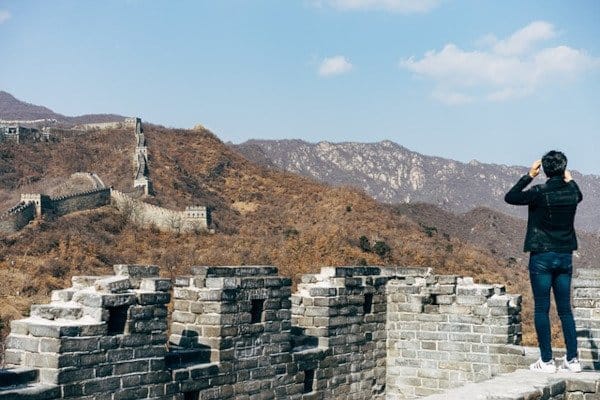
Behind the awe-inspiring stones and battlements lies a story not of glory, but of exhausting human toil. The Great Wall was not raised by skilled artisans alone—it was built largely by conscripted soldiers, peasants, and convicted prisoners. Ordinary people were called away from their farms, fields, and families, handed crude tools, and ordered to work under punishing conditions.
Imagine carrying stone blocks on treacherous mountain slopes or tamping layers of earth beneath the unforgiving sun with little more than bare hands and wooden tools. For many laborers, survival was a daily struggle. The Wall demanded not only sweat, but years stolen from lives meant for tending crops or raising families.
Death on the Wall: Between Myth and Truth
One of the darkest tales surrounding the Wall is the belief that countless lives were lost during construction. Ancient stories whisper of bodies buried within the Wall itself, their bones left as part of the foundation. While this makes for haunting folklore, historians today view the idea of corpses sealed inside as myth.
What is undisputed, however, is that the working conditions were deadly. Exhaustion, accidents, disease, and malnutrition claimed the lives of thousands—possibly hundreds of thousands—over the centuries. Workers who perished were rarely afforded proper burials; in many remote places, their bodies were abandoned in the wilderness, a grim reality that fed the legend.
The Silent Sacrifices of Families
Beyond those who labored and died, the Wall’s construction left invisible scars on society. Every laborer conscripted meant a family back home left without critical hands to tend crops or care for children. Villages were left half-empty, fields lay neglected, and communities struggled under the heavy weight of absence.
For many families, sending a loved one to work on the Wall was no different from losing them entirely. This silent form of sacrifice ensured the Wall’s bricks were not only mortared with sweat and blood, but also with grief and longing that stretched across generations.
Who Built the Wall?
| Group of Laborers | Role in Construction | Hardships Faced |
| Soldiers | Provided manpower, guarded worksites, built fortifications | Long deployments, exposure to harsh climates, diverted from actual defense duties |
| Peasants | Drafted seasonally to supply bulk of labor force | Loss of income and neglected farms, risk of famine for families left behind |
| Convicts/Prisoners | Used for the most dangerous or grueling work | Brutal punishments, unsafe tasks, high mortality rates |
| Skilled Workers (artisans, masons, engineers) | Designed towers, oversaw stonework, organized logistics | Stress of meeting imperial demands, exhaustion from remote harsh sites |
| Local Communities near construction sites | Supplied food, resources, and sometimes enforced to assist labor | Depletion of farmland, confiscation of materials, disruption of village life |
Military Might or Flawed Defense?
The Great Wall was envisioned as a mighty shield stretching across northern China, designed to keep nomadic tribes and invading armies at bay. In theory, its watchtowers, beacon systems, and garrisons of soldiers created an unbroken line of defense. Signal fires could quickly alert troops of an approaching threat, while sheer cliffs of stone discouraged direct assault.
On paper, it looked nearly unbeatable. Yet reality had a different story to tell. The Wall slowed enemies down, but it never made China impenetrable. It was more of a deterrent than an absolute safeguard.
Famous Invasions That Slipped Past
History is rich with examples of how easily opponents found ways around the Wall. The most famous breaches came not from armies smashing through, but from slipping past. In 1211, Genghis Khan and his Mongol forces bypassed fortified stretches, entering through unprotected passes and weakly manned gates.
Later, during the 17th century, the Manchus managed to take control of China after an insider allowed them through a key Wall gate at Shanhaiguan. In many ways, the Wall’s greatest weakness wasn’t its bricks or towers—it was human frailty, whether in the form of betrayal, poor planning, or insufficient troops to cover its immense length.
So why did emperors continue to invest such staggering resources in the Wall if it failed to consistently repel invaders? The answer lies in its dual role as both military asset and political theater. A towering wall stretching across mountains made a powerful statement: it showed strength, order, and imperial authority.
For rulers, the Wall was as much about image as it was about defense. It reassured citizens, intimidated rivals, and reinforced the narrative that China was a mighty civilization worthy of respect and fear. In practice, the Wall worked best not as an impenetrable barrier but as a symbol—an enduring reminder of ambition and control, even when its stones couldn’t stop a charge.
Notable Invasions Past the Wall
| Invader / Group | Year (approx.) | How They Breached the Wall | Outcome / Impact |
| Xiongnu | 200s BCE | Exploited weak/unfinished Qin sections | Raids along the frontier exposed gaps in early Wall defenses. |
| Genghis Khan & Mongol Empire | 1211 CE | Bypassed weakly manned passes and bribed/took gates | Mongols conquered northern China; Yuan Dynasty followed (1271). |
| Oirat Mongols | 1449 CE | Slipped past poorly defended stretches | Defeated Ming army in the “Tumu Crisis”; emperor captured. |
| Manchus (Later Jin/Qing) | 1644 CE | Gained entry at Shanhaiguan Pass with insider betrayal | Took Beijing, ending the Ming and establishing the Qing Dynasty. |
Myths That Shaped the Wall’s Dark Reputation
One of the most haunting legends surrounding the Great Wall is the belief that the bodies of workers who died during construction were buried within its bricks. This story has gripped imaginations for centuries, painted as a chilling testament to the human cost embedded in the structure.
The tale of Meng Jiangnu is often cited here—a widow whose cries supposedly caused part of the Wall to collapse, revealing her husband’s body. While this legend is deeply moving, historical evidence to confirm widespread burial of bodies in the Wall is lacking. Most deaths were more likely to have been handled according to local customs, rather than being concealed within the Wall itself.
Ghosts and Spirits Haunting the Battlements
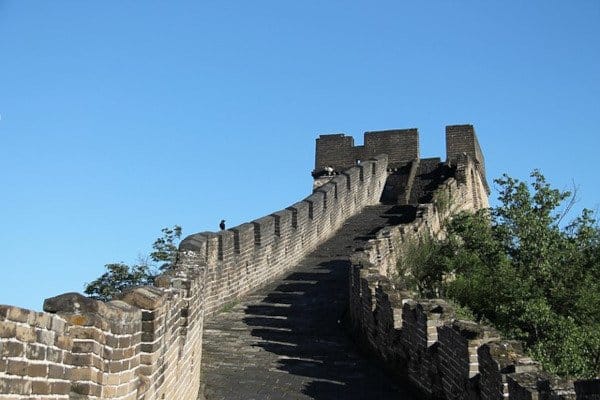
Local folklore casts the Wall as a place haunted by restless spirits of those who perished during its brutal construction. Many believe that on stormy nights or quiet hours, the anguished cries and ghostly figures of laborers linger along the fortress battlements. These stories grew over generations, reflecting the collective memory of hardship and loss tied to the Wall.
Whether these ghost tales are based on supernatural happenings or cultural means to honor the dead, they add a mystical and somber layer to the Wall’s identity beyond its physical presence.
Separating Folklore from Historical Fact
When diving into the legends, it’s important to distinguish between myth and documented truth. The emotional power of the stories about buried bodies and haunted battlements reflects real historical pain, but not necessarily literal facts. Archaeological research and historical records provide little proof for these specific claims. Instead, they highlight the Wall’s vast and varied history of construction, suffering, and defense. Understanding this balance preserves the Wall’s mystery while honoring truthful accounts of its past.
The Wall as a Tool of Control
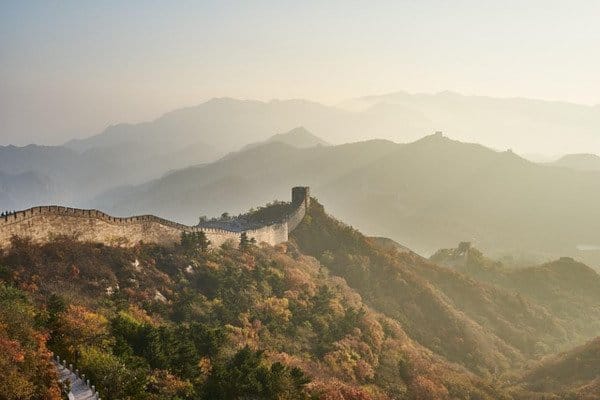
The Great Wall was not just a defensive structure; it was a powerful symbol designed to assert the authority of emperors and the state over the people. Standing tall across vast distances, the Wall visually reinforced the might of the ruling dynasty.
It communicated an image of control and dominance—not only to potential invaders but also to the citizens within the empire. The Wall’s presence reminded people of the government’s power to mobilize resources and control vast stretches of land, asserting political and cultural boundaries.
Forced Taxation and Labor Burdens
Behind this symbol of strength lay heavy costs for common citizens. The Wall’s construction and maintenance relied on forced labor, drawing heavily from soldiers, peasants, and prisoners. Those who weren’t forced to work on the Wall often faced increased taxation to fund its building.
This burden disproportionately impacted rural communities already struggling to survive, exacerbating poverty and social unrest. The forced extraction of labor and resources was a tool of control that reinforced the state’s dominance, often at great human cost.
The Wall also served as an important piece of political propaganda. Emperors used it to craft a narrative of a “mighty empire” successfully defending its borders and preserving its people from outside threats. This narrative helped unify diverse ethnic groups within the empire under a shared identity centered on strength and resilience.
While the Wall’s military function sometimes fell short, its psychological and cultural impact was immense, making it a key instrument for promoting loyalty and justifying imperial rule.
Related reading: Ancient Chinese Punishments: Justice or Cruelty? – Opens in new tab
Western Romanticism and Misinterpretation
Early Western explorers and writers were captivated by the grandeur and mystery of the Great Wall, often embellishing its story to suit their own romantic imaginations. These outsiders saw the Wall as a symbol of the exotic and ancient East, magnifying myths of colossal scale and supernatural origins to intrigue their audiences.
Their accounts sometimes downplayed the Wall’s practical purposes, instead focusing on the drama of sacrifice and endurance, contributing to a mythologized image that spread widely in the West.
Mistranslations and Exaggerations Shaping Global Perceptions
Many misconceptions about the Wall arise from mistranslations and exaggerations over time. For example, early references to the Wall’s length and visibility were often misunderstood or overstated, fueling ideas about its uniqueness and invincibility.
These distortions were amplified through books, newspapers, and travelers’ tales, which lacked precise historical context or scientific validation. Such embellishments reinforced a simplified narrative of the Wall as a monolithic structure, overshadowing its complex history and multiple phases of construction.

The Modern Myth of Visibility from Space
Perhaps the most persistent myth is that the Great Wall of China is visible from space with the naked eye. This claim dates back nearly 300 years to an English antiquarian’s speculation and gained traction through 20th-century media, including Ripley’s Believe It or Not!
However, astronauts including Neil Armstrong and Chinese astronauts have confirmed it is not visible without aid from orbit or the Moon due to its narrow width and earth-toned materials blending with the landscape. Despite scientific evidence debunking this, the myth remains embedded in popular culture as a testament to the Wall’s awe-inspiring scale, even if factually incorrect.
The Wall Today: Preserving History With Honesty
Today, the Great Wall attracts millions of tourists annually, becoming a global symbol of China’s heritage. However, much of what visitors experience is a carefully curated, sanitized version of history.
Popular sections like Badaling and Mutianyu have been restored and commercialized to accommodate large crowds, often smoothing over the harsher realities of the Wall’s past. The narrative presented to tourists tends to focus on the Wall’s grandeur and national pride, while the difficult human stories and environmental tolls are often glossed over or omitted.
Ruins and Forgotten Stretches with Grimmer Tales
Beyond the bustling tourist hotspots, many parts of the Great Wall lie in ruin, neglected and crumbling. These forgotten sections tell a far grimmer tale—of decay, abandonment, and loss. They serve as silent witnesses to centuries of struggle, erosion, and the passage of time, preserving memories that are less celebratory but no less important. Such stretches remind us of the Wall’s complex history, including the suffering of laborers and local communities, and challenge the polished version of its legacy.

Balancing National Pride with Past Hardships
Preserving the Wall today involves walking a delicate line between celebrating national pride and acknowledging the past’s hardships. Authorities and historians strive to maintain the Wall as a cultural monument while bringing more honest stories to light.
This approach encourages a deeper understanding of the Wall’s multifaceted legacy—not just as a symbol of strength but also as a monument to human endurance and sacrifice. Responsible tourism and thoughtful preservation efforts seek to honor both the marvel and the darkness embedded in this ancient structure.
Conclusion: Understanding the Full Legacy
The Great Wall of China is a marvel of human architecture and ingenuity, representing centuries of strategic vision and cultural identity. However, it is equally important to remember the darkness that shadows its splendor—the immense human cost, environmental toll, and the political motives underlying its construction. The Wall stands not only as a monument of conquest and defense but also as a testament to sacrifice, struggle, and the endurance of countless individuals who shaped its history.
Lessons from the Wall extend beyond its bricks and battlements. It teaches us about leadership’s double-edged nature—the pursuit of power and control through monumental projects—and the complex sacrifices demanded from ordinary people. The Wall encourages reflection on resilience, perseverance, and the human spirit’s capacity to endure hardship in pursuit of a greater purpose.
Beneath centuries of myth and legend lies a much richer, nuanced truth. To truly appreciate the Great Wall, one must dig past simplified stories and romantic ideals to uncover the complex realities of its making. Embracing this fuller legacy allows us to honor both its greatness and its shadows, fostering a deeper understanding of history that acknowledges both marvel and hardship.
Related reading: “Was The Great Wall of China Actually Effective?“
Stay in Touch
 Join our newsletter by using the forms on this website or click here!
- Follow us on Google News
- Follow us on Facebook



Featured image by sun jib from Pixabay
Share it!