When many people hear “Traditional Chinese Medicine” (TCM), they often picture a bowl of bitter herbal soup or thin needles inserted into the skin. While these are indeed important tools, they represent only the surface of a much deeper tradition.
TCM is not merely a collection of remedies; it is a complete medical system that has evolved over thousands of years. It offers a unique framework for understanding how the human body functions, how illness arises, and how healing can occur.
Far from being a relic of the past, this ancient system still holds relevance in the modern world. As global healthcare increasingly recognizes the limits of treating symptoms in isolation, more people are exploring TCM for its holistic approach. It can complement modern medicine by focusing on underlying patterns of imbalance, offering perspectives on chronic conditions, stress management, and preventive care that resonate with today’s health-conscious society.
In this guide, we will look back at the origins of TCM, including foundational texts such as the Yellow Emperor’s Inner Canon. We will explore the philosophy of holistic health, in which the body, mind, and environment are viewed as interconnected.
Finally, we will examine one of the key ideas that distinguishes TCM: treating the whole person rather than focusing solely on a specific disease. Understanding these principles can help explain why this long-standing tradition continues to be practiced by millions around the world.
Historical Origins: The Foundation of Wisdom
To understand Traditional Chinese Medicine (TCM), it helps to look back to its intellectual origins—a time when healing began shifting from mystical ritual toward a more systematic approach. For centuries prior, illness was often attributed to angry spirits or demonic possession. Treatments frequently involved shamanistic rituals, dances, and sacrifices.
This perspective began to change with the compilation of the Huangdi Neijing, or the Yellow Emperor’s Inner Canon. Although traditionally attributed to the legendary Yellow Emperor, scholars believe it was written between the Warring States period and the Han Dynasty (roughly 475 BCE to 220 CE). This influential text did more than list remedies; it introduced a framework that viewed the human body as a system governed by natural laws.
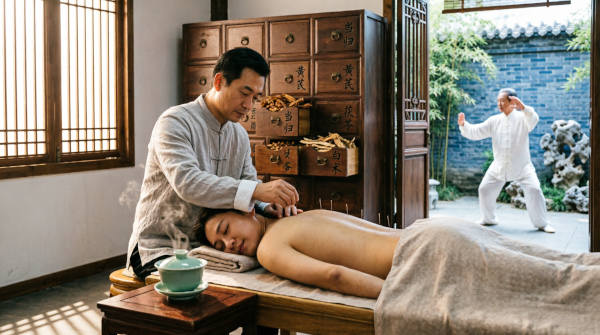
The Inner Canon was significant because it encouraged systematic observation. Instead of asking which spirit caused an illness, physicians began asking what imbalance in the body produced certain symptoms. The text introduced the ideas of Yin and Yang—opposing yet complementary forces—and the Five Elements (Wood, Fire, Earth, Metal, Water) as fundamental principles of physiology.
In this view, health was no longer about battling supernatural forces but about maintaining harmony within the body and with the surrounding world. Organs were seen not only as physical structures but also as functional systems connected by pathways called meridians, through which Qi (vital energy) was believed to flow.
TCM continued to evolve after the Inner Canon. It developed as a living tradition through China’s many dynasties. An important moment in this development occurred during the Eastern Han Dynasty with the physician Zhang Zhongjing, often called the “Sage of Medicine.” His influential work, the Shanghan Lun (Treatise on Cold Damage Disorders), placed greater emphasis on clinical practice.
While the Inner Canon established philosophical foundations, Zhang Zhongjing focused on diagnosis and herbal formulas tailored to specific stages of illness. His work demonstrated how theories such as Yin and Yang could be applied to real clinical conditions, helping bridge the gap between philosophical ideas and practical treatment.
Over the centuries, this process of combining philosophical theory with clinical observation continued. Each era contributed new insights—refining pulse diagnosis, expanding the materia medica (herbal catalog), and developing techniques such as moxibustion and acupuncture. As a result, TCM today reflects a long tradition shaped by centuries of observation, debate, and medical practice.
The Core Philosophy: Holistic Health and Balance
At the heart of Traditional Chinese Medicine lies a philosophical framework that views health as a state of dynamic balance. Unlike modern Western medicine, which often focuses on isolated pathogens or malfunctioning organs, TCM considers the entire system of the human body.
This holistic view is built on three core ideas: the flow of vital energy, the balance of opposing forces, and the relationship between humans and the natural world. Understanding these concepts helps explain why TCM treatments aim to restore balance rather than simply suppress symptoms.
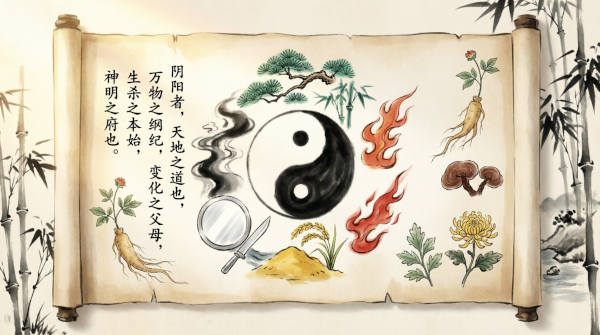
The Concept of Qi (Vital Energy)
In TCM, Qi (often pronounced “chee”) is considered the fundamental life force that animates all living things. It is described not only as energy but also as a subtle substance that supports the body’s functions—warming tissues, defending against illness, and transforming food into nourishment and vitality.
One way to imagine Qi is as the electricity that powers the body’s systems. When the supply is strong and the circuits function smoothly, everything operates normally.
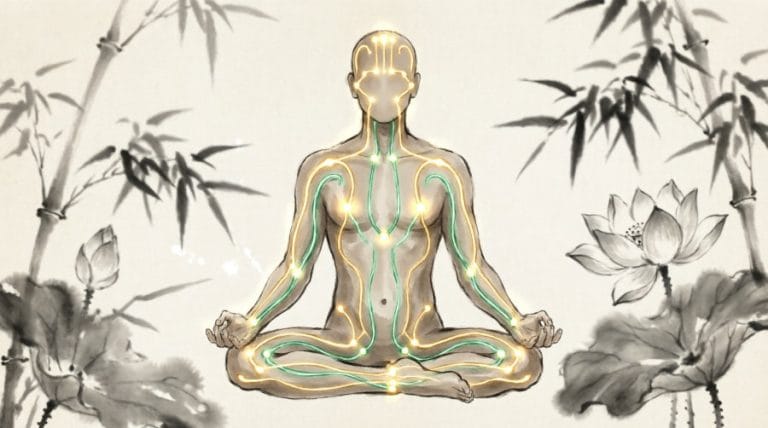
Qi is believed to circulate through pathways called meridians, which connect the surface of the body with internal organs. When Qi flows smoothly, the body tends to remain resilient. Illness is thought to arise when this flow becomes disrupted.
A blockage in Qi—sometimes associated with stress, injury, or poor diet—may contribute to pain or tension. A deficiency of Qi may be associated with fatigue, reduced vitality, or slower recovery. TCM therapies such as acupuncture and herbal medicine are traditionally used to help regulate the flow of Qi and restore balance.
Yin and Yang: Dynamic Equilibrium
If Qi represents the body’s vital energy, Yin and Yang describe how that energy is balanced and expressed. These two forces represent complementary aspects of reality. Yin is often associated with darkness, cold, rest, and substance, while Yang is linked to light, warmth, activity, and function. Neither is considered superior; health depends on their balance.
For example, sleep is a Yin activity that restores the body, while wakefulness is a Yang activity that uses energy. In a healthy state, Yin and Yang continuously adjust to one another, maintaining equilibrium.
Illness may arise when this balance becomes disrupted. An excess of Yang might appear as fever, inflammation, or agitation, while excess Yin might be associated with chills, fatigue, or fluid retention. TCM diagnosis often focuses on identifying which aspect is out of balance. Treatments may then aim to cool excess Yang or support deficient Yin in order to restore equilibrium.
| Yin (阴) | Yang (阳) |
| Dark, night | Light, day |
| Cold, cool | Hot, warm |
| Rest, sleep | Activity, wakefulness |
| Internal, inward | External, outward |
| Substance, structure | Function, energy |
| Feminine | Masculine |
| Moon | Sun |
The Interconnectedness of Body and Nature
A central concept in TCM philosophy is Tian Ren He Yi (天人合一), often translated as the unity of heaven and humanity. This idea suggests that humans are deeply connected to the natural world and influenced by the same rhythms that govern nature.
Just as the earth experiences seasons and cycles, the human body is believed to follow similar patterns. Each season is traditionally associated with specific organ systems. For example, spring is linked with the Liver and the element Wood, representing growth and renewal. Winter corresponds with the Kidneys and the element Water, emphasizing rest and conservation.
According to this view, lifestyle and environment play an important role in health. Aligning daily habits—such as sleep, diet, and physical activity—with seasonal changes is believed to support well-being. By living in harmony with these natural rhythms, individuals may help maintain balance and resilience.
| Element (五行) | Season | Organ System | Emotion | Color | Flavor |
| Wood (木) | Spring | Liver | Anger | Green | Sour |
| Fire (火) | Summer | Heart | Joy | Red | Bitter |
| Earth (土) | Late Summer | Spleen | Worry | Yellow | Sweet |
| Metal (金) | Autumn | Lung | Sadness | White | Pungent |
| Water (水) | Winter | Kidney | Fear | Black | Salty |
Treating the Person, Not Just the Disease
One of the most distinctive features of Traditional Chinese Medicine is its focus on the individual rather than solely on the disease itself. While modern medicine often aims to eliminate a specific pathogen or repair a damaged organ, TCM typically views illness as a sign that the body’s overall balance has been disrupted. This perspective influences how diagnosis and treatment are approached.
The TCM Definition of Disease
In Western medicine, a disease is usually defined by a set of symptoms or an identified pathogen, such as a virus or bacterium. In TCM, illness is often described as a pattern of disharmony (Zheng (证)) within the body.
This perspective leads to an important clinical principle known as “same disease, different treatment” (Tong Bing Yi Zhi (同病异治)). Two patients may have the same Western diagnosis—for example, migraines—but their underlying patterns may differ. One patient might experience migraines associated with excess Liver Fire (Gan Huo (肝火)) related to stress, while another might experience migraines linked to Blood Deficiency (Xue Xu (血虚)). Because the underlying patterns differ, the treatments may also differ.
In this way, TCM focuses on addressing the broader imbalance that may contribute to symptoms rather than focusing only on the symptoms themselves.
Bian Zheng Lun Zhi (Pattern-Based Diagnosis and Treatment)
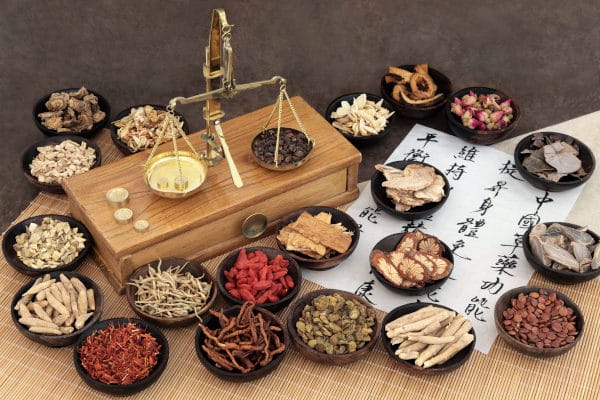
To identify these patterns, practitioners use a diagnostic method called Bian Zheng Lun Zhi (辨证论治). This process involves gathering information about the patient’s overall condition rather than relying solely on laboratory tests.
Practitioners may examine the tongue, feel the pulse at several positions on the wrist, listen to the patient’s voice, and ask questions about sleep, digestion, emotions, and lifestyle. These observations help build a broader picture of the individual’s health.
Treatment is also influenced by a person’s constitution, known as Ti Zhi (体质). This refers to an individual’s physical and emotional tendencies, which are shaped by genetics, environment, and life experiences. In TCM theory, emotions can also affect health.
The Seven Emotions (Qi Qing (七情))—joy, anger, worry, pensiveness, sadness, fear, and fright—are believed to influence different organ systems when experienced intensely or over long periods.
By considering physical symptoms, emotional factors, and personal constitution together, practitioners attempt to create a treatment plan tailored to the individual.
| Emotion (情) | Related Organ | Effect of Excess |
| Anger (怒) | Liver | Qi stagnation, headaches |
| Joy (喜) | Heart | Scattered Qi, insomnia |
| Worry (忧) | Spleen | Digestive weakness |
| Sadness (悲) | Lung | Shortness of breath |
| Fear (恐) | Kidney | Incontinence, weakness |
| Shock (惊) | Heart/Kidney | Anxiety, palpitations |
Preventive Medicine: Treating Before Illness Appears
One of the most notable aspects of TCM is its emphasis on prevention. This principle is often summarized as “treating potential disease” (Zhi Wei Bing (治未病))—the idea that the best medicine helps prevent illness before it develops.
A major part of this approach is Yang Sheng (养生), which can be translated as “nurturing life.” Yang Sheng involves cultivating healthy habits that support balance and resilience over time.
This may include dietary therapy (Shi Liao (食疗)), where foods are selected not only for nutrition but also for their energetic properties within TCM theory. It also includes gentle movement practices such as Tai Chi (太极拳) and Qigong (气功), which are traditionally believed to cultivate Qi while improving flexibility and coordination.
Emotional balance is also considered important. Maintaining a calm and balanced state of mind is believed to help support the smooth flow of Qi. Through these practices, individuals aim to strengthen their overall resilience so that small imbalances can be corrected before they develop into more serious health problems.
End Words
Traditional Chinese Medicine offers a different perspective on health—one that emphasizes restoring balance rather than focusing solely on symptom relief. By viewing the body as an interconnected system, TCM highlights how factors such as diet, emotions, lifestyle, and environment may all influence well-being.
Rather than replacing modern medicine, TCM is often viewed today as a complementary approach. It provides additional perspectives on prevention, stress management, and long-term health. When combined thoughtfully with modern medical knowledge, these approaches can contribute to a broader understanding of human health.
Ultimately, the enduring legacy of Traditional Chinese Medicine lies in its central idea: treating the person, not just the disease. In a fast-paced world that often focuses on quick fixes, this ancient philosophy encourages people to pay attention to their bodies, their environment, and the balance that supports lasting health.
Traditional Chinese Medicine offers a rich, practical approach to understanding your body and supporting your well-being in everyday life.
Research References
- Maurer N, Nissel H, Egerbacher M, Gornik E, Schuller P, Traxler H. Anatomical Evidence of Acupuncture Meridians in the Human Extracellular Matrix: Results from a Macroscopic and Microscopic Interdisciplinary Multicentre Study on Human Corpses. Evid Based Complement Alternat Med. 2019 Mar 21;2019:6976892. doi: 10.1155/2019/6976892. PMID: 31015853; PMCID: PMC6448339.
- Guang-Jun Wang, M. Hossein Ayati, Wei-Bo Zhang, “Meridian Studies in China: A Systematic Review,” Journal of Acupuncture and Meridian Studies, ISSN 2005-2901,
- Zhang WB, Jia DX, Li HY, Wei YL, Yan H, Zhao PN, Gu FF, Wang GJ, Wang YP. Understanding Qi Running in the Meridians as Interstitial Fluid Flowing via Interstitial Space of Low Hydraulic Resistance. Chin J Integr Med. 2018 Apr;24(4):304-307. doi: 10.1007/s11655-017-2791-3. Epub 2018 Jan 9. PMID: 29327122.
- Qi, Wenchuan1,2; He, Bin1; Gu, Qingxin1; Li, Yongming3; Liang, Fanrong1,2,4,*. Scientific exploration and hypotheses concerning the meridian system in traditional Chinese medicine. Acupuncture and Herbal Medicine 4(3):p 283-289, September 2024. | DOI: 10.1097/HM9.0000000000000128
- Wang, D., Qu, M. Homeostasis Research Model Based on Yin-Yang Theory: Five Examples. Chin. J. Integr. Med. 27, 403–407 (2021). https://link.springer.com/article/10.1007/s11655-021-2861-4
- Wang Z, Wang M, Lin M, Lu Y, Xia Q, Wei P. East meets west: integrating Yin-Yang theory with immunology teaching. Front Immunol. 2024 Aug 20;15:1441863. doi: 10.3389/fimmu.2024.1441863. PMID: 39229266; PMCID: PMC11368773.
- Matos LC, Machado JP, Monteiro FJ, Greten HJ. Understanding Traditional Chinese Medicine Therapeutics: An Overview of the Basics and Clinical Applications. Healthcare (Basel). 2021 Mar 1;9(3):257. doi: 10.3390/healthcare9030257. PMID: 33804485; PMCID: PMC8000828.
- Zhou L, Wang J, Xie R, et al. The Effects of Traditional Chinese Medicine as an Auxiliary Treatment for COVID-19: A Systematic Review and Meta-Analysis. The Journal of Alternative and Complementary Medicine: Paradigm, Practice, and Policy Advancing Integrative Health. 2021;27(3):225-237. doi:10.1089/acm.2020.0310
- Miao Jiang, Cheng Lu, Chi Zhang, Jing Yang, Yong Tan, Aiping Lu, Kelvin Chan, Syndrome differentiation in modern research of traditional Chinese medicine, Journal of Ethnopharmacology, ISSN 0378-8741,
- Vincent C.H. Chung, Robin S.T. Ho, Xinyin Wu, Justin C.Y. Wu,
- Incorporating traditional Chinese medicine syndrome differentiation in randomized trials: Methodological issues, European Journal of Integrative Medicine, ISSN 1876-3820, https://doi.org/10.1016/j.eujim.2016.08.164.
Stay in Touch
 Join our newsletter by using the forms on this website or click here!
- Follow us on Google News
- Follow us on Facebook



Featured Image from Depositphotos
Share it!