Across wellness studios, integrative clinics, and preventive health programs worldwide, acupuncture has steadily transitioned from an ancient practice to a modern health staple. More people are seeking it out not only for targeted pain relief but as a gentle, proactive way to support the body’s natural resilience and maintain long-term balance.
This growing appeal reflects a broader cultural shift toward holistic care, where physical comfort, emotional steadiness, and daily habits are viewed as interconnected. Yet behind today’s wellness interest lies a discipline refined through thousands of years of clinical observation and scholarly documentation.
At its foundation, acupuncture is a precise therapeutic method that uses hair-thin, single-use needles to stimulate specific locations on the body. The practice originated in ancient China and was first systematized in classical medical texts such as the Huangdi Neijing (The Yellow Emperor’s Inner Canon), compiled over two millennia ago.
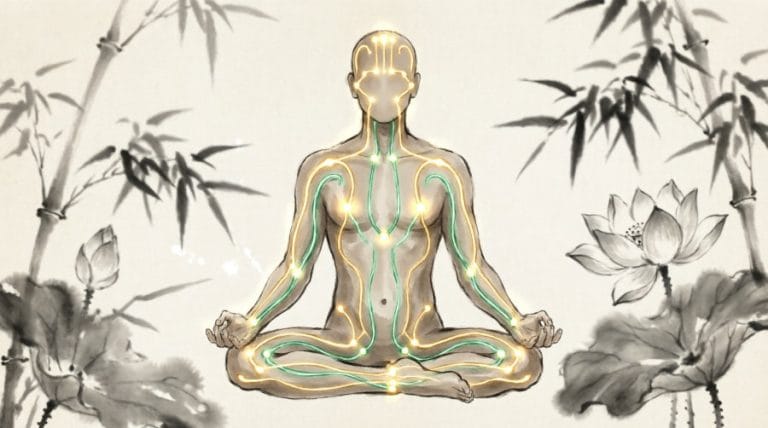
Early physicians identified a network of invisible channels called meridians, through which vital energy, or Qi, circulates to sustain organ function and tissue vitality. Rather than focusing solely on isolated symptoms, traditional practitioners learned to read subtle patterns of disharmony and used needle placement to guide the body back toward its natural rhythm.
In this article, we will explore exactly how acupuncture needles interact with the body, bridging classical meridian theory with modern neurophysiological research. You will learn how foundational points like ST36 and LI4 are chosen and what makes them so widely used, understand the meaning behind the characteristic De Qi sensation during treatment, and review practical safety guidelines to help you navigate sessions with confidence.
Whether you are considering your first visit or simply want to separate fact from folklore, this guide will provide a clear, well-researched overview of how acupuncture works in practice.
Understanding How Acupuncture Needles Work
In classical Chinese medicine, the human body is understood as a living network through which Qi, or vital energy, flows along designated channels known as meridians. Healthy function depends on this energy moving freely and evenly. When stress, environmental shifts, dietary habits, or emotional strain disrupt the flow, blockages form and the body’s natural harmony falters.
Acupuncture needles are placed at precise locations along these pathways to gently remove stagnation and restore smooth circulation. Practitioners often compare this process to clearing a blocked irrigation system: once the channels are open, nutrients and vitality reach the tissues that need them most.
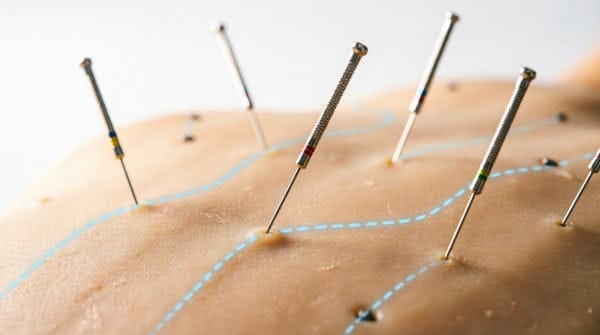
This approach also focuses on rebalancing Yin and Yang, the complementary forces that regulate rest and activity, cooling and warming, and structure and function. By stimulating specific meridian points, practitioners aim to harmonize the Zang-Fu organ networks, which include functional systems like the heart, liver, spleen, lungs, and kidneys.
Rather than treating organs as isolated anatomical structures, traditional theory views them as interdependent partners. Acupuncture helps recalibrate their communication, ensuring that each system supports the whole and the body returns to its natural equilibrium.
The Modern Scientific Perspective
Contemporary physiology has mapped how fine acupuncture needles interact with the body’s measurable biological systems. When a needle penetrates the skin and reaches deeper tissue layers, it activates sensory nerve fibers that transmit signals to the brain and spinal cord.
This stimulation triggers the release of endogenous opioids, including endorphins and enkephalins, which naturally dampen pain perception. At the same time, needle input engages the pain-gate mechanism in the dorsal horn of the spinal cord, effectively filtering out discomfort signals before they reach conscious awareness.
Beyond neurological pathways, needle insertion creates a controlled micro-trauma that increases local blood flow. This enhanced microcirculation delivers oxygen and nutrients while flushing out metabolic waste. The process also stimulates immune cells to release anti-inflammatory cytokines, which help calm tissue irritation and accelerate recovery.
Researchers have further discovered that acupuncture needles physically interact with the body’s connective tissue, or fascia. When a practitioner gently rotates the needle, collagen fibers wrap around it, creating mechanical tension that travels through the fascial network.
This phenomenon, known as mechanotransduction, sends biochemical signals that relax tight tissue, improve cellular communication, and help regulate the autonomic nervous system, shifting the body from a stress-dominant state toward rest and repair.
| Traditional TCM Concept | Modern Scientific Correlate | Clinical Outcome |
| Qi stagnation in meridians | Impaired nerve signaling + localized inflammation | Pain, tension, reduced mobility |
| Restoring Yin-Yang balance | Modulating sympathetic/parasympathetic activity | Stress reduction, improved sleep |
| Removing blockages | Enhancing microcirculation + fascial release | Faster tissue recovery, reduced swelling |
| Harmonizing Zang-Fu organs | Regulating neuro-endocrine-immune networks | Better digestion, immune resilience |
Integrating Ancient Theory with Contemporary Research
What makes acupuncture so clinically effective is how naturally traditional concepts align with modern physiological findings. The classical idea of clearing Qi blockages closely mirrors today’s understanding of restoring nerve signaling, improving vascular flow, and reducing localized inflammation.
When a practitioner evaluates a patient through pulse assessment and tongue observation, they are identifying systemic patterns that modern medicine now correlates with autonomic imbalance, hormonal fluctuations, and inflammatory markers.
Clinical studies consistently demonstrate that treatments guided by classical meridian theory produce measurable shifts in brain activity, heart rate variability, and cytokine regulation.
Traditional diagnostics offer a holistic framework for personalized care, while contemporary neuroscience and tissue biology provide clear explanations for why specific needle placements yield predictable therapeutic outcomes.
Rather than existing in opposition, these two perspectives reinforce each other. Together, they form a comprehensive model that honors the body’s innate intelligence while delivering reproducible, evidence-backed relief.
Key Acupuncture Points and Their Applications
Acupuncture points are not randomly chosen spots but precisely mapped locations identified along the body’s meridian network through centuries of clinical observation. Practitioners locate them using anatomical landmarks, proportional measurements called cun, and subtle tissue changes such as tenderness or slight depressions.
A treatment session rarely relies on a single isolated point. Instead, practitioners apply pattern differentiation, a diagnostic method that evaluates pulse quality, tongue coating, and symptom history to uncover the root cause of an imbalance.
Once a pattern is recognized, they select points that work in synergy. This means pairing primary points with supportive ones to enhance circulation, calm specific organ systems, and address both the immediate complaint and underlying constitutional tendencies.
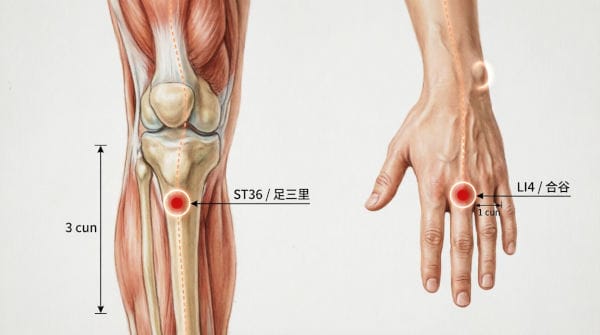
ST36 (Zusanli): The Point of Longevity
Known in Chinese as Zusanli, or “Three Leg Miles,” ST36 is one of the most widely studied and respected points in traditional medicine. It sits approximately three cun below the outer depression beneath the kneecap, about one finger-width lateral to the sharp front edge of the shinbone.
Historically, travelers and soldiers stimulated this location to restore stamina and walk long distances without fatigue, which directly inspired its name. In classical practice, it tonifies the Spleen and Stomach, nourishes Qi and Blood, and strengthens the body’s defensive energy.
Modern clinical research aligns with these traditional applications, showing that ST36 stimulation positively influences digestive motility, modulates immune cell activity, and supports recovery from chronic fatigue. Practitioners frequently use it to soothe gastrointestinal discomfort, regulate inflammatory responses, and rebuild vitality after prolonged stress or illness.
LI4 (Hegu): The Master Point for Head and Pain
LI4, or Hegu, meaning “Joining Valley,” is located on the back of the hand in the fleshy web between the thumb and index finger, directly over the radial side of the second metacarpal bone.
It belongs to the Large Intestine meridian and has long been recognized for its powerful ability to clear blockages affecting the head, face, and neck. Traditional texts describe it as a primary point for expelling external wind, reducing fever, and relieving tension.
In contemporary practice, it is routinely used to manage migraines, sinus pressure, toothaches, and jaw tightness. Clinical studies also highlight its capacity to calm sympathetic nervous system overactivity, making it highly effective for stress-related facial tension.
A critical safety consideration accompanies this point: LI4 strongly influences uterine tone and promotes downward Qi movement. For this reason, it is strictly contraindicated during pregnancy unless specifically administered by a licensed professional managing labor induction.
| Point Name | Meridian | Location (Simplified) | Traditional Use | Modern Application | Safety Note |
| ST36 (Zusanli) | Stomach | 3 cun below kneecap, lateral to shinbone | Tonifies Qi, strengthens digestion | Immune support, fatigue recovery | Generally safe for all |
| LI4 (Hegu) | Large Intestine | Web between thumb and index finger | Clears head/face blockages, reduces pain | Migraine relief, stress reduction | Avoid during pregnancy |
| PC6 (Neiguan) | Pericardium | 2 cun above wrist crease, between tendons | Calms heart, harmonizes stomach | Nausea relief, anxiety support | Safe with gentle needling |
| SP6 (Sanyinjiao) | Spleen | 3 cun above inner ankle bone | Nourishes blood, regulates reproduction | Hormonal balance, sleep support | Avoid during pregnancy |
Personalized Point Selection in Practice
Acupuncture is never a standardized checklist. Skilled practitioners design treatment plans by weaving together local, distal, and empirical points to match each patient’s unique physiological state.
Local points are placed near the area of discomfort to improve tissue circulation and reduce localized inflammation. Distal points are chosen further along the same meridian to guide energy flow and address systemic imbalances from a distance.
Empirical points carry generations of clinical validation for specific conditions, such as using certain back-shu locations for chronic organ weakness or extra-meridian points for acute stress responses.
By combining these categories, practitioners create a highly individualized strategy that respects the body’s current needs, targets root causes, and adapts as healing progresses across multiple sessions.
The Concept of De Qi: What to Feel During Treatment
The term De Qi (得气) translates literally as “arrival of Qi” or “obtaining the energy.” In classical acupuncture texts, it describes the moment when the needle has successfully engaged the body’s vital force and the therapeutic process truly begins.
Historical documents like the Lingshu chapter of the Huangdi Neijing emphasize that needling without achieving De Qi is like fishing without feeling a bite—the technique may be correct, but the essential connection has not been made.
For practitioners, De Qi serves as a critical treatment marker, confirming that the needle is properly positioned and that the meridian is responding. It is not merely a physical sensation but a dynamic interaction between practitioner intent, needle technique, and the patient’s internal flow.

Common Sensations Patients Experience
When De Qi arises, patients typically report a distinct cluster of sensations that differ from sharp pain or simple pressure. The most commonly described feelings include a dull, spreading ache around the needle site; a sense of heaviness or fullness, as if the area is gently sinking; mild distension, similar to a soft blooming sensation beneath the skin; subtle tingling or electric-like warmth that may travel slightly along the meridian pathway; and occasionally a localized feeling of warmth or coolness.
These sensations are generally mild, tolerable, and often described as “strangely comforting.” Importantly, sharp, stabbing, or shooting pain is not De Qi and should be communicated to the practitioner immediately for adjustment.
De Qi in Clinical Practice vs. Modern Research
In traditional clinical practice, achieving De Qi is considered essential for optimal therapeutic outcomes. Practitioners use subtle lifting, thrusting, and rotating techniques to elicit and modulate this response, tailoring the intensity to the patient’s constitution and treatment goals.
Modern research has begun to map these subjective experiences onto measurable physiological changes. Studies using functional MRI and heart rate variability analysis show that De Qi correlates with activation in brain regions associated with pain modulation and autonomic regulation, particularly the hypothalamus and limbic system.
The sensation appears to trigger a shift from sympathetic (stress) dominance toward parasympathetic (rest-and-digest) activity, supporting the traditional view that De Qi facilitates systemic rebalancing.
Researchers also note that the mechanical winding of connective tissue around the needle during manipulation generates bioelectrical signals that may explain the spreading, deep sensations patients describe.
| Sensation Type | Typical Description | What It May Indicate | When to Alert Practitioner |
| Dull ache | Deep, spreading pressure around needle | Healthy De Qi response | If sharp or worsening |
| Heaviness | Limb feels weighted or grounded | Qi engagement in meridian | If accompanied by numbness |
| Tingling | Mild electric or warm sensation | Nerve activation, circulation shift | If radiating painfully |
| Warmth/Coolness | Localized temperature change | Autonomic regulation in progress | If burning or uncomfortable |
| Sharp pain | Sudden, stabbing, or shooting | Needle may need repositioning | Always report immediately |
What If You Don’t Feel De Qi?
Not every patient experiences De Qi in the same way, and absence of strong sensation does not necessarily mean the treatment is ineffective. Individual sensitivity varies based on factors like tissue density, nervous system reactivity, hydration levels, and even emotional state. Some people naturally have a higher threshold for internal sensation, while others feel responses more readily.
Practitioners are trained to recognize subtle signs of De Qi beyond patient report, such as slight tissue tightening around the needle or changes in pulse quality. If De Qi is not initially present, the acupuncturist may adjust needle depth, angle, or manipulation technique, or select alternative points that respond more readily for that individual.
In certain gentle styles of acupuncture, minimal sensation is intentional, particularly for sensitive patients or pediatric care. Open communication during your session allows the practitioner to fine-tune the approach so that treatment remains both comfortable and effective.
Traditional Chinese Medicine offers a rich, practical approach to understanding your body and supporting your well-being in everyday life.
Acupuncture Safety: What Every Patient Should Know
Safety in acupuncture begins with choosing a properly trained and licensed practitioner. In most regions, legitimate acupuncturists complete accredited graduate-level programs that include extensive study of anatomy, physiology, point location, needle technique, and clinical internship hours.
Licensing bodies—such as the National Certification Commission for Acupuncture and Oriental Medicine (NCCAOM) in the United States or equivalent regulatory colleges in other countries—establish clear competency benchmarks and require ongoing continuing education.
Before booking a session, verify that your practitioner holds current licensure and has completed training recognized by your local health authority. This foundational step ensures they possess the knowledge to treat you safely and respond appropriately to any unexpected reactions.

Hygiene and Equipment Protocols
Modern acupuncture adheres to strict infection-control standards. Reputable clinics use only single-use, pre-sterilized, hair-thin filiform needles that are disposed of immediately after each session in designated sharps containers.
Treatment tables should be covered with fresh paper or sanitized between patients, and practitioners must wash hands or use medical-grade sanitizer before handling needles. The treatment environment should appear clean, organized, and well-lit.
If you ever observe reusable needles, unclear storage practices, or inconsistent sanitation, it is appropriate to ask questions or seek care elsewhere. These protocols are non-negotiable safeguards that protect both patient and practitioner.
Contraindications and Precautions
While acupuncture is gentle and low-risk for most people, certain health conditions require modified techniques or temporary avoidance. Individuals with bleeding disorders, those taking anticoagulant medications, or people with severe osteoporosis may need shallower needling or alternative point selections to minimize bruising or tissue stress.
Patients with pacemakers should inform their practitioner, as electro-acupuncture (which uses mild electrical current) may interfere with device function. Pregnancy warrants special attention: points like LI4 and SP6 are generally avoided during gestation due to their potential influence on uterine activity.
Additionally, if you take medications that affect pain perception, immune response, or blood pressure, share this information during your intake. After treatment, most people resume normal activities immediately, but practitioners often recommend avoiding intense exercise, alcohol, or heavy meals for a few hours to allow the body to integrate the session’s effects.
| Health Condition | Precaution Needed | Practitioner Adjustment |
| Bleeding disorder / anticoagulants | Risk of bruising or prolonged bleeding | Shallower needling; avoid high-bleed-risk points |
| Pacemaker or implanted device | Electro-acupuncture may interfere | Use manual needling only; avoid electrical stimulation |
| Pregnancy | Certain points may stimulate uterine activity | Avoid LI4, SP6, BL67; use pregnancy-safe protocols |
| Severe osteoporosis | Fragile bones require gentle approach | Minimal insertion depth; avoid strong manipulation |
| Anxiety or needle sensitivity | Heightened startle response possible | Use thinner needles; prioritize calming points first |
Managing Expectations and Minor Side Effects
Acupuncture is generally well-tolerated, and most patients experience only mild, short-lived responses. It is normal to feel relaxed, slightly tired, or emotionally calm after a session—signs that your nervous system is shifting toward rest and repair. Minor bruising, a small drop of blood at a needle site, or temporary soreness may occur but typically resolve within a day.
Rarely, some individuals report brief lightheadedness or heightened sensitivity. These reactions are usually harmless and subside quickly with rest and hydration. However, contact your healthcare provider if you experience persistent pain, signs of infection (redness, warmth, swelling that worsens), numbness that does not resolve, or any symptom that concerns you. Open communication with your acupuncturist before, during, and after treatment helps ensure your comfort and safety.
How to Find a Qualified Acupuncturist
Locating a trustworthy practitioner is straightforward when you know what to look for. Start by checking your country’s or state’s licensing board website to confirm a provider’s credentials and standing.
During a preliminary consultation, ask about their training background, experience with your specific concern, and approach to safety and hygiene. A qualified acupuncturist will welcome these questions, explain their process clearly, and conduct a thorough health intake before treatment.
Be cautious of red flags such as practitioners who guarantee cures, discourage conventional medical care, use non-sterile or reusable needles, or pressure you into lengthy prepaid packages without assessment. Choosing a licensed, transparent, and communicative professional not only enhances safety but also builds the trust essential for effective, personalized care.
| Normal Response | Typical Duration | Self-Care Tip | Warning Sign (Contact Provider) |
| Mild fatigue or relaxation | 2–24 hours | Rest, hydrate, light meal | Exhaustion lasting >48 hours |
| Small bruise at needle site | 1–3 days | Cold compress first day | Expanding redness, warmth, or pus |
| Temporary soreness | Few hours | Gentle stretching, warm bath | Sharp pain or numbness that persists |
| Emotional release (tears, calm) | During or shortly after session | Journaling, quiet time | Overwhelming distress or panic |
End Words
Acupuncture stands as a remarkable bridge between ancient Chinese wisdom and contemporary physiological science. What originated as a meticulous system of meridian mapping and Qi regulation over two millennia ago now aligns closely with modern understanding of neurobiology, connective tissue mechanics, and immune regulation.
Rather than contradicting one another, these perspectives enrich the practice: traditional diagnostics provide a holistic framework for identifying root imbalances, while current research validates how precise needle stimulation prompts measurable shifts in pain modulation, circulation, and nervous system regulation. This dual foundation ensures that acupuncture remains both culturally grounded and clinically relevant in today’s healthcare landscape.
Because the practice involves direct interaction with the body’s delicate physiological systems, partnering with a licensed, properly trained acupuncturist is essential. Accredited practitioners bring years of structured education in anatomy, point selection, and safety protocols, guaranteeing that each session is both effective and secure.
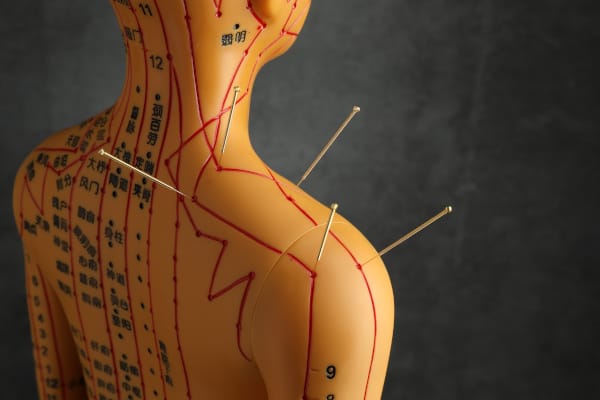
Equally important is maintaining open, honest communication throughout your care. Sharing your complete health history, describing your sensations during treatment, and asking questions about technique or point selection allows your practitioner to adapt each visit to your evolving needs. This collaborative dynamic transforms acupuncture from a passive procedure into an active, personalized healing partnership.
Ultimately, acupuncture delivers the most lasting benefits when integrated into a broader, well-rounded wellness routine. It is not a standalone cure but a supportive therapy that works best alongside nourishing nutrition, consistent movement, restorative sleep, and conventional medical care when appropriate.
By honoring both time-tested principles and your individual health goals, you can harness acupuncture’s full potential to restore balance, build resilience, and sustain long-term vitality. Whether you are addressing a specific condition or simply nurturing everyday well-being, thoughtful and consistent practice remains the key to unlocking its true value.
*Note: This article is for educational purposes. Consult a licensed TCM practitioner or healthcare provider for personal medical advice.*
Traditional Chinese Medicine offers a rich, practical approach to understanding your body and supporting your well-being in everyday life.
References & Further Reading
- Han J. “Acupuncture and endorphins.” Neuroscience Letters. 2004
- Liu X, et al. “Mechanism, research progress and warning of the effects of acupuncture at Zusanli point (ST36) on pharmacokinetics: A review.”
- Wang LP, et al. “Efficacy of electroacupuncture at Hegu (LI4) and Taichong (LV3) for migraine.”
- Kong J, et al. “Acupuncture needling sensation: the neural correlates of deqi using fMRI.”
- Ernst E, White AR. “Prospective studies of the safety of acupuncture: a systematic review.”
- Chan MWC, et al. “Safety of acupuncture: overview of systematic reviews.”
- Carlsson, C. (2007). Acupuncture Mechanisms.
- Kwokming James Cheng, “Neurobiological Mechanisms of Acupuncture for Some Common Illnesses: A Clinician’s Perspective”
- Irene Lund, Thomas Lundeberg, “Mechanisms of acupuncture”
- Lijun He, Danghan Xu, Chao Jia, Nuo Xu, Lizhu Lin, Jietao Lin.” Effect of Fatigue Three-Needle acupuncture therapy in a patient with cancer-related fatigue”
Stay in Touch
 Join our newsletter by using the forms on this website or click here!
- Follow us on Google News
- Follow us on Facebook



Featured Image from Depositphotos
Share it!