
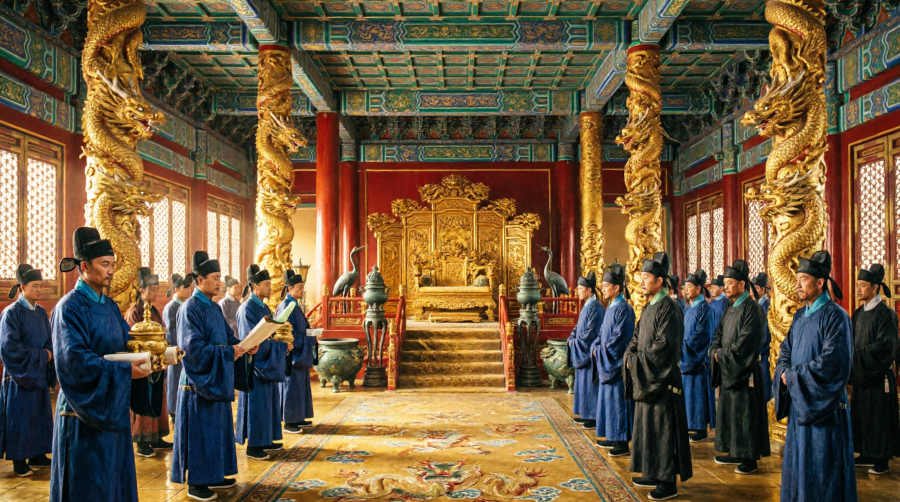
Throughout the long tapestry of Chinese history, few groups have held a position as unique, complex, and frequently misunderstood as the imperial eunuchs. To modern readers, the practice of castration may seem distant, yet within the framework of ancient Chinese statecraft, it developed into a highly structured and deliberately maintained institution.
For more than two millennia, these men lived and worked behind the high walls of the imperial palace, serving as the emperor’s closest attendants while navigating a delicate space between absolute servitude and remarkable political influence.
In traditional Chinese society, family continuity and filial piety were considered foundational virtues. Castration directly contradicted these Confucian ideals, which is precisely why imperial rulers recognized its strategic value. Because eunuchs could not father children or establish powerful family lineages, they posed no threat of founding rival dynasties or shifting court loyalties through blood ties.
Emperors relied on this reality to build a class of officials whose personal fortunes were entirely bound to the throne. What began as a form of criminal punishment and a practice applied to war captives gradually transformed into a formalized court system that touched nearly every aspect of imperial administration, from treasury management and military command to harem oversight and diplomatic missions.
The story of Chinese eunuchs is far more than a tale of palace intrigue or historical controversy. It reflects the practical realities of how emperors maintained control, how bureaucratic systems adapted, and how individuals navigated extraordinary circumstances within a rigid social hierarchy.
In the following sections, we will explore how the eunuch system originated, trace its political peaks across the Han, Tang, and Ming dynasties, examine the daily rituals and educational training that shaped their careers, and follow the institution’s careful regulation and eventual decline during the Qing era.
By looking closely at their lives and legacies, we can better understand the hidden mechanisms that kept China’s imperial courts functioning for centuries.
Historical Origins and Early Court Integration
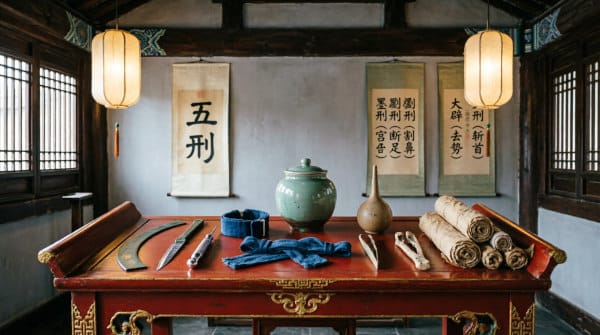
The earliest formal presence of eunuchs in China traces back to the ancient legal codes known as the Five Punishments (五刑, wǔ xíng). Established during the early dynastic periods and refined through the Zhou era, this system structured corporal and capital penalties to maintain social order.
Alongside tattooing, nose-cutting, foot amputation, and execution, castration (宫刑, gōngxíng) served as one of the most severe non-lethal sanctions. Originally reserved for serious offenses such as treason, rebellion, or adultery, it carried a dual purpose: it punished the offender while permanently removing their ability to continue a family line.
Over time, imperial administrators recognized a practical advantage in this penalty. Rather than executing every convicted individual, rulers could redirect castrated men into palace service, transforming a harsh legal sentence into a structured labor pool. This shift laid the groundwork for castration to evolve from a purely punitive measure into an organized institution tied directly to the imperial household.
| Punishment (Chinese) | English Name | Typical Offenses | Physical Consequence |
| 墨刑 (Mòxíng) | Tattooing | Minor theft, fraud | Permanent facial/body markings |
| 劓刑 (Yìxíng) | Nose-cutting | Assault, rebellion | Removal of nose |
| 刖刑 (Yuèxíng) | Foot amputation | Desertion, serious crimes | Loss of one or both feet |
| 宫刑 (Gōngxíng) | Castration | Treason, adultery, political crimes | Removal of reproductive organs |
| 大辟 (Dàpì) | Death penalty | High treason, regicide | Execution |
Confucian Philosophy and the Concept of Bodily Integrity
Understanding the cultural weight of castration requires looking at traditional Chinese values, particularly Confucian teachings on filial piety. The Classic of Filial Piety famously states that one’s body, hair, and skin are gifts from one’s parents, and harming them is considered a profound breach of duty. Within this moral framework, castration represented the ultimate rupture of family continuity and ancestral reverence.
Because eunuchs could no longer produce heirs or properly honor their lineage, they existed outside the standard kinship networks that structured ancient Chinese society.
Paradoxically, this very social displacement became a political asset. Emperors realized that men stripped of family ties and traditional status would have no alternative loyalty base.
Their survival, comfort, and advancement depended entirely on imperial favor. This philosophical and social isolation created a uniquely dependent class of servants—one that rulers could trust to manage sensitive inner-court matters without the complications of competing family alliances or hereditary ambitions.

Early Recruitment Practices and Initial Administrative Roles
In the earliest centuries of Chinese state formation, palace eunuchs were drawn from three main sources: convicted criminals, prisoners of war captured during border campaigns, and tribute boys sent by neighboring tribes or conquered territories.
Young captives were especially valued because castration performed before adulthood typically resulted in fewer health complications and allowed for longer service lives. Once inside the palace walls, these men began as low-ranking attendants, tasked with maintaining living quarters, delivering messages, and managing daily logistics.
Their most distinctive advantage, however, was unrestricted access to the inner quarters of the imperial residence. Since traditional male officials were strictly forbidden from entering the emperor’s private living spaces and the concubines’ quarters, eunuchs naturally became the essential bridge between the outer court bureaucracy and the inner royal household.
As their proximity to the emperor grew, so did their responsibilities. They gradually took on record-keeping, treasury oversight, and ritual coordination. This steady expansion of duties marked the transition from forced laborers to trusted administrative figures, setting the stage for their eventual political influence in later dynasties.
The First Political Era: Han Dynasty Factions
During the Han Dynasty (206 BCE–220 CE), the eunuch system matured from a punitive measure into a calculated instrument of imperial governance. A significant portion of palace eunuchs originated from border campaigns, where young boys from non-Han tribes were captured, castrated, and brought into the imperial palace.
This practice served multiple strategic purposes. First, these youths had no existing family networks within the capital, reducing the risk of factional collusion. Second, their inability to father children meant they could not establish rival dynastic lines—a constant concern for emperors navigating complex court politics. Third, their complete dependence on imperial patronage fostered intense loyalty.
Over time, Han rulers began assigning these trusted servants to sensitive administrative roles: managing palace records, overseeing imperial correspondence, and supervising treasury operations.
Because traditional scholar-officials were barred from the inner quarters, eunuchs became the emperor’s indispensable link to the private sphere of court life. This proximity, initially a logistical convenience, gradually evolved into a source of considerable political leverage.
The Ten Attendants and Shifting Court Power Dynamics
By the late Eastern Han period, eunuch influence had expanded beyond household management into the heart of state governance.
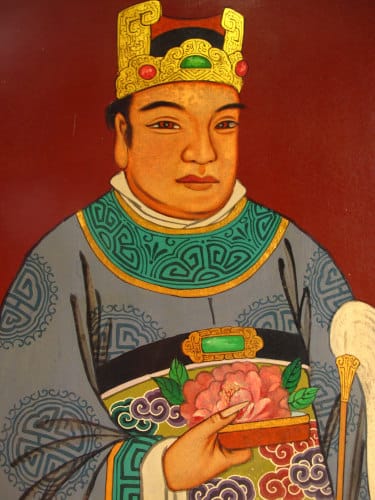
During the reign of Emperor Ling (r. 168–189 CE), a powerful faction known as the Ten Attendants (十常侍, shí chángshì)—though historically composed of twelve core members—rose to prominence. These eunuchs mastered the art of court navigation, using their access to the emperor to marginalize rival ministers, manipulate appointments, and accumulate vast personal wealth.
They skillfully exploited Emperor Ling’s disinterest in daily administration, presenting themselves as loyal intermediaries while systematically consolidating control over military commissions and regional inspectorates. Their actions, however, deepened governmental corruption and exacerbated popular discontent.
Many historians link their mismanagement to the outbreak of the Yellow Turban Rebellion in 184 CE, a massive peasant uprising that severely weakened central authority. As the Han state faltered, the Ten Attendants tightened their grip, creating a volatile cycle in which imperial dependence on eunuchs further destabilized the very system they were meant to protect.
Palace Massacres and the Collapse of the Eastern Han
The tension between eunuch factions and traditional scholar-officials reached a breaking point in 189 CE following Emperor Ling’s premature death. His thirteen-year-old son, Emperor Shao, ascended the throne under the regency of General He Jin and Empress Dowager He—both staunch opponents of eunuch dominance.
Fearing loss of power, the Ten Attendants orchestrated He Jin’s assassination inside the palace. This act triggered immediate retaliation: He Jin’s allies, including the warlord Dong Zhuo, stormed the capital, massacring thousands of eunuchs regardless of rank or involvement. The brutal purge effectively ended the Ten Attendants’ rule but also shattered the already fragile Han administration.
With the central government in disarray, Dong Zhuo seized control of the young emperor, plunging China into decades of warlord conflict that culminated in the Three Kingdoms period. The first great era of eunuch political influence thus concluded not with reform, but with violent collapse—a cautionary chapter that would shape imperial attitudes toward palace servants for centuries to come.
Tang Dynasty Resurgence and Military Control
After centuries of limited influence following the Han Dynasty’s collapse, eunuchs reemerged as significant political actors during the Tang Dynasty (618–907 CE).
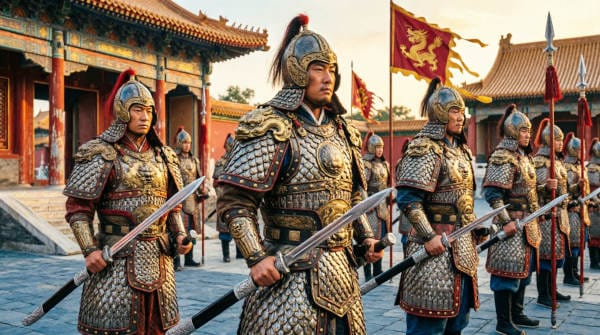
A pivotal moment came in 784 CE, when Emperor Dezong, shaken by military rebellions and regional warlord challenges, placed the elite Shence Army (神策军, Shéncè Jūn)—also known as the Army of Divine Strategy—entirely under eunuch command.
Stationed in the western capital of Chang’an, this force served as the emperor’s personal guard and a rapid-response military unit. By entrusting its leadership to palace eunuchs, the throne aimed to create a loyal counterweight to potentially disloyal frontier generals.
This decision, however, had far-reaching consequences. With direct control over a professional standing army, eunuchs gained unprecedented leverage within court politics.
They could now protect their interests through military force, intimidate rival officials, and influence imperial decisions with tangible backing. What began as a defensive measure to stabilize the throne gradually transformed into a structural shift that empowered eunuchs to shape Tang governance from within.
The Sweet Dew Incident and Failed Imperial Purges
By the mid-9th century, eunuch dominance had grown so pronounced that Emperor Wenzong (r. 826–840 CE) resolved to reclaim imperial authority. In late 835 CE, he conspired with his trusted chancellor, Li Xun, and advisor Zheng Zhu to eliminate the most powerful eunuch factions in a single, decisive strike.
Their plan—later known as the Sweet Dew Incident (甘露之变, Gānlù zhī Biàn)—centered on luring key eunuchs to a ceremonial gathering where imperial soldiers would ambush and execute them. According to historical accounts, the plot unraveled when a sudden gust of wind lifted a tent curtain during the assembly, revealing armed troops lying in wait.
Alerted to the trap, the eunuchs swiftly mobilized the Shence Army under their command. They seized Emperor Wenzong, declared Li Xun a traitor, and launched a brutal counter-purge. Over a thousand officials, scholars, and soldiers suspected of supporting the chancellor were executed. Li Xun and Zheng Zhu were captured and killed, while Emperor Wenzong spent his remaining years under effective house arrest, stripped of real power.
This failed coup not only cemented eunuch control over the Tang court but also demonstrated how military authority could override even the emperor’s will when placed in the hands of palace insiders.
Eunuch-Dominated Successions and Late Tang Fragmentation
In the decades following the Sweet Dew Incident, eunuchs assumed de facto control over imperial succession. With the authority to issue edicts in the emperor’s name, they selected, enthroned, and occasionally deposed monarchs based on their own political calculations.
This period saw a rapid turnover of rulers, many of whom were young, inexperienced, or deliberately kept passive to ensure eunuch dominance. While this arrangement provided short-term stability within the palace, it exacerbated broader governmental dysfunction.
Regional military governors (jiedushi) grew increasingly autonomous, ignoring central directives and withholding tax revenues. Peasant uprisings, most notably the Huang Chao Rebellion (874–884 CE), further eroded Tang authority. Eunuch factions, preoccupied with internal rivalries and self-preservation, proved unable to coordinate an effective response.
By the early 10th century, the dynasty existed in name only. In 903 CE, the warlord Zhu Wen (later founder of the Later Liang) entered Chang’an and ordered the massacre of the remaining powerful eunuchs, effectively ending their political era.
The Tang Dynasty formally collapsed in 907 CE, ushering in the fragmented Five Dynasties and Ten Kingdoms period. The Tang experience served as a stark lesson: when eunuchs controlled both palace access and military force, the balance of imperial power could tip irreversibly toward internal domination and systemic decline.
Song and Yuan Dynasties: Restriction and Adaptation
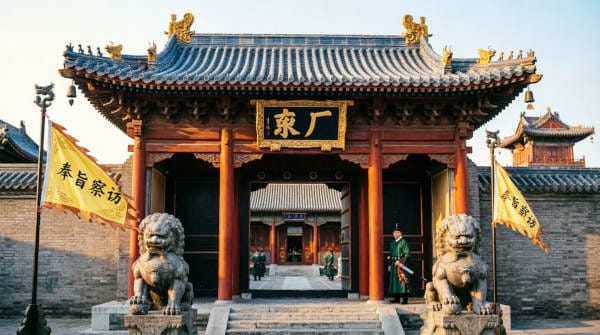
The founding of the Song Dynasty in 960 CE marked a deliberate effort to correct the administrative imbalances of previous eras. Emperor Taizu, acutely aware of how eunuch factions had contributed to the collapse of the Tang Dynasty, issued clear edicts restricting palace servants from holding military commands or participating in state decision-making.
Eunuchs were reassigned to domestic duties, focusing on palace maintenance, ritual preparations, and managing imperial households. This policy successfully minimized their political footprint for much of the Northern Song period. However, the system was not entirely immune to exceptions. As court politics grew more complex, certain eunuchs gradually regained influence through specialized skills or close personal ties to the throne.
The most notable example is Tong Guan, a eunuch general who rose to prominence under Emperor Huizong. Commanding military campaigns and overseeing border defenses, Tong Guan’s career demonstrated that imperial prohibitions could be bypassed when rulers valued immediate results over administrative tradition.
Other figures leveraged their proximity to the emperor to influence scholarly appointments and court patronage. These cases reveal a recurring pattern in Chinese governance: even strict institutional safeguards could be softened by an emperor’s personal preferences or pressing state needs.
Yuan Diplomatic Usage and Gradual Cultural Integration
When the Mongols established the Yuan Dynasty in the late 13th century, they brought a distinctly different approach to palace administration. Traditional Mongol and Central Asian governance relied heavily on tribal administrators, military commanders, and foreign advisors, leaving little room for the eunuch system that had flourished under Han Chinese dynasties.
Initially, castrated men in the Yuan court served limited roles, often appearing as palace attendants, workshop supervisors, or diplomatic couriers moving between regional courts. Their primary value lay in logistics and ceremony rather than governance.
As the Yuan rulers spent more time governing China proper, however, they gradually adopted elements of Chinese bureaucratic practice. The imperial household expanded, and with it, the demand for trusted inner-court staff grew.
Eunuchs began to fill positions managing imperial archives, coordinating palace rituals, and assisting in cross-cultural communications. Though they never approached the political dominance seen in the Tang or later Ming periods, their growing presence reflected a quiet process of cultural adaptation. The Yuan court did not embrace the eunuch system wholesale, but it recognized its utility in maintaining palace order and facilitating administrative continuity.
Related reading: The Most Powerful Women in Ancient China – Opens in new tab
Shifts in Imperial Attitudes Across Fragmented Periods
The transition between the Tang collapse, the Five Dynasties and Ten Kingdoms era, and the rise of the Song illustrates how Chinese rulers continuously recalibrated their approach to palace servants. The late Tang experience left a deep institutional memory: unchecked eunuch power, especially when combined with military control, could paralyze the central government.
Successive short-lived dynasties in the 10th century experimented with strict oversight, often reducing eunuch ranks to manual laborers or eliminating court positions entirely.
When the Song Dynasty unified much of China, it institutionalized these cautious practices into formal law, creating a system where eunuchs remained useful but deliberately constrained. Yet the historical record shows that imperial attitudes were never static.
Rulers consistently weighed two competing needs: the practical convenience of relying on palace insiders for sensitive tasks, and the political risk of allowing those same insiders to accumulate independent authority. This balancing act shaped how each dynasty managed its inner court.
Even when eunuchs were kept at a distance, their proximity to the emperor ensured they remained a visible part of palace life, ready to step into larger roles whenever central authority weakened or imperial trust shifted.
| Dynasty | Period | Political Influence Level | Key Roles | Notable Restriction/Expansion |
| Han | 206 BCE–220 CE | High (late period) | Palace administration, imperial correspondence | Ten Attendants faction dominated late court |
| Tang | 618–907 CE | Very High | Military command (Shence Army), succession control | Eunuchs could depose emperors |
| Song | 960–1279 CE | Low–Moderate | Domestic service, occasional military roles | Early prohibitions; exceptions like Tong Guan |
| Yuan | 1271–1368 CE | Low | Diplomatic couriers, palace logistics | Mongol rulers limited political roles |
| Ming | 1368–1644 CE | Very High | Intelligence (Eastern Depot), naval command, treasury | Institutionalized education and advancement |
| Qing | 1644–1912 CE | Low (mostly) | Manual labor, ritual service, rare advisory roles | Strict regulations; late resurgence under Cixi |
The Ming Dynasty Peak: Institutionalization and Power
The Ming Dynasty (1368–1644) marked the most systematic expansion of eunuch influence in Chinese history. This transformation began under the Yongle Emperor (r. 1402–1424), who seized the throne through a prolonged civil war and quickly recognized the strategic value of palace insiders.
Many eunuchs had secretly supported his campaign, providing crucial intelligence while he was still a regional prince. Once crowned, Yongle rewarded their loyalty by granting them direct access to state affairs, effectively reversing his father Hongwu’s strict ban on eunuch political participation.
He viewed them as a reliable counterbalance to the powerful scholar-official class, whose loyalty often leaned toward Confucian ideals rather than imperial decrees. To further consolidate his authority, Yongle established the Eastern Depot (Dongchang) in 1420. Operated entirely by trusted eunuchs, this agency functioned as a secret police and intelligence network.
Its agents monitored government officials, investigated corruption, and reported directly to the throne. By placing surveillance and enforcement in eunuch hands, Yongle created a parallel power structure that bypassed traditional bureaucratic channels and laid the foundation for centuries of palace-centered governance.
Naval Expeditions, Intelligence Networks, and Imperial Projects
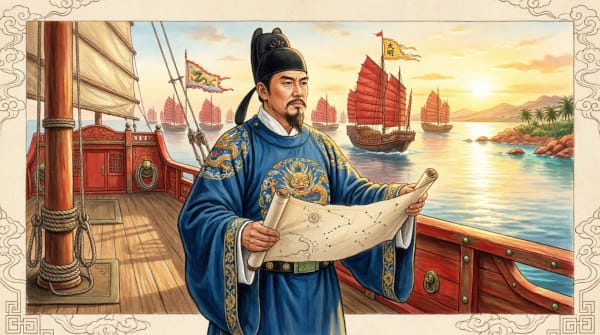
Under Ming patronage, eunuchs stepped into roles that extended far beyond palace walls. The most famous example is Zheng He, a Yunnan-born Muslim who was captured as a boy, castrated, and eventually rose to become the Yongle Emperor’s most trusted admiral.
Between 1405 and 1433, Zheng He commanded seven massive treasure voyages that sailed across the South China Sea, Indian Ocean, and as far as the east coast of Africa. These expeditions served diplomatic, commercial, and strategic purposes, projecting Ming authority, securing tribute relationships, and mapping unknown maritime routes.
At the same time, other eunuchs managed critical domestic projects. They supervised the relocation of the capital from Nanjing to Beijing and played a central role in designing and constructing the Forbidden City. Their involvement in large-scale engineering, tax collection, and military logistics demonstrated how thoroughly eunuchs had been integrated into the empire’s administrative machinery.
The Eastern Depot’s intelligence network further expanded during this period, with eunuch agents stationed across provinces to monitor regional governors, suppress rebellions, and ensure loyalty to the central court. This combination of maritime exploration, infrastructure development, and domestic surveillance turned eunuchs into indispensable pillars of Ming statecraft.
| Name | Dynasty | Primary Role | Major Achievement/Controversy | Historical Legacy |
| Zheng He | Ming | Admiral, Diplomat | Led seven treasure voyages to Africa | Symbol of Ming maritime power |
| Liu Jin | Ming | Secret Police Chief | Controlled Eastern/Western Depots; amassed vast wealth | Executed for corruption; cautionary tale |
| Wei Zhongxian | Ming | Virtual Dictator | Purged Donglin faction; built personal cult | Symbol of eunuch overreach |
| Tong Guan | Song | Military General | Led campaigns against Liao and Jin | Rare example of eunuch military command |
| Li Lianying | Qing | Imperial Confidant | Trusted aide to Empress Dowager Cixi | Embodied late-Qing palace influence |
| Sun Yaoting | Republican | Palace Attendant | Last surviving imperial eunuch | Living bridge to imperial past |
Voluntary Castration and the Economic Motivations Behind It
As eunuch roles expanded, the demand for palace servants grew dramatically, triggering a social phenomenon rarely seen in earlier dynasties: voluntary castration. Unlike previous eras where castration was primarily a legal punishment or applied to war captives, Ming-era families increasingly chose the procedure for their sons as a calculated path to social mobility.
Poverty drove many parents to view palace service as a guaranteed means of survival. Life inside the Forbidden City offered stable food, shelter, and a clear hierarchy where talent and loyalty could lead to wealth and influence.
Successful eunuchs often sent money home, elevated their families’ status, and sometimes secured official ranks. To meet the demand, professional castrators operated in specialized workshops, charging substantial fees for the procedure. These practitioners followed strict protocols, including careful timing, specialized tools, and post-operative care that required patients to avoid urination for several days to prevent infection. Survival rates were reasonably high, and successful candidates underwent months of training before entering palace service.
The practice became so widespread that Ming authorities repeatedly issued edicts banning voluntary castration, fearing labor shortages in rural communities and an overcrowded court. Yet the economic incentives proved too strong to suppress. This grassroots shift transformed the eunuch system from a state-imposed punishment into a voluntary career path, reflecting the intense social pressures and limited opportunities faced by ordinary citizens in late imperial China.
Life Inside the Forbidden City: Rituals, Training, and Duties
Entering palace service required a physical and cultural transition that began long before a candidate crossed the palace gates. The procedure was typically carried out by licensed practitioners who specialized in the operation and post-operative care.
Using a single, carefully curved blade, the surgeon removed both the penis and testicles in one or two precise cuts. Recovery was closely monitored. Candidates were restricted from drinking water for several days to prevent urination, which could reopen the wound or cause fatal infections. A small paper or feather plug was often inserted to keep the urinary tract patent during healing. If the candidate could urinate freely after the bandages were removed, survival was considered secure.
Beyond medical survival, castration carried deep ritual significance. In traditional Chinese belief, entering the afterlife required a complete body. To address this, families or practitioners carefully preserved the severed organs in a ceramic jar or lacquered box, sometimes labeled with the candidate’s name and the date of the procedure.
This container, colloquially referred to as a “treasure” (宝贝), served multiple purposes. It acted as proof of legitimate castration for palace registration, functioned as an identification token for promotions, and was later buried with the eunuch to ensure spiritual wholeness.
Some eunuchs even purchased duplicate containers if their original was lost, underscoring how deeply this practice was woven into both administrative routine and personal belief.
The Inner School Education and Bureaucratic Advancement
Once physically recovered, young eunuchs did not immediately begin administrative work. The Ming Dynasty recognized that literate, well-trained servants were essential for managing a complex imperial household, so it established the Inner School (内书堂, Nèishūtáng) specifically for their education.
Students studied basic literacy, classical Chinese texts, calligraphy, arithmetic, and court etiquette. More advanced pupils learned poetry, music, and the formal protocols required for imperial ceremonies. Teachers were often respected scholar-officials or senior eunuchs who had risen through the ranks.
This educational system fundamentally changed the eunuch’s role within the palace. Literacy allowed them to draft documents, manage household accounts, interpret imperial decrees, and communicate effectively with outer-court ministries. As their skills improved, so did their career prospects.
Talient eunuchs could be assigned to specialized bureaus, supervise palace workshops, or eventually lead entire administrative departments. The Inner School transformed many from manual laborers into competent bureaucrats, giving the imperial court a reliable pool of insiders who understood both palace culture and state administration.
While the Qing Dynasty did not maintain an identical institution, it continued structured training programs that emphasized discipline, literacy, and ritual knowledge, ensuring that palace servants remained capable and orderly.
Harem Management, Artistic Roles, and Daily Administration
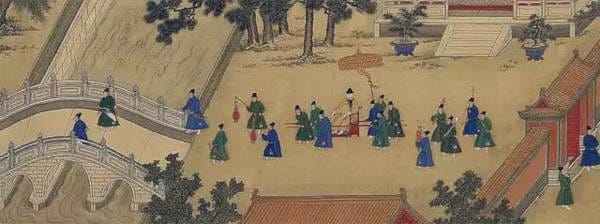
Daily life inside the Forbidden City was highly structured, and eunuchs formed the operational backbone of the imperial household. Their responsibilities spanned a wide hierarchy, from sweeping courtyards and carrying water to managing multi-department budgets.
At the core of their duties was harem management. Eunuchs controlled access to the inner quarters, delivered messages between the emperor, empress, and concubines, supervised palace maids, and coordinated meals, clothing, and health care. Their position required strict discretion, as mishandling information or breaching protocol could result in severe punishment or exile.
Beyond administration, many eunuchs filled artistic and ceremonial roles. They trained as musicians, dancers, and stage performers, providing entertainment during festivals and imperial banquets. Others oversaw the imperial wardrobe, managed textile workshops, prepared ritual offerings, and maintained palace gardens and archives.
The eunuch bureaucracy itself was divided into specialized directorates, each responsible for specific functions such as ceremonies, security, supply chains, or imperial study collections. Promotion depended on performance, loyalty, and seniority, with top-ranking eunuchs wearing distinctive robes, carrying official seals, and issuing directives that carried the weight of the throne.
Through this intricate division of labor, eunuchs kept the imperial household running smoothly while maintaining a quiet but indispensable presence in the rhythms of court life.
| Stage | Duration | Focus Area | Outcome |
| Initial Recovery | 3–4 months | Physical healing, basic obedience | Clearance for palace entry |
| Inner School (内书堂) | 1–3 years | Literacy, classics, calligraphy, etiquette | Qualification for administrative roles |
| Apprenticeship | 1–2 years | Bureau-specific skills (treasury, rituals, security) | Assignment to specialized department |
| Junior Service | Variable | Task execution, loyalty demonstration | Eligibility for promotion |
| Senior Rank | Years of service | Leadership, imperial trust, network-building | Authority to issue directives, manage staff |
Ming Power Struggles and Infamous Eunuch Dictators
The early 16th century marked a dramatic escalation in eunuch political influence under the Zhengde Emperor (r. 1505–1521). Ascending the throne at just fourteen, the young monarch had been raised entirely within the palace walls, surrounded by eunuchs who became his closest companions.
A group of eight powerful servants, known collectively as the Eight Tigers (八虎, Bā Hǔ), quickly leveraged this trust to dominate court affairs. At their head stood Liu Jin, a shrewd operator who controlled the Eastern and Western Depots—the empire’s feared secret police agencies. Through these networks, Liu Jin monitored officials, suppressed dissent, and placed loyal supporters in key administrative and military posts.
He accumulated staggering personal wealth, reportedly storing silver and gold in hidden vaults throughout the palace, while imposing heavy taxes on provinces to fund imperial projects and his own enrichment.
Officials who opposed him faced demotion, torture, or execution. However, Liu Jin’s overreach eventually sparked internal rivalry. A fellow eunuch, fearing marginalization, exposed alleged plots against the emperor. Convinced of betrayal, Zhengde ordered Liu Jin’s arrest. In 1510, he was executed by lingchi (death by a thousand cuts), a punishment reserved for the most severe crimes.
Though the remaining Tigers retained influence for a time, Liu Jin’s fall demonstrated how quickly eunuch power could collapse when imperial favor shifted.
Wei Zhongxian’s Virtual Dictatorship and Factional Warfare
More than a century later, the Tianqi Emperor (r. 1620–1627) presided over another era of extraordinary eunuch dominance. Illiterate and deeply uninterested in governance, Tianqi preferred carpentry to statecraft, leaving daily administration to his trusted nurse, Madame Ke, and the eunuch Wei Zhongxian.
Together, they formed a powerful duo that effectively ruled the Ming court. Wei Zhongxian systematically purged the Donglin faction—a coalition of Confucian scholar-officials who advocated moral governance and bureaucratic integrity.
Using the imperial secret police, he arrested, tortured, and executed dozens of prominent critics, replacing them with loyalists who owed their positions solely to his patronage. His influence grew so absolute that temples were erected in his honor across the empire, and officials addressed him with titles usually reserved for royalty.
Wei amassed immense wealth through bribes, land seizures, and control of state monopolies. Yet his rule depended entirely on Tianqi’s passive support. When the emperor died unexpectedly in 1627, the political landscape shifted overnight.
Chongzhen’s Purge and the Ming Dynasty’s Final Collapse
The new Chongzhen Emperor (r. 1627–1644) inherited a fractured court and a weakening state. Unlike his predecessor, he was determined to restore imperial authority. Within months of ascending the throne, he responded to widespread official petitions by stripping Wei Zhongxian of all titles and honors. Facing imminent arrest and likely execution, Wei committed suicide in 1627.
Chongzhen then launched a sweeping purge of Wei’s faction, executing or exiling hundreds of collaborators. While this move initially restored confidence among scholar-officials, it also destabilized the court’s operational networks. Many experienced administrators were removed, creating vacuums that proved difficult to fill during a period of mounting crises.
Peasant rebellions, led by figures like Li Zicheng and Zhang Xianzhong, gained momentum as famine and heavy taxation fueled popular discontent. Simultaneously, the Manchu forces in the northeast pressed relentlessly against Ming defenses. Chongzhen, though diligent and well-intentioned, struggled with indecision and growing paranoia, frequently rotating ministers and mistrusting both officials and military commanders.
In 1644, Li Zicheng’s rebel army breached Beijing’s walls. Rather than face capture, the Chongzhen Emperor took his own life on a hill behind the Forbidden City. His death marked the effective end of Ming rule in China proper. The eunuch system, once a tool for consolidating imperial power, had become entangled in the very factionalism and administrative decay that contributed to the dynasty’s fall.
The Qing Dynasty: Discipline, Decline, and Late Resurgence
When the Manchu-led Qing Dynasty took control of Beijing in 1644, its leaders carried a cautious perspective shaped by Ming history. Having witnessed how eunuch factions had weakened the previous dynasty, the Qing court deliberately limited their political role.
Under the regency of Prince Dorgon, the number of palace eunuchs was sharply reduced from approximately 70,000 at the Ming collapse to just around 1,000. Their duties were confined largely to manual labor, palace maintenance, and basic household service—far removed from the administrative and military positions they once held.
This restriction reflected a broader Manchu strategy: preserve useful palace functions while preventing any single group from accumulating independent power. Although a brief resurgence occurred under the Shunzhi Emperor, who allowed eunuch Wu Liangfu to help establish the Thirteen Offices for inner-court management, this experiment ended quickly after Shunzhi’s death in 1661.
The offices were disbanded, and eunuchs returned to subordinate roles. For most of the Qing era, the court maintained tight control, ensuring that palace servants remained tools of imperial authority rather than political actors in their own right.
Strict Regulations, Punishments, and the Exceptional Lama Eunuchs
The Qing Dynasty codified eunuch conduct through detailed regulations that emphasized obedience, discipline, and clear boundaries. Punishments for misconduct were severe and precisely graded.
A first-time deserter faced two months of imprisonment and twenty blows with a bamboo rod. A second offense meant confinement on the kang (a heated brick bed) for two months under uncomfortable conditions. A third desertion resulted in banishment to Mukden (modern Shenyang) for forced labor. More serious crimes, such as stealing items belonging to the emperor, could lead to immediate public execution. These rules reinforced a culture of strict accountability within the Forbidden City.
One notable exception to the general restriction on eunuch influence involved Tibetan Buddhist practice. As Qing emperors increasingly embraced Vajrayana Buddhism, a specialized group known as Lama eunuchs was created. These men, trained in religious rituals and liturgy, served as private chaplains within the imperial household, conducting ceremonies and maintaining sacred spaces.
Their role was spiritually significant but politically contained, reflecting the Qing court’s ability to accommodate religious needs without compromising administrative control. During the height of the dynasty under the Qianlong Emperor, the total number of palace eunuchs rose to approximately 3,100 around 1750 to support the expanding ceremonial and domestic demands of a flourishing court. Yet even at this peak, their authority remained carefully circumscribed by imperial decree.
| Offense | First Violation | Second Violation | Third Violation |
| Desertion | 2 months imprisonment + 20 bamboo blows | 2 months confined to kang (heated bed) | Banishment to Mukden for 2.5 years forced labor |
| Neglect of Duty | Heavy beating (two sessions, 3 days apart) | Demotion + additional punishment | Dismissal or exile |
| Theft of Imperial Property | Immediate public beheading | — | — |
| Unauthorized Communication with Officials | Demotion + confinement | Dismissal | Permanent exile |
Empress Dowager Cixi’s Reliance and the Rise of Li Lianying
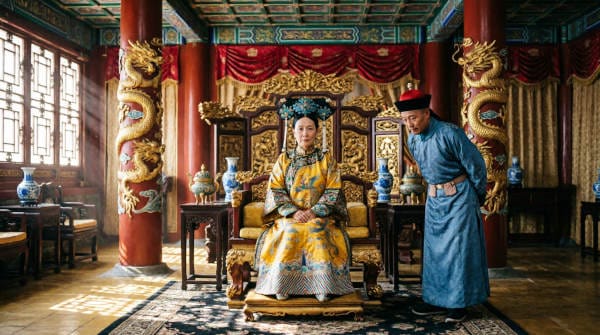
The late 19th century brought a shift in eunuch influence as the Qing state faced internal rebellion, foreign pressure, and institutional decline. When Empress Dowager Cixi consolidated power after 1861, she encountered a practical constraint: as a woman, she could not freely access all areas of the Forbidden City or interact directly with male officials in certain contexts. To navigate these limitations, she increasingly relied on trusted eunuchs as intermediaries, messengers, and personal aides.
The first prominent figure in this circle was An Dehai, who grew close to Cixi and occasionally acted with considerable authority. However, his perceived overreach led to his arrest and public execution in 1869 by the provincial governor Ding Baozhen—a move tacitly supported by Cixi’s political rival, Prince Gong. This incident reinforced the boundaries of eunuch power even during a period of growing dependence.
A more enduring figure emerged in Li Lianying, who initially gained favor through his skill as a hairdresser. His talent for conversation, discretion, and entertainment deepened Cixi’s trust, and he gradually became her most constant companion. While Li never held formal political office, his proximity to the empress dowager allowed him to influence access to her, accept gifts from officials seeking favor, and shape the flow of information within the palace.
After Cixi’s death in 1908, Li was permitted to retire with considerable wealth, living out his days in relative comfort. His career illustrates how, even under a dynasty that formally restricted eunuch authority, personal trust and palace logistics could create pathways for quiet but meaningful influence during times of imperial uncertainty.
The Republican Transition and the End of the System
The Xinhai Revolution of 1911 ended over two millennia of imperial rule, yet the transition away from the eunuch system was neither immediate nor absolute. Under the Articles of Favorable Abdication, the last emperor, Puyi, was permitted to retain his title, reside within the Forbidden City, and maintain a reduced imperial household.
This unique arrangement allowed the court to continue functioning as a semi-autonomous enclave within the new Republic of China. Eunuchs remained essential to daily palace life, managing rituals, household logistics, and the emperor’s personal needs.
However, their numbers had dwindled significantly compared to the Qing peak, and their social status had shifted. No longer backed by imperial law, many eunuchs operated in a legal gray zone, their authority dependent on tradition rather than statute.
For young recruits like Sun Yaoting, castrated in 1911 at age eight, palace service still represented a path to stability amid national upheaval. Yet the broader political landscape had changed: republican ideals, modernizing reforms, and growing public scrutiny placed the entire institution under pressure, signaling that the eunuch system’s days were numbered.
The 1923 Palace Fire and the Mass Expulsion Decree
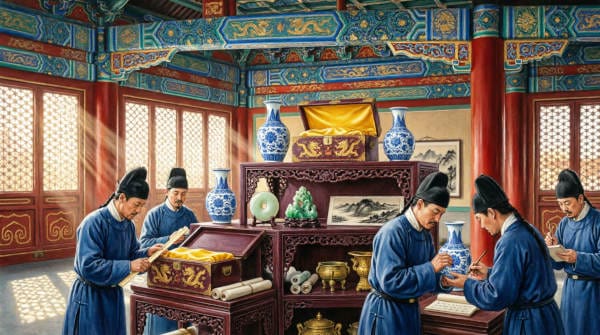
By the early 1920s, the Forbidden City faced mounting challenges. With the imperial court’s budget constrained and oversight weakened, some eunuchs turned to selling palace artifacts to supplement their incomes. Concerned about the loss of cultural treasures, Puyi—advised by his Scottish tutor Reginald Johnston—ordered a comprehensive inventory of the palace collections in 1923.
This directive threatened to expose widespread theft. In response, a fire broke out in the Jianfu Palace garden, destroying numerous buildings and countless artifacts. While the cause remains debated, many historians believe the blaze was deliberately set to conceal evidence of looting.
Outraged by the destruction and determined to restore order, the teenage Puyi issued a decisive decree: nearly all remaining eunuchs would be expelled from the Forbidden City immediately. Within days, over a thousand palace servants were forced to leave the only home many had ever known, stepping into a republican society that offered them little support or recognition.
Only a few dozen trusted attendants, including Sun Yaoting, were retained for essential maintenance. This mass expulsion marked the functional end of the eunuch system as an organized institution, even though the imperial household itself lingered for another year.
Related reading: Ancient Chinese Punishments: Justice or Cruelty? – Opens in new tab
Sun Yaoting’s Journey and the Final Imperial Eunuch
Sun Yaoting’s life encapsulates the twilight of China’s imperial eunuch tradition. Born into poverty in Hebei Province, he was castrated at home in 1911 when his family hoped palace service might secure his future. He entered the Forbidden City in 1917, during Puyi’s reduced court era.
After the 1923 expulsion, Sun remained among the small group of eunuchs tasked with maintaining the palace’s daily operations. When General Feng Yuxiang evicted the imperial household from the Forbidden City in 1924, Sun, like most of his colleagues, returned to civilian life.
He lived quietly through decades of profound social change: the Republican era, the Japanese invasion, the Civil War, and the founding of the People’s Republic. In his later years, Sun became a valuable historical witness, sharing his experiences with researchers and visiting the Forbidden City as a guest rather than a servant.
His final public visit occurred in 1995. Sun Yaoting passed away in 1996 at the age of 94, outliving all his fellow imperial eunuchs. With his death, a living link to China’s imperial past was severed. His life story reminds us that behind the grand narratives of dynasties and revolutions were individual human beings navigating extraordinary circumstances with resilience and dignity.
| Year | Event | Impact on Eunuch System |
| 1911 | Xinhai Revolution; Puyi’s abdication | Imperial court retained in Forbidden City; eunuchs kept for household service |
| 1917 | Sun Yaoting enters palace | One of last recruits; symbol of system’s twilight |
| 1923 | Jianfu Palace fire; inventory ordered | Puyi expels ~1,000 eunuchs to stop artifact theft |
| 1924 | Feng Yuxiang evicts imperial court | Remaining eunuchs dismissed; system functionally ends |
| 1996 | Death of Sun Yaoting | Last living link to imperial eunuch tradition passes |
Cultural Legacy and Historical Reassessment
Throughout Chinese cultural history, eunuchs have occupied a complex space in storytelling, often reflecting society’s anxieties about power, loyalty, and morality. In classical literature, they frequently appear as cunning courtiers whose influence threatens the natural order.
Novels like Romance of the Three Kingdoms dramatize the Ten Attendants as manipulative figures who accelerate the fall of the Han Dynasty, while later Ming and Qing fiction often portrays powerful eunuchs as symbols of corrupt inner-court politics.
Traditional Chinese opera also developed distinct eunuch roles, marked by specific vocal techniques, stylized movements, and costume details that emphasized their unique status between the outer bureaucracy and the inner household.
Yet folklore and regional tales occasionally present a more nuanced view, highlighting eunuchs who demonstrated quiet loyalty, artistic talent, or personal sacrifice. These contrasting portrayals reveal how traditional culture used eunuch figures to explore broader themes: the tension between public virtue and private influence, the fragility of imperial authority, and the human cost of serving at the center of power.
Modern Scholarly Perspectives and Archival Preservation
The historical study of Chinese eunuchs has shifted dramatically in recent decades. Early accounts, often written by Confucian scholar-officials, tended to frame eunuchs through a moral lens, emphasizing their ambition and alleged corruption.
Contemporary historians, however, approach the subject with greater nuance, examining institutional structures, economic motivations, and social mobility. Researchers now analyze palace archives, imperial edicts, and administrative records to reconstruct how eunuchs actually functioned within the bureaucracy.
Institutions like the First Historical Archives of China and the Palace Museum in Beijing have preserved thousands of documents, including daily logs, payroll records, and correspondence that reveal the routine operations of eunuch departments.
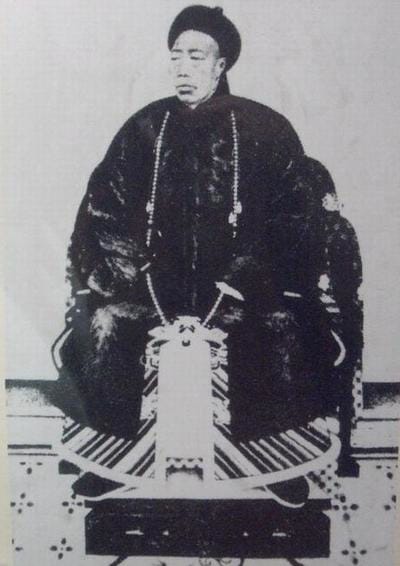
Personal accounts have also become invaluable sources. Memoirs such as The Last Eunuch of China, compiled from Sun Yaoting’s oral history, provide rare firsthand perspectives on palace life, training, and the emotional realities of castration.
By combining archival rigor with human-centered storytelling, modern scholarship has moved beyond caricature, presenting eunuchs as skilled administrators, cultural mediators, and products of a highly structured imperial system.
The Lasting Impact on Chinese Administrative History
The eunuch system left a permanent imprint on the development of Chinese governance. By creating a class of officials whose careers depended entirely on imperial favor rather than family lineage or scholarly examination, emperors established a practical counterweight to the traditional bureaucracy.
This dual structure allowed rulers to bypass formal channels when necessary, manage sensitive palace affairs, and maintain direct control over military and financial resources. Yet the system also demonstrated the risks of concentrating power within an unaccountable inner circle.
Historical cycles of eunuch dominance and subsequent purges highlight recurring challenges in Chinese statecraft: balancing loyalty with oversight, managing insider influence, and preventing administrative decay.
Today, historians and political scholars study the eunuch institution not as a mere curiosity, but as a case study in institutional design, bureaucratic adaptation, and the ongoing negotiation between central authority and administrative elites. Its legacy continues to inform discussions about how states structure trust, monitor power, and navigate the delicate space between public service and personal loyalty.
End Words
The story of Chinese eunuchs is far more than a chronicle of palace intrigue or historical anomaly. It is a window into the practical realities of imperial governance, the delicate balance of power within a complex bureaucracy, and the human experiences of individuals who navigated extraordinary circumstances within a rigid social order.
From their origins in ancient legal codes to their final chapter in the early twentieth century, eunuchs served as both instruments and agents of Chinese statecraft—sometimes reinforcing imperial authority, sometimes challenging it, and always reflecting the tensions inherent in centralized rule.
What emerges from this long history is not a simple narrative of villainy or victimhood, but a nuanced portrait of adaptation and agency. Eunuchs were shaped by the systems that created them, yet they also shaped those systems in return. They managed treasuries, commanded armies, led diplomatic missions, preserved cultural traditions, and kept the daily rhythms of the Forbidden City functioning.
Their lives remind us that history is made not only by emperors and generals, but also by the countless individuals whose labor, loyalty, and choices sustained institutions across centuries.
Today, as we reassess the eunuch legacy through modern scholarship and preserved archives, we gain a deeper appreciation for the complexity of Chinese administrative history. Their story invites us to look beyond moral judgments and consider how societies structure trust, manage insider influence, and balance tradition with change.
In the end, the eunuchs of Imperial China leave us with a lasting lesson: that even those placed at the margins of power can, under the right circumstances, become central to the unfolding of history.
Thank you for joining this exploration of a fascinating and often misunderstood chapter in Chinese culture.
References & Further Reading
- Tsai, Shih-shan Henry. The Eunuchs in the Ming Dynasty. Albany: State University of New York Press, 1995
- Kutcher, Norman A. Eunuch and Emperor in the Great Age of Qing Rule. Berkeley: University of California Press, 2018.
- Dale, Melissa S. Inside the World of the Eunuch: A Social History of the Emperor’s Servants in Qing China. Hong Kong: Hong Kong University Press, 2018.
- Anderson, Mary. Hidden Power: The Palace Eunuchs of Imperial China. Buffalo: Prometheus Books, 1990
- Jia Yinghua. The Last Eunuch of China: The Life of Sun Yaoting. Beijing: China Intercontinental Press, 1992; English ed. 2008 (Aff.link)
- Howard Chiang. How China Became a “Castrated Civilization” and Eunuchs a “Third Sex”
- Chen, Gilbert. “Castration and Connection: Kinship Organization among Ming Eunuchs.” Ming Studies 74 (2016): 27–52.
- Hoeckelmann, Anne. “Eunuchs, Great Clans and Political Reproduction under the Tang.” Journal of Chinese History 4, no. 2 (2020): 215–240.
- Shih-shan Henry Tsai. The Eunuchs in the Ming Dynasty 1995 (Aff.link)
- Rawski, Evelyn S. The Last Emperors: A Social History of Qing Imperial Institutions. Berkeley: University of California Press, 1998.
- Melissa S. Dale. Introduction: The Other Side of Eunuch History
- Dorothee Schaab-Hanke and Achim Mittag. Journal of Asian History
- James Masaki Fujitani. The Emperor’s Personal Foreign Affairs
Stay in Touch
 Join our newsletter by using the forms on this website or click here!
- Follow us on Google News
- Follow us on Facebook