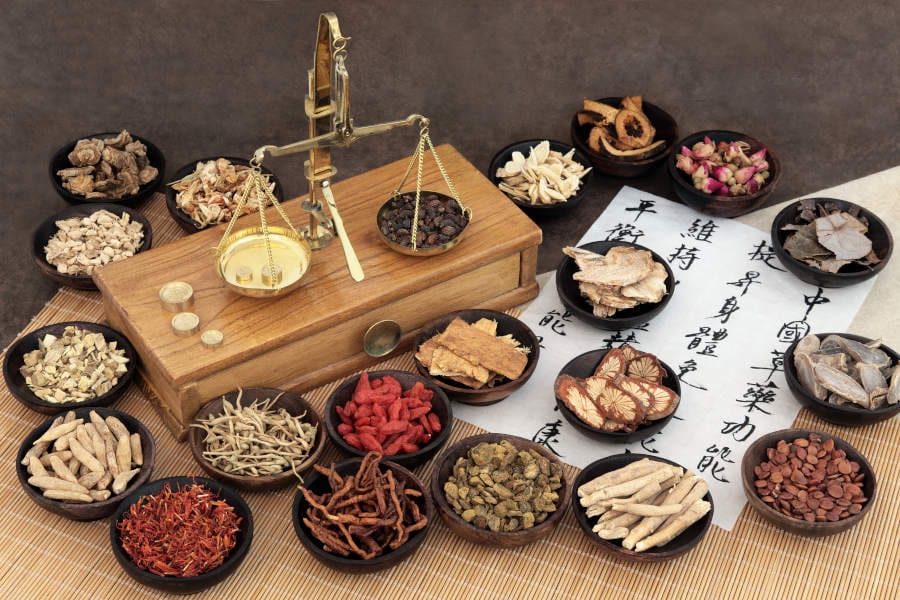
For thousands of years, Traditional Chinese Medicine (TCM) has viewed the human body not as a machine made of isolated parts, but as a miniature universe reflecting the natural world.
At the heart of this ancient healing tradition lies herbal medicine, a profound pharmacopeia rooted deeply in Chinese philosophy. Rather than isolating single chemical compounds to attack symptoms, TCM herbalism seeks to restore harmony between the body and its environment, embodying the core Daoist principle of unity between humanity and nature.
To understand this botanical wisdom, we must look through the lens of Yin and Yang and the Five Elements. In this system, every plant, root, bark, and flower possesses a unique energetic signature.
An herbalist does not merely ask what disease a patient has; they observe the body’s internal climate. They look for excess heat or chilling cold, stagnant energy or deep deficiency. The herbs prescribed are carefully selected to correct these specific imbalances, gently guiding the body back to a state of vibrant equilibrium.
This elegant system relies on a highly structured framework to classify and utilize the natural world. Herbs are categorized by their thermal properties, known as the four natures, and their specific therapeutic actions, defined by the five flavors.
Yet, the true brilliance of TCM lies not in using a single powerful plant, but in the masterful art of combination. Like a general directing an army or a chef balancing a complex dish, a practitioner blends multiple herbs into synergistic formulas.
This approach maximizes healing benefits, minimizes side effects, and addresses the root cause of illness rather than just its branches.
Exploring the logic behind this natural pharmacopeia reveals a deeply intelligent approach to healing. By uncovering the principles of the four natures, the five flavors, and the ancient art of herbal formulation, we can truly appreciate how this timeless tradition continues to nurture health and restore balance today.
The Four Natures (Si Qi): The Thermal Properties of Herbs
In Traditional Chinese Medicine, the “four natures” or Si Qi do not refer to the physical temperature of a plant when you touch it. Instead, they describe the herb’s energetic effect on the body after it is ingested.
This classification is deeply rooted in the philosophy of Yin and Yang. By understanding whether an herb is inherently cooling or warming, practitioners can prescribe remedies that directly counteract the internal climate of a patient’s illness, restoring balance through the principle of opposition.
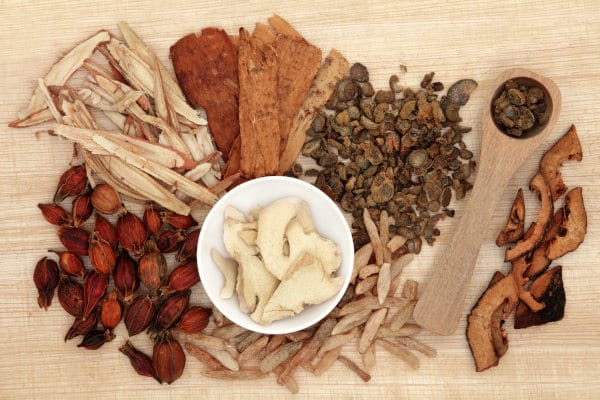
Cold and Cool Natures for Clearing Heat
Herbs classified as cold or cool belong to the Yin category. They act as nature’s internal cooling system, prescribed to clear excess heat, reduce inflammation, and detoxify the body.
When a patient presents with “heat” symptoms—such as a high fever, a red face, intense thirst, restlessness, or a rapid pulse—a practitioner will reach for these cooling botanicals.
For example, honeysuckle flower (Jin Yin Hua) and peppermint (Bo He) are frequently used to soothe sore throats and reduce fevers. These herbs gently draw the heat out of the body’s upper energy centers, providing relief by clearing the pathological fire without damaging the body’s fundamental fluids.
Warm and Hot Natures for Dispelling Cold
Conversely, warm and hot herbs are aligned with Yang energy. They are used to dispel internal cold, stimulate blood circulation, and revitalize sluggish bodily functions.
If a patient suffers from “cold” patterns, characterized by chills, cold limbs, pale skin, fatigue, and poor digestion, these herbs act like an internal hearth to warm the system.
Fresh ginger (Sheng Jiang) and cinnamon twig (Gui Zhi) are classic examples of this category. A warm cup of ginger tea, for instance, is a common household remedy in China used to expel wind-cold at the first sign of a winter chill, warm the stomach, and promote healthy digestion by driving the cold out through gentle perspiration.
The Neutral Nature for Harmonizing the Body
Not all herbs possess a strong thermal bias. The fourth category is the neutral nature (Ping). These herbs neither strongly heat nor cool the body, making them incredibly versatile, gentle, and safe for long-term use.
Neutral herbs are often used to harmonize other ingredients in a complex formula, protect the digestive system, or treat chronic conditions where introducing extreme temperatures could cause further imbalance.
Licorice root (Gan Cao) and Poria mushroom (Fu Ling) are prime examples. They quietly support the body’s core energy, ensuring that the more aggressive warming or cooling herbs do their jobs effectively without causing collateral discomfort to the stomach or other delicate organs.
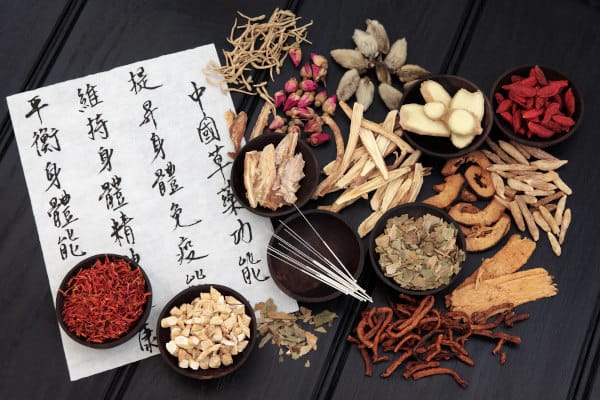
The Five Flavors (Wu Wei): The Taste and Action of Herbs
In Traditional Chinese Medicine, the taste of an herb is far more than a culinary detail; it is a profound indicator of its medicinal function. This concept, known as Wu Wei or the Five Flavors, categorizes herbs into five distinct flavor profiles: pungent, sweet, bitter, sour, and salty.
Deeply intertwined with the Five Elements theory, each flavor corresponds to a specific element and organ network. More importantly, these tastes dictate the specific therapeutic actions of the herbs, guiding their energy to particular parts of the body to correct imbalances.
Pungent: Dispersing and Moving
Often described as spicy or acrid, pungent herbs have a dispersing and moving quality. They are excellent for promoting the circulation of Qi and blood, and for inducing sweating to expel external pathogens.
When you catch a winter chill and drink a hot cup of ginger or peppermint tea, the pungent flavor is working to open your pores, stimulate circulation, and drive the illness out through your skin.
Sweet: Tonifying and Harmonizing
Sweet herbs are the body’s natural nourishers and builders. In TCM, “sweet” does not just mean sugary; it refers to herbs that tonify, harmonize, and moisten the body.
They are primarily used to strengthen the digestive system, replenish vital energy, and relieve muscle spasms or pain. Ingredients like licorice root, ginseng, and jujube dates are classic sweet herbs, often prescribed for fatigue and weakness, or used in formulas to soften the harsh effects of other ingredients.
Bitter: Clearing and Drying
Bitter herbs possess a draining, drying, and descending energy. They are potent remedies used to clear stubborn heat, reduce inflammation, and eliminate excess dampness from the body.
If a patient is dealing with a severe infection, an inflamed skin condition, or digestive stagnation, a practitioner might prescribe bitter herbs like coptis root or rhubarb. These herbs purge the heat downwards and restore clarity to the system.
Sour: Astringing and Containing
While pungent herbs disperse, sour herbs do the exact opposite—they contain and prevent the leakage of the body’s vital substances. The sour flavor has an astringent and consolidating effect, making it highly valuable for preserving the body’s essence.
These herbs are frequently used to stop excessive sweating, control chronic coughs, or halt prolonged diarrhea. Herbs like schisandra berry are prized for their ability to lock in essential fluids and energy.
Salty: Softening and Purging
Salty herbs have a softening and purging action. In nature, salt draws out moisture and breaks down hard structures. Similarly, in the body, salty herbs are used to soften hardened masses, dissipate nodules, and moisten the intestines to relieve constipation.
Derived mostly from the ocean, herbs like kelp, seaweed, and natural sea salt are classic examples, often utilized to treat conditions like goiters, swollen lymph nodes, or severe dryness.
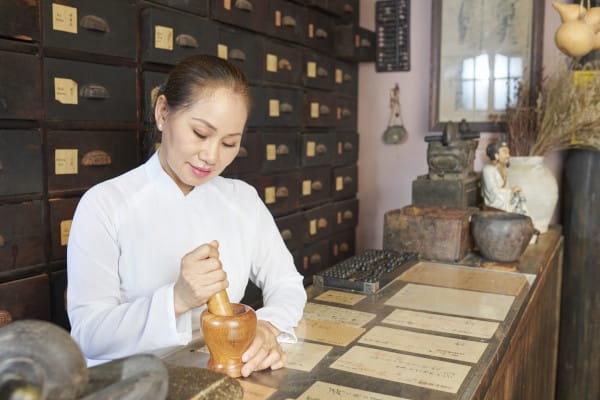
The Art of Synergy: Combining Herbs into Formulas
In Western pharmacology, the focus often lies on isolating a single active chemical compound to target a specific symptom. Traditional Chinese Medicine (TCM) takes a fundamentally different approach. It views complex health issues as multifaceted imbalances that require a multifaceted solution.
Therefore, TCM rarely relies on a single herb. Instead, it embraces the philosophy of synergy, where multiple botanicals are combined to create a combined effect greater than the sum of their individual parts.
Think of a single herb as a solo instrument; when blended into a formula, it becomes part of a harmonious symphony that addresses the root of the disharmony rather than just silencing a single symptom.
To achieve this perfect harmony, ancient practitioners developed a highly structured compositional framework known as Jun, Chen, Zuo, Shi, which translates to Emperor, Minister, Assistant, and Envoy. This hierarchical system ensures every herb in a decoction has a specific, purposeful role.
The Emperor (Jun) is the principal herb that targets the main cause of the disease or the primary symptom. It is usually the most powerful ingredient and often carries the highest dosage in the formula.
The Minister (Chen) supports the Emperor. It may enhance the main therapeutic effect or address secondary symptoms that the Emperor cannot reach alone.
The Assistant (Zuo) plays a crucial protective and balancing role. It might be included to neutralize the toxicity or harshness of the Emperor and Minister herbs, ensuring the formula is safe for the patient’s digestion and overall constitution. It can also treat minor accompanying conditions.
Finally, the Envoy (Shi) acts as the guide and harmonizer. This herb directs the therapeutic effects of the entire formula to a specific meridian or targeted area of the body, while also blending the diverse flavors and energies of the other ingredients into a unified, cohesive blend.
This meticulous method of combining herbs serves two vital purposes: mitigating side effects and enhancing overall efficacy. Some highly effective individual herbs can be too harsh, overly cold, or overly hot, potentially damaging the body’s healthy energy or digestive system if used alone.
By introducing Assistant and Envoy herbs, the formula buffers these extreme properties, protecting the patient’s stomach and vital organs. At the same time, the synergistic interactions between the herbs amplify the desired therapeutic actions. The result is a highly customized, balanced remedy that delivers powerful healing while remaining gentle enough for the body to accept and utilize fully.
Curious to learn more about Traditional Chinese Medicine? 📚
Explore a selection of beginner-friendly and in-depth TCM books and start deepening your understanding today.(Aff.link)👉
From Diagnosis to Decoction: Crafting the Formula
While modern medicine often focuses on identifying a specific disease and applying a standardized treatment, Traditional Chinese Medicine operates on a deeply individualized diagnostic paradigm.
The journey from a patient’s first symptom to their final cup of herbal tea is a meticulous process of observation, analysis, and bespoke creation. This ensures that the medicine perfectly matches the unique biological landscape of the person taking it.
Pattern Differentiation (Bian Zheng Lun Zhi) in Prescribing
The cornerstone of TCM clinical practice is a principle known as Bian Zheng Lun Zhi, which translates to “pattern differentiation and treatment determination.”
Rather than simply naming an illness, a practitioner seeks to identify the underlying “pattern” of disharmony. A pattern is a comprehensive snapshot of the patient’s internal environment at that exact moment, capturing the complex interplay of Yin, Yang, Qi, blood, and the organ networks.
To uncover this pattern, the practitioner relies on the Four Pillars of diagnosis: observing the patient’s complexion and tongue, listening to their breathing and cough, asking detailed questions about their lifestyle, sleep, and digestion, and feeling the subtle qualities of their pulse.
Consider two patients who both visit a clinic complaining of severe headaches. A standardized approach might give them both the same painkiller.
However, through pattern differentiation, the TCM practitioner might discover that the first patient has a red tongue and a rapid pulse, indicating “Liver Fire” blazing upward.
The second patient might have a pale face, a weak pulse, and dizziness, pointing to “Blood Deficiency” failing to nourish the head. Because their root patterns are entirely different, they will receive completely different herbal prescriptions.
Bian Zheng Lun Zhi ensures the treatment targets the true root of the imbalance, not just the shared symptom.
Customizing Blends for the Individual Patient
Because every individual’s pattern is unique, TCM formulas are never truly one-size-fits-all. Once the practitioner identifies the core pattern, they select a classical base formula and then customize it to fit the patient’s specific constitution, age, gender, and even the current season or local climate.
This customization is a dynamic and highly skilled process. The practitioner might adjust the dosages of certain herbs to be more prominent, add new herbs to address a secondary complaint, or remove an ingredient that might clash with the patient’s constitution.
For example, if a patient has a naturally weak digestive system, the practitioner will add extra sweet, neutral herbs to protect the stomach while still treating the primary issue. If the patient is being treated during a particularly damp and humid summer, the practitioner might introduce more aromatic, drying herbs to help the body adapt to the environment.
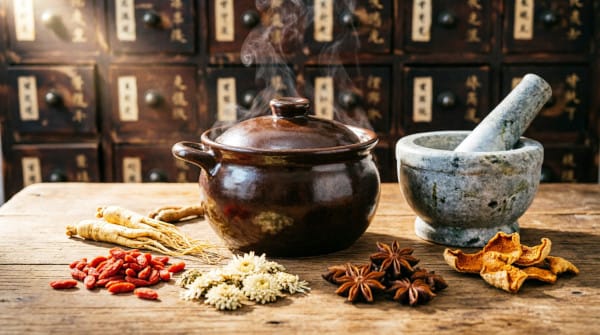
This bespoke approach culminates in the physical preparation of the medicine, known as the decoction. Patients traditionally soak the raw, custom-blended herbs in cold water and then simmer them slowly in a clay or ceramic pot.
This gentle extraction process draws out the complex medicinal properties, filling the home with a rich, earthy aroma. Drinking this warm, personalized herbal tea becomes a mindful daily ritual, reinforcing the profound connection between the patient’s unique biology and the healing power of nature.
End Words
Traditional Chinese herbal medicine is much more than a simple collection of botanical remedies; it is a profound reflection of Chinese philosophy and a deep respect for the natural world.
By understanding the thermal properties of the four natures and the therapeutic actions of the five flavors, we gain insight into a highly logical system of healing.
Furthermore, the art of combining herbs into synergistic formulas highlights a holistic approach that treats the whole person, seeking to restore the delicate balance of the body rather than merely suppressing isolated symptoms.
This ancient pharmacopeia continues to thrive today, beautifully bridging the wisdom of the past with modern wellness.
Disclaimer: As we explore and appreciate these traditional practices, it is crucial to approach them with care and responsibility. Herbal medicines contain powerful, active compounds that can interact with modern pharmaceuticals or affect individuals differently based on their unique constitutions.
Therefore, the information shared in this article is for educational and cultural appreciation purposes only. It is not intended as a substitute for professional medical advice, diagnosis, or treatment.
Always consult with a qualified healthcare provider or a licensed Traditional Chinese Medicine practitioner before starting any new herbal regimen, especially if you are pregnant, nursing, taking medications, or managing a pre-existing health condition.
Traditional Chinese Medicine offers a rich, practical approach to understanding your body and supporting your well-being in everyday life.
References & Further Reading
- “The characterization of traditional Chinese medicine natures and flavors using network pharmacology integrated strategy.” Hong Wang, Wenfeng Wei, Jing Liu, Shuang Zhang, Yunli Zhao, Zhiguo Yu. Journal of Traditional and Complementary Medicine
- “Pattern recognition-based analysis of the material basis of five flavors of Chinese herbal medicines in Lamiaceae”. Chuanyao Z, Xiao W, Gaoxiang S, Qing Z, Feifei BU, Xiaojun Z, Peng W.
- “Synergistic Effects of Chinese Herbal Medicine: A Comprehensive Review of Methodology and Current Research.” Zhou, Xian. Frontiers in pharmacology vol. 7 201.
- “Identifying roles of “Jun-Chen-Zuo-Shi”. Wu, Leihong et al. Chinese medicine vol. 9 24. doi:10.1186/1749-8546-9-24
- “Structural pharmacology of Chinese medicine: technological breakthroughs in decoding multi-target synergy and precision mechanisms.” Wang, Caiyan et al. Advanced biotechnology vol. 4,1 11.
- “Bian zheng lun zhi as a complementary and alternative treatment for menstrual cramps in women with dysmenorrhea: a prospective clinical observation.” Lin, Pin-Yi et al. Evidence-based complementary and alternative medicine : eCAM vol. 2014 (2014).
- “Syndrome differentiation in modern research of traditional Chinese medicine,” Miao Jiang, Cheng Lu, Chi Zhang, Jing Yang, Yong Tan, Aiping Lu, Kelvin Chan. Journal of Ethnopharmacology,
- “TCM Zheng Classification and Clinical Trials.” Lu, Aiping et al. Evidence-based complementary and alternative medicine : eCAM vol. 2013 (2013)
Note: This article is for educational purposes. Consult a licensed TCM practitioner or healthcare provider for personal medical advice.
Stay in Touch
 Join our newsletter by using the forms on this website or click here!
- Follow us on Google News
- Follow us on Facebook



Featured Image from Depositphotos
Share it!