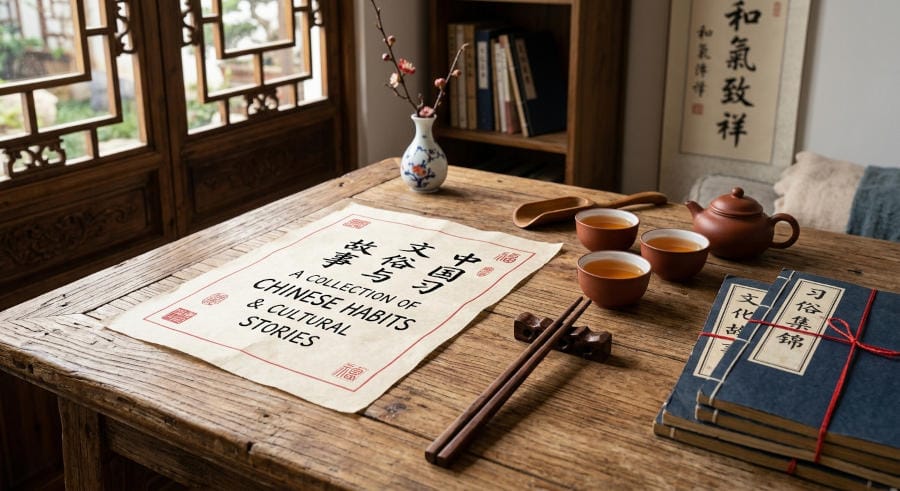
Stepping into China or interacting with Chinese friends often feels like entering a world where everyday actions carry hidden meanings. From the way people greet each other to how they enjoy a simple meal, daily habits in China are deeply rooted in thousands of years of history, philosophy, and social harmony.
For Westerners, some of these practices might seem puzzling or even contradictory at first glance. You might wonder why friends fiercely compete to pay the dinner bill, or why hot water is the preferred drink even in the sweltering summer heat.
However, behind every seemingly unusual custom lies a profound cultural logic. These habits are rarely random; they are carefully designed to show respect, maintain physical balance, or strengthen community and family bonds.
By looking past the surface, we can transform confusion into appreciation and bridge the cultural gap. Let us explore some of the most fascinating Chinese habits that often leave Westerners surprised, and uncover the rich, meaningful stories behind them.
The Art of Dining and Food Culture
Food in China is far more than mere sustenance; it is a cornerstone of social connection, historical philosophy, and expressive hospitality. The dining table is where relationships are forged and cultural values are quietly demonstrated.
Understanding these dining habits offers a delicious window into the Chinese mindset.
Sipping Hot Water in Every Season: Why Ice is the Enemy
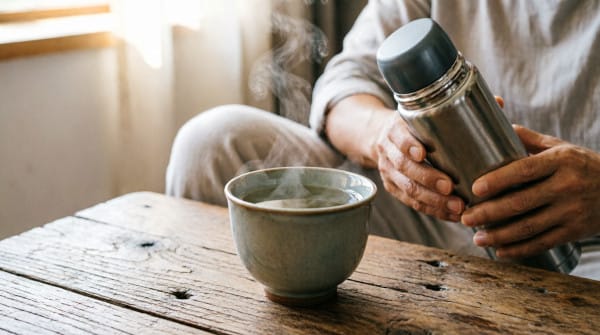
Walk into any restaurant in China, and your default beverage will likely be a steaming cup of plain hot water, regardless of whether it is a freezing winter day or a humid summer afternoon.
This habit is deeply rooted in Traditional Chinese Medicine (TCM), which teaches that the stomach is like a cooking pot. Consuming ice or cold drinks is believed to extinguish the body’s digestive “fire,” disrupting the flow of Qi (vital energy) and causing stagnation. Historically, boiling water was also a crucial public health measure to prevent waterborne illnesses.
Over centuries, this practical necessity evolved into a cherished wellness ritual, with hot water viewed as a soothing, healing elixir that aids digestion and promotes overall balance.
The Great Bill Fighting Ritual: A Competitive Sport at Restaurants
For many Westerners, splitting a restaurant bill evenly is the norm. In China, however, the end of a meal often triggers a highly choreographed, seemingly aggressive dance to pay the entire bill.
Friends or colleagues will physically block each other from reaching the cashier, argue over who has the honor of paying, and sometimes even sneak away to settle the tab beforehand. This is not about financial recklessness; it is a profound display of mianzi (face) and generosity.
Paying for the group is a way to build guanxi (relationships) and show that you value the company more than the money. Refusing to let someone pay can sometimes be seen as rejecting their goodwill, making this “fight” a genuine act of social affection.
Slurping Noodles as a Compliment: Showing Appreciation with Sound
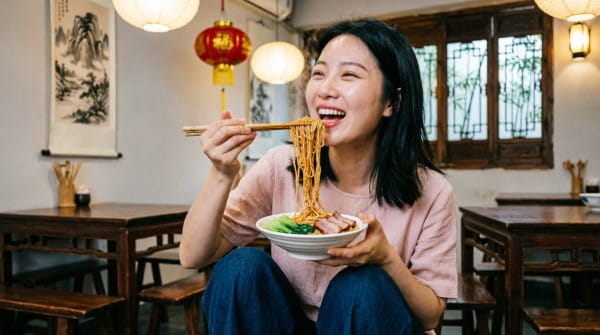
In many Western dining settings, eating quietly is the ultimate sign of good manners. In China, particularly when enjoying a steaming bowl of beef noodle soup or zhajiangmian, slurping is not only acceptable but encouraged.
From a practical standpoint, slurping helps cool down the hot noodles as they enter the mouth. Culturally, it serves a dual purpose: it aerates the broth, enhancing the aroma and flavor profile, and it acts as an audible compliment to the chef.
A loud, enthusiastic slurp communicates that the food is incredibly delicious, turning a simple meal into an interactive and appreciative experience.
Leaving a Little Food on the Plate: The Subtle Message of Abundance
Traditional Chinese hospitality dictates that a host must always provide more food than the guests could possibly eat. Consequently, finishing every last grain of rice or scrap of meat on your plate can inadvertently send the wrong message.
It might imply to the host that they did not order enough food and that you are still hungry. Leaving a small, polite amount of food on your plate or in the serving dishes signals that you are completely full and satisfied, and that the host’s generosity was abundant.
While modern initiatives like the “Clean Plate Campaign” have encouraged reducing food waste in recent years, the underlying traditional sentiment of honoring the host’s generosity remains a vital part of dining etiquette.
Social Etiquette and Personal Boundaries
Navigating social interactions in China requires a shift in perspective, as the boundaries of personal space and privacy are defined differently than in the West.
What might feel intrusive or overly formal to a foreigner is often a deeply ingrained expression of care, respect, and social harmony. Understanding these nuances is key to building genuine connections.
Asking Deeply Personal Questions Right Away: Salary, Weight, and Marriage
In many Western cultures, asking about someone’s salary, weight, or marital status is considered a major faux pas. In China, however, these questions are frequently asked by acquaintances, colleagues, or even friendly strangers shortly after meeting.
This is rarely intended as judgment or nosiness. Instead, it is a traditional way of establishing relational context and showing genuine interest in your life stage. In a collectivist society, knowing these details helps others understand how to best relate to you, offer appropriate advice, or even introduce you to potential matches.
It is a conversational shortcut to warmth and inclusion, signaling that you are now part of their social circle.
Serving Others with Your Own Chopsticks: The Ultimate Sign of Affection
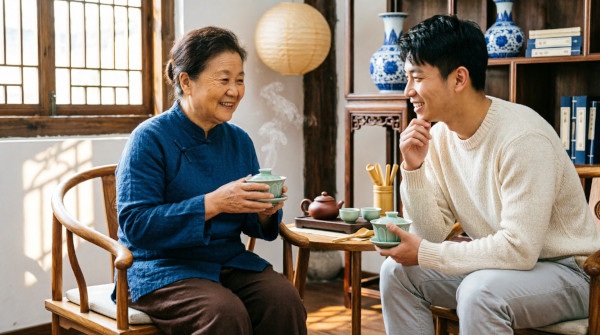
If an elder or a close friend uses their own chopsticks to pick up a choice piece of meat or vegetable and places it directly into your bowl, do not be alarmed.
Historically, this is one of the highest forms of culinary hospitality and affection in Chinese culture. It breaks down the barrier between “my food” and “your food,” symbolizing that you are treated as close family.
The giver is essentially saying, “This is delicious, and I want to make sure you get the best part.” While modern hygiene awareness has popularized the use of dedicated serving chopsticks (gongkuai) in restaurants and public settings, the traditional act of sharing directly from one’s own chopsticks remains a powerful, heartfelt gesture of intimacy and care in private, familial settings.
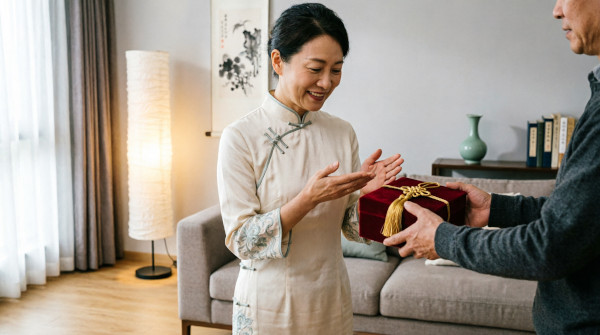
Receiving Gifts with Both Hands: A Gesture of Deep Respect
The physical act of receiving a gift, a business card, or even a simple document in China carries significant weight.
Accepting an item with both hands is a non-verbal cue that demonstrates full attention, humility, and deep respect for the giver. Receiving something with a single hand, especially while looking away or being distracted, can be perceived as casual, dismissive, or arrogant.
Additionally, it is customary to politely decline a gift once or twice before accepting it, and to refrain from opening it immediately in front of the giver. This prevents any appearance of greed and protects the giver’s mianzi (face) in case the gift is modest.
The Concept of Face and Indirect Refusals: Reading Between the Lines
The concept of mianzi (face) governs much of Chinese social interaction, prioritizing group harmony over blunt honesty. As a result, a direct “no” is often avoided, as it can cause embarrassment or damage the relationship. Instead, refusals are wrapped in softness and ambiguity.
If you propose an idea or invite someone out, a response like “I will think about it” (wo kao lu yi xia), “it might be a little inconvenient” (bu tai fang bian), or even a hesitant silence, usually translates to a polite but firm “no.” Learning to read these subtle, indirect cues is an essential skill.
It allows you to gracefully step back without forcing the other person into an uncomfortable position, thereby preserving mutual respect and social harmony.
Everyday Physical and Lifestyle Habits
Daily life in China involves physical routines and practical habits that have evolved over generations, blending historical necessity with modern lifestyle choices.
These everyday actions highlight a deep connection to physical comfort, household hygiene, and cultural aesthetics.
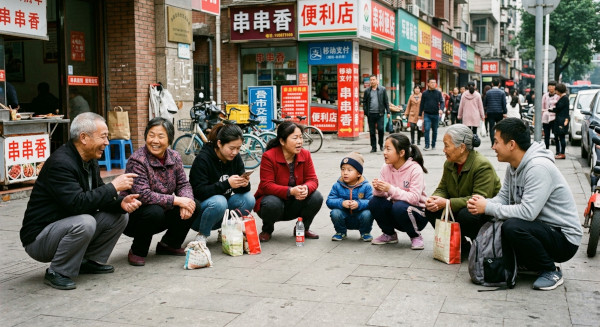
The Mastery of the Asian Squat: Resting Comfortably Anywhere
Walk down any street in China, and you will see people of all ages resting in a deep, heels-flat squat while waiting for a bus, chatting, or playing chess. Often dubbed the “Asian squat” by Westerners, this posture requires significant ankle mobility and calf flexibility that many adults in the West lose due to a lifelong reliance on chairs.
Historically, this habit stems from the widespread use of traditional squat toilets and a lack of public seating in older urban layouts. Today, it remains a highly practical, comfortable way to rest, stretch the lower back, and socialize at eye level without needing a bench.
Avoiding the Sun at All Costs: The Cultural Obsession with Pale Skin
While many Westerners flock to beaches to achieve a sun-kissed tan, Chinese people often go to extraordinary lengths to avoid direct sunlight.
During the summer, it is common to see individuals carrying UV-blocking umbrellas, wearing wide-brimmed hats, and sporting detachable sun-protection sleeves.
This deep-rooted preference for pale skin dates back to ancient times, when a fair complexion signaled wealth and high social status, indicating that one did not have to perform manual labor outdoors in the fields.
Today, this historical class marker has seamlessly blended with modern beauty standards and a genuine health consciousness regarding UV damage and skin aging.
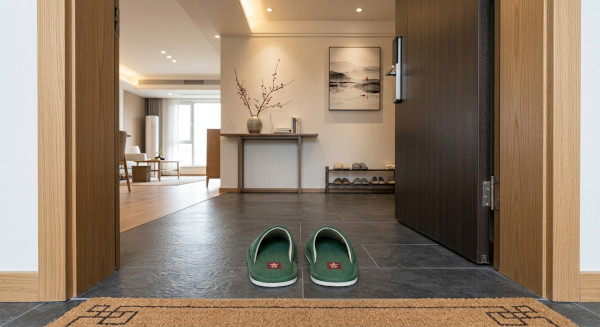
The Strict Indoor Slipper Rule: Leaving the Outside Dirt at the Door
Entering a Chinese home with outdoor shoes on is a major cultural taboo. The moment you step through the doorway, you are expected to remove your shoes and change into a pair of designated indoor slippers provided by the host.
This strict boundary between the “outside” and “inside” world is deeply tied to hygiene and respect for the living space.
Historically, Chinese families spent much of their time sitting, eating, and even sleeping on floor-level mats or heated platforms called kang. Keeping the floors immaculately clean was an absolute necessity, a practical tradition that persists strongly in modern apartment living today.
The Pre-Meal Hot Towel Refresh: Cleansing Hands Before the Feast
At the start of a meal at a traditional or upscale restaurant, servers will often present a steaming hot, rolled-up towel or a warm wet wipe. This is not merely a luxury; it is an essential pre-meal ritual.
Because Chinese dining traditionally involves eating with chopsticks and occasionally using hands for items like bones or shells, cleansing the hands right before the feast is both a hygienic necessity and a sensory transition.
The heat of the towel opens the pores and provides a refreshing moment of pause, signaling to the guests that the socializing is shifting into the main event of sharing food.
Traditional Health and Wellness Practices
Health in China is often viewed through the lens of prevention and balance rather than just treating symptoms. Rooted in thousands of years of Traditional Chinese Medicine (TCM), everyday wellness habits are designed to protect the body’s vital energy and maintain harmony between internal organs and the external environment.
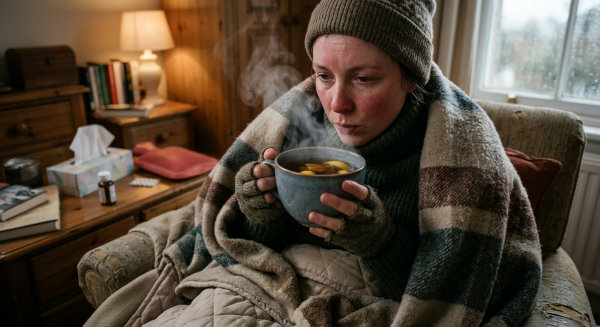
Covering Up Completely When Sick: Sweating Out the Cold
If a Chinese person catches a common cold, their immediate reaction is rarely to reach for over-the-counter medication. Instead, they will bundle up in thick layers, drink steaming ginger and scallion tea, and aim to sweat profusely. In TCM, a cold is classified as an invasion of “wind-cold” (feng han) evil.
The most effective way to expel this pathogen is to open the pores and push it out through sweat (fa han). This is also why you will hear constant warnings against “catching a draft” (chui feng) or going outside with wet hair.
The belief is that open pores and dampness create a direct highway for cold energy to penetrate deep into the body, turning a minor sniffle into a prolonged illness.
The Intense Postpartum Confinement Month: The Rules of Zuo Yue Zi
Zuo yue zi, literally “sitting the month,” is a strict, traditional 30-day recovery period for mothers after childbirth. In Chinese culture, pregnancy and delivery are viewed as a massive depletion of a woman’s Qi (vital energy) and blood, leaving her body exceptionally vulnerable to cold and wind.
During this month, new mothers are traditionally forbidden from washing their hair, bathing in cold water, stepping outside, or even crying. Their diet consists exclusively of highly caloric, warming foods, such as pig trotter soup brewed with aged ginger and sesame oil, to replenish blood and promote lactation.
While modern confinement centers (yue zi zhong xin) have updated these practices with scientific monitoring and comfortable amenities, the core philosophy remains unchanged: prioritizing the mother’s long-term health over short-term convenience.
Avoiding Cold Foods for Digestive Harmony: Protecting the Body’s Qi
The aversion to ice water, raw salads, and cold fruits extends far beyond mere preference; it is a foundational principle of digestive health in China. According to TCM, the spleen and stomach are the “root of postnatal existence,” acting as the body’s cooking pot.
They require warmth to properly transform and transport nutrients from food. Consuming cold or raw items forces the body to expend precious Qi just to warm the food up to body temperature before digestion can even begin. Over time, this is believed to weaken the digestive fire, leading to an accumulation of “dampness,” bloating, fatigue, and poor nutrient absorption.
For this reason, warm, cooked meals are not just a culinary preference, but a daily, proactive form of medicine.
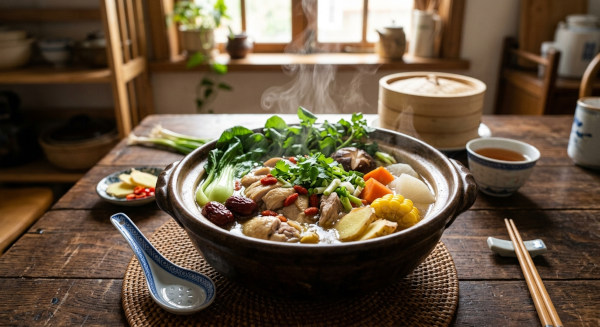
Traditional Chinese Medicine offers a rich, practical approach to understanding your body and supporting your well-being in everyday life.
Family Dynamics and Generational Differences
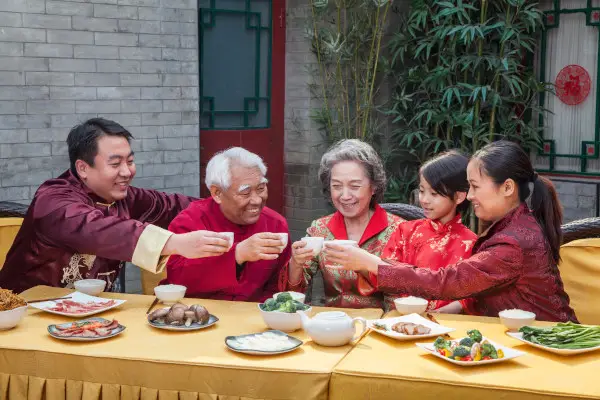
In Chinese culture, the family is not just a social unit; it is the fundamental building block of society. Unlike the Western emphasis on individualism and the nuclear family, Chinese society operates on a deeply interconnected, multi-generational model.
This collective approach shapes everything from how children are raised to how elders are cared for, creating a continuous cycle of mutual support and obligation.
The Grandparent Childcare Tradition: Raising the Third Generation
In many Western countries, parents rely on daycare centers or hired nannies to look after their children while they work. In China, however, it is the standard norm for grandparents to take on the primary role of childcare.
It is incredibly common to see grandparents dropping kids off at school, cooking their meals, and taking them to the park. This is not viewed as a burden on the older generation, but rather as a vital family duty and a source of personal fulfillment.
Driven by the demands of modern work culture and the legacy of the one-child policy, this arrangement creates a symbiotic relationship. The parents work hard to provide financial stability, while the grandparents provide the emotional nurturing and daily care, ensuring the child is surrounded by family love at all times.

Expressing Love Through Food Instead of Words: Peeling Fruit as Affection
If you wait for a Chinese parent or grandparent to verbally say “I love you,” you might be waiting a very long time. Traditional Chinese culture, heavily influenced by Confucian values, tends to view overt verbal expressions of deep emotion as unnecessary or even slightly awkward.
Instead, love is an action, and the most universal language of affection is food. A parent quietly peeling an apple and handing it to their child, or an elder meticulously picking the best pieces of fish and placing them in your bowl, is the ultimate declaration of love.
Even the common greeting “Have you eaten yet?” (Chi le ma?) is a profound expression of care, translating roughly to “Are you taking care of yourself?” Through these culinary acts of service, families bridge emotional gaps and show deep affection without the vulnerability of spoken words.
The Pressure of Filial Piety and Elders: Caring for Aging Parents
The concept of xiao, or filial piety, is the moral bedrock of Chinese family dynamics. It dictates that children owe a lifelong debt of gratitude to their parents for giving them life and raising them.
Consequently, sending aging parents to a nursing home is traditionally viewed as a failure of duty and a source of deep social shame. Adult children are expected to care for their elders at home, whether that means living together in a multi-generational household or visiting daily to ensure their well-being.
This profound sense of obligation heavily influences life choices, from career paths and financial planning to living arrangements. While modern urbanization is introducing new challenges and shifting some of these dynamics, the core expectation remains: just as the parents sacrificed for the child, the child must now honor and protect the parents in their twilight years.
Communication and Digital Habits
In China, digital communication is not just about adopting new technology; it is about adapting ancient social values to a hyper-connected modern world.
The way Chinese people interact online reflects the same emphasis on efficiency, relationship-building, and subtle nuance that defines their offline culture.
The Ubiquity of WeChat for Everything: From Chatting to Paying Bills
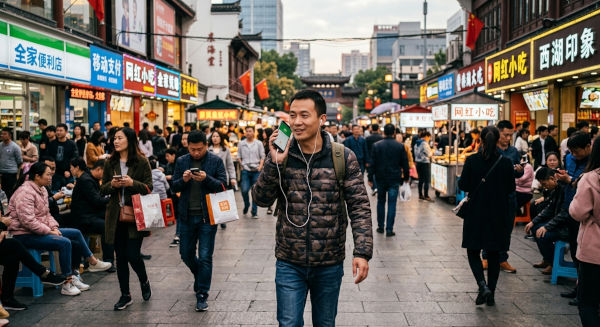
For Westerners accustomed to using separate apps for messaging, banking, social media, and ride-hailing, China’s digital ecosystem can seem astonishingly consolidated. WeChat (Weixin) is a “super app” that serves as the central nervous system of daily life.
Beyond sending messages, it is used to pay street vendors via QR codes, book hospital appointments, order groceries, and even access government services.
Culturally, this reflects a deep-seated preference for seamless convenience and the digitization of guanxi (relationships). By keeping social and practical interactions within a single, trusted platform, users maintain a cohesive digital identity.
In many urban areas, physical wallets and cash have become entirely obsolete, replaced by the simple scan of a smartphone.
Sending Voice Messages in Public: The Preference for Spoken Words
While many Westerners prefer typing text messages for the sake of speed, efficiency, and public privacy, sending lengthy voice messages is incredibly common in China, even in bustling public spaces.
This habit stems from both practical and cultural factors. Typing in Chinese requires navigating pinyin input and selecting the correct characters from a list, which can be time-consuming.
Speaking, on the other hand, is instantaneous. More importantly, voice messages convey tone, emotion, and warmth, which are vital in a culture that values relational harmony.
A spoken message feels more personal and respectful, especially when communicating with elders or close friends, bridging the gap between the coldness of digital text and the intimacy of traditional conversation.
Using Emojis with Hidden Meanings: The Subtle Art of the Smiley Face
Emoji usage in China has evolved its own unique semantic layer, heavily influenced by the cultural need for indirect communication and the preservation of mianzi (face).
A prime example is the classic “slight smile” emoji (🙂). To a Westerner, this is a simple, friendly expression. To many younger Chinese people, however, it often signifies speechlessness, passive-aggression, or a polite but cold dismissal—essentially communicating, “I am smiling on the outside, but I am done with this conversation.”
Conversely, older generations frequently use emojis like the blooming rose (🌹) or the handshake (🤝) to express genuine warmth, respect, and goodwill.
Navigating this digital landscape requires reading between the lines, as the true meaning of a message often lies in the subtle, generational nuances of the emojis attached to it.
End Words
Looking closely at the daily habits of Chinese culture reveals that what might initially seem unusual is actually a beautiful tapestry of history, philosophy, and human connection. From the comforting warmth of a cup of hot water to the respectful offering of a gift with both hands, every action is a thread in the larger fabric of social harmony and mutual care.
Understanding these customs goes far beyond memorizing rules of etiquette. It is about shifting our perspective to see the deep respect for elders, the emphasis on community, and the profound belief in balancing the body and mind. Approaching these differences with curiosity rather than judgment transforms moments of confusion into opportunities for genuine connection.
Ultimately, embracing these cultural nuances enriches our worldview. It reminds us that there are many meaningful ways to navigate life, show affection, and build relationships. The next time you find yourself in a lively Chinese dining setting or navigating a subtle social interaction, remember the rich history behind the habit, and appreciate the shared humanity it represents.
Stay in Touch
 Join our newsletter by using the forms on this website or click here!
- Follow us on Google News
- Follow us on Facebook