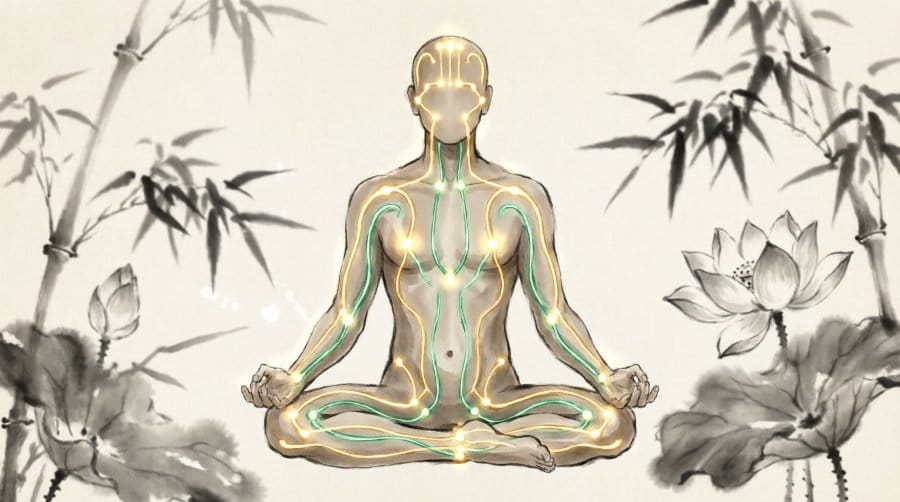
In traditional Chinese philosophy and medicine, health is not merely the absence of disease, but the harmonious flow of vital energy known as Qi (pronounced “chee”). This life force animates every cell, tissue, and thought.
To understand how Qi moves, we must look to the meridian system, or Jing Luo. Imagine a vast, intricate network of rivers flowing through a landscape.
In the human body, these energetic waterways serve as the vital highways that transport nourishment and life force to every corner of our physical being.
The Foundation of Qi and the Meridian System
The term Jing Luo translates roughly to “pathways and networks.” The Jing (meridians) are the deep, main channels, while the Luo (collaterals) are the smaller branches that spread outward to nourish the surface of the body.
Together, they form a comprehensive circulatory system for energy, ensuring that no part of the body is left disconnected or deprived of vital sustenance.
What makes this system truly remarkable is its profound connection to the Zang-Fu organs. In Western anatomy, organs are often viewed as isolated biological machines. In Chinese culture and medicine, however, the Zang-Fu organs are deeply integrated with the meridian pathways.
Each internal organ system has a corresponding meridian that regulates its specific energetic functions. This means that the physical and emotional health of your liver, heart, or lungs is directly reflected in the state of its associated energy channel.
Ultimately, the meridian system reveals the deeply holistic nature of traditional Chinese wellness. It bridges the physical and the subtle, showing that our bodily functions, emotions, and spiritual well-being are all part of a single, interconnected web.
When these pathways are clear and balanced, we experience vibrant health. When they are disrupted, illness follows. Understanding this foundational network is the first step toward exploring the 12 primary meridians, the intricate collateral channels, and the vital importance of keeping our energy flowing freely.
The 12 Primary Meridians: The Main Arteries of Energy
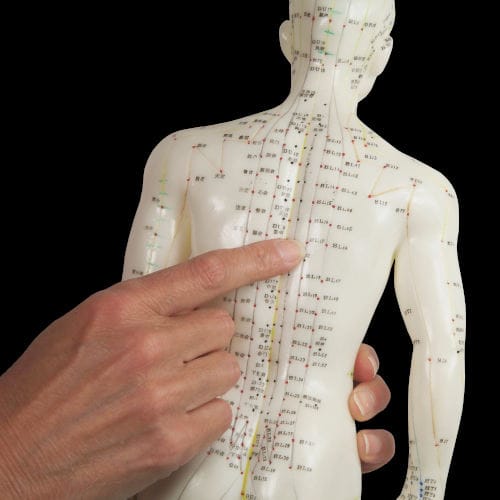
The 12 primary meridians, or Jing, are the major rivers of the body’s energetic landscape. Symmetrically mirrored on the left and right sides of the body, these main channels serve as the primary routes for Qi and blood.
In traditional Chinese medicine, these pathways are categorized into Yin and Yang, reflecting the fundamental duality of nature. Understanding how these meridians operate provides a clear map of how our internal organs communicate with the rest of the body.
The Yin Meridians of the Arms and Legs
Yin meridians are generally associated with the solid, internal organs (the Zang). Anatomically, these pathways tend to run along the inner, more protected aspects of the arms and legs.
The three Yin meridians of the arms originate in the chest and travel down to the fingertips. The Lung meridian governs respiration and the immune system, acting as the body’s first line of defense. The Heart meridian oversees blood circulation and houses the Shen, or the mind and spirit. The Pericardium meridian acts as a protective outer shield for the heart, guarding it against both physical pathogens and emotional stress.
Moving to the lower body, the Yin meridians of the legs begin at the feet and flow upward toward the torso. The Spleen meridian is central to digestion, transforming food and drink into usable Qi and blood.
The Kidney meridian stores our foundational essence, or Jing, which governs growth, reproduction, and longevity. The Liver meridian ensures the smooth, unobstructed flow of energy throughout the body and is closely tied to emotional balance and detoxification.
The Yang Meridians of the Arms and Legs
Yang meridians connect to the hollow, digestive organs (the Fu). These pathways typically run along the outer, more exposed edges of the arms and legs, reflecting their role in interacting with the external environment.
The Yang meridians of the arms travel from the fingertips up to the head and face. The Large Intestine meridian assists in physical elimination and is metaphorically linked to the ability to let go of emotional waste.
The Small Intestine meridian separates pure nutrients from impure waste, aiding in absorption. The Triple Burner, or San Jiao, is a unique concept in Chinese culture; it does not represent a single physical organ but rather regulates the upper, middle, and lower cavities of the body, managing fluid metabolism and overall temperature.
The Yang meridians of the legs are robust pathways that handle heavy physical processing. The Stomach meridian receives and breaks down food, working in tandem with the Spleen. The Gallbladder meridian aids in digestion and is traditionally associated with decision-making, planning, and courage.
The Bladder meridian is the longest pathway in the body, running from the inner eye, over the head, and down the entire back to the feet. It plays a massive role in expelling toxins and defending the body against external climatic pathogens.
Organ Connections and the Circadian Flow
The 12 primary meridians do not operate in isolation. Each Yin organ pairs with a corresponding Yang organ, creating a deeply integrated relationship. For example, the Yin Heart pairs with the Yang Small Intestine, while the Yin Liver pairs with the Yang Gallbladder.
This pairing ensures that deep, internal functions are perfectly supported by the body’s more active, external processes, maintaining a delicate internal balance.
Furthermore, Qi does not flow randomly through these channels. It follows a precise, 24-hour cycle known as the Chinese body clock. Every two hours, Qi reaches its peak strength in a specific meridian before moving on to the next.
For instance, the Stomach meridian is most active between 7:00 AM and 9:00 AM, making it the ideal time to eat a nourishing breakfast. Conversely, the Liver meridian peaks between 1:00 AM and 3:00 AM, a time when the body should be in deep sleep to allow for proper detoxification and blood regeneration.
By understanding this circadian rhythm, we can align our daily habits with our body’s natural energy peaks to optimize overall health and vitality.
Curious to learn more about Traditional Chinese Medicine? 📚
Explore a selection of beginner-friendly and in-depth TCM books and start deepening your understanding today.(Aff.link)👉
Collateral Channels: The Network of Secondary Pathways
If the 12 primary meridians are the great rivers of the body’s energetic landscape, the collateral channels are the intricate network of streams, creeks, and irrigation canals.
While the main rivers transport massive volumes of Qi and blood over long distances, these secondary pathways distribute that vital nourishment to every single tissue, muscle, and cell. They ensure that no part of the body is left disconnected from the body’s central energy supply.
The Luo Vessels and Major Collaterals
The Luo vessels are the primary branches that diverge from the 12 main meridians. Each of the 12 primary channels has a specific Luo point, creating a total of 12 primary Luo vessels. Their most important function is to act as energetic bridges, connecting the internally and externally paired meridians.
For example, the Luo vessel of the Lung meridian connects directly to the Large Intestine meridian, ensuring that energy balances smoothly between these two related systems.
Beyond these standard connections, there are larger collateral networks that spread energy broadly across the torso and abdomen. The most notable are the Ren Luo, Du Luo, and the Great Spleen Luo.
These major collaterals fan out to nourish the body’s surface and deeper tissues alike, ensuring that the energy flowing through the main rivers seeps effectively into the surrounding anatomical structures.
Divergent, Sinew, and Cutaneous Channels
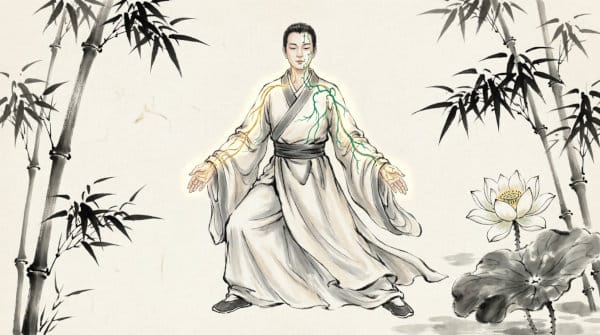
To manage the complex physical and defensive needs of the human body, the meridian system features highly specialized branches. The Divergent Channels (Jing Bie) dive deep into the torso, connecting organs that are not directly linked by the primary meridians.
These deep pathways strengthen the internal relationships between organs and help route Qi to areas the primary channels might not reach directly.
In contrast, the Sinew Channels (Jing Jin) follow the physical pathways of muscles, tendons, and ligaments. Unlike the primary meridians, they do not carry Qi to the internal organs.
Instead, they govern joint movement, physical strength, flexibility, and posture. When you experience a muscle cramp or joint stiffness, a TCM practitioner will often look to the Sinew channels for the root cause.
Finally, the Cutaneous Regions (Pi Bu) represent the most superficial layer of the system. These are the specific zones on the skin where defensive Qi, known as Wei Qi, circulates.
This energetic shield protects the body from external environmental pathogens, such as wind, cold, and dampness, acting as the first line of defense against illness.
The Eight Extraordinary Vessels
Beyond the standard 12 meridians and their collaterals lies a unique and profound set of pathways known as the Eight Extraordinary Vessels (Qi Jing Ba Mai).
Unlike the primary meridians, they do not belong directly to specific internal organs, nor do they follow the standard 24-hour circadian flow. Instead, they act as deep reservoirs that store, pool, and regulate excess Qi and blood, releasing it when the primary channels are depleted.
The two most prominent of these are the Du Mai (Governing Vessel) and the Ren Mai (Conception Vessel). The Du Mai runs up the center of the back and governs all the Yang channels of the body, often referred to as the “Sea of Yang.”
The Ren Mai runs down the front center of the body, governing all the Yin channels, and is known as the “Sea of Yin.” Together, they form a continuous, unbroken loop that regulates the body’s core energetic cycles.
Because of their profound influence on the body’s fundamental energies, the Du and Ren vessels are the central focus of many Qigong, martial arts, and meditation practices.
The remaining six extraordinary vessels support highly specialized functions, ranging from regulating reproduction and menstruation to managing the body’s core temperature and structural integrity.
Meridian Blockages: When the Flow is Interrupted
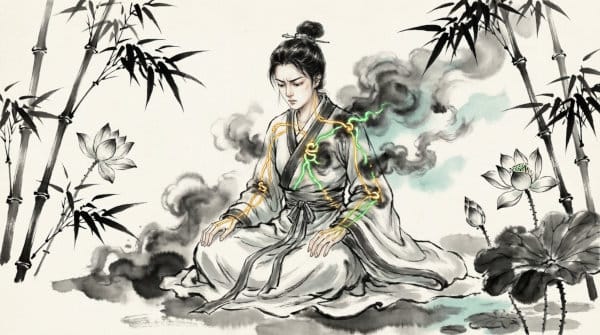
Just as a river can be dammed by debris or frozen by winter cold, the body’s meridian pathways can become obstructed. In traditional Chinese medicine, the free flow of Qi and blood is essential for vibrant health.
When this flow is interrupted, the body’s natural balance is compromised, leading to a state of stagnation. Understanding what causes these blockages and how to clear them is central to the healing philosophy of Chinese culture.
Causes of Energy Stagnation
Blockages in the meridian system typically arise from two main categories of disruption: external environmental factors and internal lifestyle imbalances.
Externally, the body is vulnerable to climatic pathogens, primarily Wind, Cold, Heat, and Dampness. When the body’s defensive energy is weak, these environmental factors can invade through the skin and settle into the channels.
Cold, for instance, has a contracting nature that physically constricts the meridians, slowing down energy flow much like freezing water. Dampness is heavy and sluggish, acting like thick sludge that clogs the pathways and makes movement difficult.
Internally, our daily habits and emotional states play an equally profound role. The primary emotions are directly linked to the internal organs and their respective meridians.
Prolonged anger or frustration can cause Liver Qi to stagnate, while excessive grief can weaken the Lung meridian. Furthermore, a poor diet rich in greasy, processed, or excessively cold foods can impair the Spleen’s digestive function, creating internal dampness that blocks the channels.
Physical inactivity, poor posture, and chronic stress also contribute heavily to a sluggish energy flow.
Recognizing the Signs of Blocked Qi
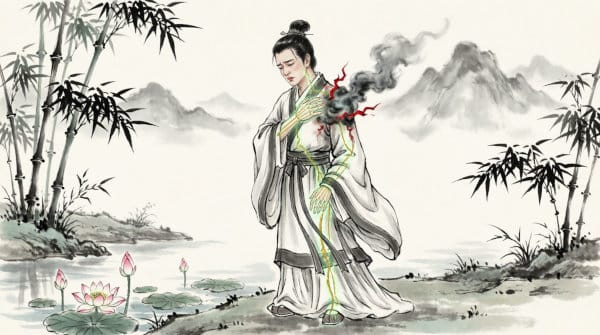
The most famous axiom in traditional Chinese medicine regarding blockages is “bu tong ze tong,” which translates to “if there is no free flow, there is pain.” Pain is the body’s most direct signal that Qi and blood are struggling to pass through a congested meridian. This pain can manifest as sharp, stabbing sensations, or as a dull, lingering ache that worsens with pressure.
However, blockages are not limited to physical pain. When energy stagnates, it can also manifest as numbness, tingling, swelling, or a feeling of heaviness in the limbs. Because the meridians are deeply connected to the internal organs, a blockage in a specific channel can lead to systemic organ dysfunction.
For example, stagnant energy in the digestive meridians might cause bloating, nausea, or irregular bowel movements. Additionally, since Qi nourishes the mind and spirit, blocked pathways often result in emotional distress, such as unexplained anxiety, mood swings, irritability, or a feeling of mental fog.
Curious to learn more about Traditional Chinese Medicine? 📚
Explore a selection of beginner-friendly and in-depth TCM books and start deepening your understanding today.(Aff.link)👉
Restoring Harmony and Clearing the Pathways
The primary goal of traditional Chinese medicine is to remove these obstructions and restore the smooth, continuous flow of energy. Acupuncture is perhaps the most direct method for achieving this.
By inserting ultra-fine needles into specific acupoints along the meridians, practitioners can physically stimulate the channels, release tissue tension, and unblock the stagnant Qi.
Acupressure works on a similar principle, using targeted manual pressure to clear minor blockages and encourage local circulation without the use of needles.
Beyond physical therapies, Chinese culture offers a rich toolkit for maintaining clear pathways from the inside out. Herbal medicine utilizes specific botanical formulas to warm the channels, invigorate blood, or dissolve internal dampness.
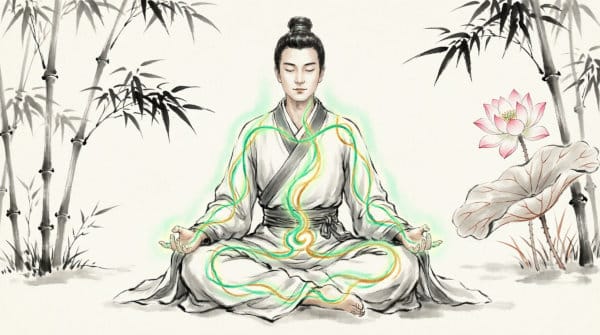
Movement practices like Qigong and Tai Chi combine gentle physical motion with deep, mindful breathing to actively pump Qi through the meridians, preventing stagnation before it starts.
Finally, dietary therapy ensures that the body receives the right nutritional building blocks to produce abundant Qi and blood, keeping the energetic rivers full, clear, and flowing freely.
End Words
The meridian system is far more than an ancient medical theory. It is a profound map of human vitality, refined over thousands of years of careful observation and lived experience. From the 12 primary meridians that connect our deepest organs to the surface of our skin, to the intricate collateral channels that ensure no tissue is left unnourished, this network reveals a vision of the body as a unified, living whole.
What makes this framework so enduring is its practical wisdom. It teaches us that health is not a static condition but a dynamic state of flow. When we understand that our emotions, diet, environment, and daily rhythms all influence the movement of Qi through these pathways, we gain a powerful lens for self-awareness. A persistent ache, a recurring mood shift, or a pattern of fatigue is no longer a mystery but a meaningful signal from the body asking for attention and balance.
Today, the principles of the meridian system continue to resonate well beyond the borders of traditional Chinese medicine. Practices rooted in these pathways, from acupuncture and Qigong to mindful movement and dietary therapy, are embraced worldwide by people seeking a more integrated approach to wellness. The ancient insight that true health requires the free and harmonious flow of energy remains as relevant now as it was centuries ago.
By honoring these pathways and learning to listen to the subtle language of our own energy, we carry forward a timeless tradition of balance, prevention, and holistic well-being.
FAQ
1. What exactly is the meridian system in Traditional Chinese Medicine (TCM)?
The meridian system, or Jing Luo, is the body’s energetic highway. It is a comprehensive network of channels that transport Qi (vital energy) and blood, connecting the internal Zang-Fu organs to the muscles, skin, and joints to maintain holistic health.
2. How many primary meridians are there, and how are they categorized?
There are 12 primary meridians, symmetrically mirrored on both sides of the body. They are categorized into six Yin meridians (associated with solid, internal organs and running along the inner limbs) and six Yang meridians (associated with hollow, digestive organs and running along the outer limbs).
3. What is the difference between primary meridians and collateral channels?
If primary meridians are the major rivers of the body, collateral channels (Luo) are the smaller streams, creeks, and capillaries. While main meridians transport large volumes of energy over long distances, collaterals branch out to nourish superficial tissues, muscles, and the skin.
4. What are the Eight Extraordinary Vessels?
These are unique, deep energy pathways that do not connect directly to specific organs like the primary meridians do. Instead, they act as reservoirs, storing and regulating excess Qi and blood to support the primary meridians when the body is under stress or depleted. The Du (Governing) and Ren (Conception) vessels are the most prominent of these.
5. How does the Chinese body clock relate to the meridian system?
Qi flows through the 12 primary meridians in a precise 24-hour cycle, peaking in a specific channel for two hours at a time. For example, the Stomach meridian is most active between 7:00 AM and 9:00 AM, making it the ideal time for a nourishing breakfast, while the Liver meridian peaks between 1:00 AM and 3:00 AM, highlighting the need for deep, restorative sleep.
6. What typically causes a meridian blockage?
Blockages usually stem from two sources: external climatic pathogens (like Wind, Cold, or Dampness invading the body) and internal lifestyle factors (such as chronic stress, emotional stagnation, poor diet, or prolonged physical inactivity).
7. What does the TCM phrase “bu tong ze tong” mean?
This foundational axiom translates to “if there is no free flow, there is pain.” It encapsulates the core TCM belief that physical discomfort, stiffness, or illness is the direct result of stagnant Qi or blood within the meridian pathways.
8. Can emotional stress really block physical energy pathways?
Absolutely. In Chinese medicine, emotions and organs are deeply intertwined. Prolonged anger or frustration can cause Liver Qi to stagnate, leading to physical symptoms like tension headaches, tight shoulders, or digestive upset. Clearing the emotional blockage is often required to restore physical flow.
9. What are the most effective natural ways to clear meridian blockages?
Acupuncture and acupressure are the most direct methods for unblocking specific points. Additionally, movement practices like Qigong and Tai Chi, targeted herbal formulas, cupping therapy, and mindful dietary adjustments are highly effective for maintaining smooth, continuous energy flow.
10. Is there any modern scientific evidence supporting the existence of meridians?
Yes. While meridians do not map perfectly to Western anatomical structures like nerves or blood vessels, modern research has identified “low hydraulic resistance channels” (LHRC) and interconnected fascial networks that closely align with traditional meridian pathways. These pathways facilitate the measurable flow of interstitial fluid and biochemical signals.
Traditional Chinese Medicine offers a rich, practical approach to understanding your body and supporting your well-being in everyday life.
Scientific References & Further Reading
| Academic Source Title | Lead Researcher(s) | Source Link | Key Claim Supported |
| Classic and Modern Meridian Studies: A Review of Low Hydraulic Resistance Channels along Meridians and Their Relevance for Therapeutic Effects in Traditional Chinese Medicine | Wei-Bo Zhang, Guang-Jun Wang, Kjell Fuxe | View Source | Validates the hierarchical network of meridians, collaterals, and subcollaterals, and explains how acupuncture regulates Qi and blood flow to clear blockages. |
| Understanding Traditional Chinese Medicine Therapeutics: An Overview of the Meridian System, Acupuncture, and Herbal Medicine | L. C. Matos, et al. | View Source | Supports the foundational interconnectedness of the 12 primary meridians with the internal Zang-Fu organ systems and holistic health. |
| Review of Evidence Suggesting That the Fascia Network Could Be the Anatomical Basis for Acupoints and Meridians in the Human Body | Y. Bai, et al. | View Source | Provides modern scientific context for the collateral channels, sinew channels, and how physical stagnation in connective tissue manifests as pain or dysfunction. |
| Meridian Studies in China: A Systematic Review | Guang-Jun Wang, M. Hossein Ayati, Wei-Bo Zhang | View Source | Offers a comprehensive historical and modern scientific overview of the 12 standard meridians, the Eight Extraordinary Vessels, and their physiological roles. |
| Acupoints for Headache with Blood Stasis Syndrome: Exploring the “Bu Tong Ze Tong” Principle | J. Shi, et al. | View Source | Directly supports the classic TCM axiom “bu tong ze tong” (if there is no free flow, there is pain), explaining how blockages of Qi or blood cause physical discomfort. |
Traditional Chinese Medicine offers a rich, practical approach to understanding your body and supporting your well-being in everyday life.
Stay in Touch
 Join our newsletter by using the forms on this website or click here!
- Follow us on Google News
- Follow us on Facebook