
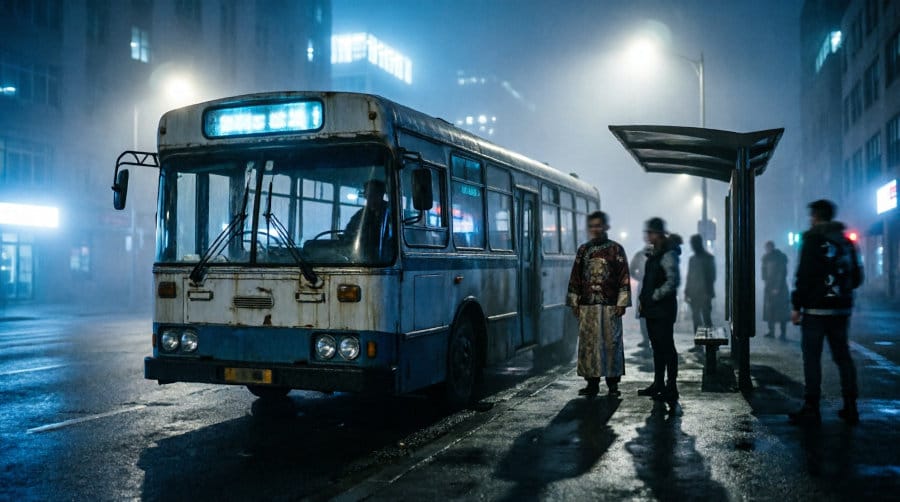
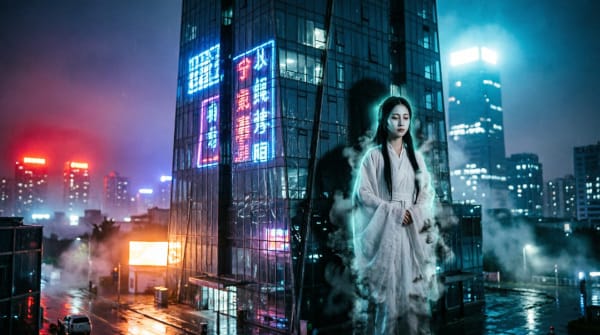
China has a rich tradition of storytelling, where the line between the living and the spirit world often blurs. For centuries, tales of ghosts, restless spirits, and mythical creatures have been passed down through generations. Today, these ancient fears have evolved. They have left the misty mountains and old villages behind, moving directly into the neon-lit streets, crowded subways, and high-rise apartments of modern cities.
Chinese urban legends are much more than simple campfire scares. They represent a fascinating blend of deep-rooted cultural beliefs and modern societal anxieties. Traditional concepts like the balance of Yin and Yang, the spiritual weight of the Hungry Ghost Festival, and the strict rules of respecting the unseen world weave seamlessly through these modern tales.
When a story about a haunted bus route or a cursed dormitory game spreads online, it taps into a collective cultural memory that is both thrilling and deeply unsettling.
In this post, we will explore the scariest Chinese urban legends of all time. From terrifying encounters on late-night public transit to forbidden supernatural games played by university students, these stories reveal the hidden shadows of contemporary city life. Grab a warm cup of tea, make sure your doors are locked, and let us step into the chilling world of modern Chinese folklore.
The Midnight Commute: Terror on Route 375
Beijing’s public transportation system moves millions of people every day, but one particular bus route has earned a reputation that keeps night shift workers and late-night travelers on edge. Route 375, which runs through the northwestern districts of Beijing, became the center of China’s most infamous urban legend—a story so disturbing that it allegedly led to real-world changes in the city’s transit system.
The Chilling Encounter at the Fengtai Bus Stop
The legend takes place on a cold autumn night in 1995. The last bus of the evening was making its final run through the quiet streets when something unusual happened at a stop near Fengtai. According to the most common version of the story, only three passengers remained on board: an elderly driver, a young female conductor, and a single passenger heading home after a late shift.
As the bus approached a dimly lit stop, three mysterious figures appeared from the darkness. What made this moment particularly unsettling was that this stop had been closed for months due to road construction. No regular buses should have been stopping there, and no one should have been waiting at that location in the middle of the night.
The Bizarre Passengers and the Smell of Decay
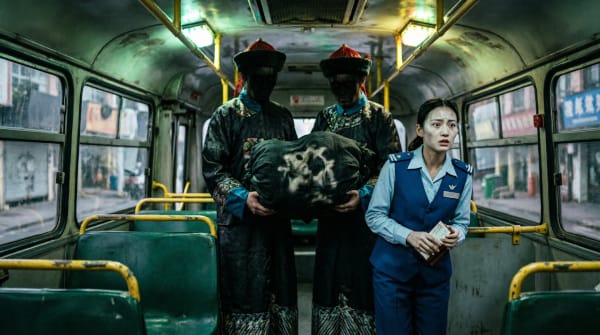
The three new passengers who boarded that night were unlike anyone the crew had ever seen. An old woman in traditional clothing shuffled onto the bus first, moving with an eerie silence. Behind her came two tall figures dressed in Qing Dynasty-style robes, carrying what appeared to be a large bundle wrapped in black cloth between them.
The conductor, following her duty, moved to collect fares. But as she approached the strange passengers, she noticed something that made her blood run cold. The three newcomers emitted a faint smell of decay, and their feet seemed to hover slightly above the floor. When she asked for their tickets, the old woman simply stared ahead without responding, while the two robed figures remained completely motionless.
Most disturbing of all, the remaining passenger on the bus claimed he could see through the bundle they carried—it appeared to contain nothing at all, yet the two figures held it with great care, as if transporting something precious and heavy.
The Tragic Fate of the Bus Crew
What happened next varies depending on which version of the story you hear, but all versions end in tragedy. In the most popular telling, the bus continued its journey for several more stops before the driver suddenly collapsed over the steering wheel, and the young conductor was found dead in her seat, her face frozen in an expression of pure terror.
When authorities investigated the next morning, they discovered something even more chilling. The three mysterious passengers had vanished without a trace. No footprints led away from the bus, and no one else reported seeing them. Even more unsettling, the security footage from that night supposedly showed the bus stopping at the closed station, but the cameras captured no one boarding or exiting.
The legend claims that the bus route number was quietly changed shortly after the incident, and that the original Route 375 no longer exists in Beijing’s transit system. To this day, some late-night workers insist they’ve seen an empty bus with the old route number passing through deserted streets, its headlights cutting through the fog as it searches for passengers who will never age.
Summoning Spirits in the Dormitory: The Terrifying Game of Pen Ghost
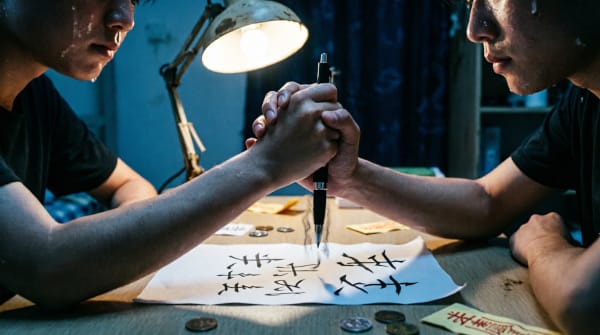
While Western culture has the Ouija board, China has its own deeply unsettling spirit-summoning game known as “Bi Xian,” which translates to “Pen Fairy” or “Pen Ghost.” To understand this legend, we have to look back at ancient Chinese divination practices. The game is a modern, simplified descendant of “Fuji,” a traditional Daoist ritual where priests would channel deities to write messages in sand or ash.
Over the centuries, this sacred practice trickled down into folk culture and eventually found its way into the hands of university students. However, the core belief remains exactly the same.
In Chinese folklore, you are not just moving a pen with your mind. You are actively inviting a wandering spirit from the unseen realm to possess the object and communicate with the living.
Treating a spirit as a parlor trick is considered highly disrespectful, which is exactly why the Pen Ghost legend carries such a heavy, cautionary weight.
Step by Step into the Supernatural Abyss
The setup for the game is deceptively simple, which is what makes it so appealing to curious students. Two players sit across from each other at a desk, placing a piece of paper between them. They cross their arms and loosely hold a single pen together, letting the tip rest lightly on the paper.
They then begin to chant a specific invitation, asking the Pen Fairy to arrive. As they wait in the quiet room, the pen begins to twitch and move. While skeptics point to the ideomotor effect—where subconscious muscle movements cause the pen to slide—believers know a spirit has taken hold.
The game starts with innocent questions about grades or romance, but the atmosphere quickly darkens. Players inevitably begin to ask forbidden questions, such as “When will I die?” or “How will I die?”
The true terror of the Pen Ghost, however, is not the summoning. It is the dismissal. The most critical rule of the game is that the spirit must be formally sent away before the players let go of the pen.
If the ritual is interrupted, or if the players fail to draw the proper closing circle, the spirit refuses to leave. Legends warn that the Pen Ghost will follow the players home, bringing severe bad luck, madness, or even death.
Why Students Still Play Despite the Severe Warnings
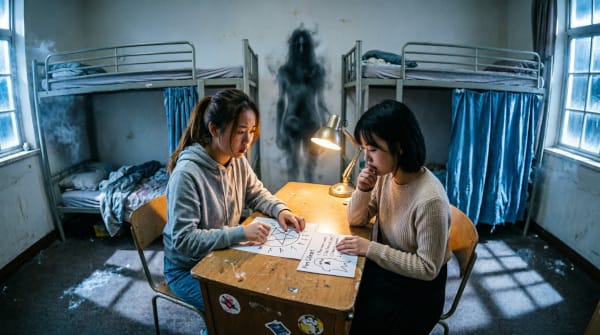
Given the terrifying consequences outlined in countless internet horror stories and movies, it is natural to wonder why students continue to play. The answer lies in the unique environment of university dormitories.
Dorm life is a confined space where boredom, peer pressure, and a desire for thrill-seeking easily mix together. For many students, playing Pen Ghost is a twisted rite of passage, a way to test their bravery and bond with roommates.
There is also a cultural misconception among the youth. Many students believe that because they are young and in a group, their collective “Yang energy” (the active, bright life force in Chinese philosophy) will protect them from the “Yin energy” of the ghost. They convince themselves that the rules only apply to those who play alone or lack spiritual strength.
Ultimately, the enduring popularity of the Pen Ghost game highlights a fascinating cultural paradox. Even in a highly modernized and technologically advanced society, the ancient belief in the delicate balance between the human and spirit worlds remains deeply ingrained.
The game persists because it perfectly captures the thrill of crossing a boundary that society tells you should never be crossed.
Cursed Objects and Haunted Spaces: When Everyday Items Turn Deadly
In Chinese folklore, the color red is typically a symbol of luck, joy, and prosperity. However, in the realm of the supernatural, red takes on a much darker meaning.
This duality is perfectly captured in one of the most famous Chinese internet ghost stories: the legend of the cursed red high heels. The tale usually follows a young woman who finds a beautiful, unworn pair of red shoes on the street or buys them from a vintage market.
When she wears them, she becomes inexplicably obsessed, wearing them everywhere until her feet bleed. The haunting escalates when she begins to hear the sound of tapping footsteps following her, even when she is alone. The story inevitably ends in tragedy, revealing that the shoes belonged to a woman who was murdered.

This legend taps directly into the terrifying concept of the “Hong Yi Gui,” or the Red Cloth Ghost. According to Chinese superstition, if a person dies wearing red while experiencing extreme anger or resentment, their spirit becomes incredibly powerful and malevolent.
The red clothing acts as a catalyst for their vengeance. The red high heels story serves as a modern cautionary tale about the dangers of taking items from the dead, reminding people that the spiritual residue attached to personal belongings can bring devastating consequences to the living.
The Whispers from the Abandoned Hospital Wards
Hospitals have always held a unique place in the cultural imagination, but in Chinese urban legends, abandoned medical facilities are considered some of the most spiritually dangerous locations on earth.
The legend of the haunted hospital ward usually involves urban explorers, university students, or new night-shift security guards who dare to enter a closed-down building. Once inside, they report hearing faint whispers, the squeaking of gurneys, and sudden, unnatural drops in temperature.
This fear is deeply rooted in the traditional Chinese philosophical concept of Yin and Yang. Hospitals are places of immense suffering, illness, and death.
In Feng Shui and folk belief, these environments accumulate heavy “Yin energy,” which is cold, dark, and passive. When a hospital is abandoned, this concentrated Yin energy has nowhere to go, creating a perfect environment for wandering spirits to linger.
The most chilling variations of this legend involve explorers finding old patient files in the dust, only to discover their own names written in the admission logs.
Others report seeing shadowy figures in the peeling paint of the old wards, believed to be the lingering echoes of patients who never found peace.
These stories reflect a deep-seated cultural anxiety about death and the belief that places soaked in human suffering retain a spiritual memory that the living should avoid disturbing.

The Cursed Antique Mirror in the Modern Apartment
As China’s cities modernize, young professionals often move into high-rise apartments, sometimes furnishing them with antique pieces from local markets.
This modern lifestyle collides with ancient superstitions in the terrifying legend of the cursed antique mirror. The story typically centers on a person who buys an ornate, vintage mirror and places it in their bedroom.
Soon after, they begin to notice subtle anomalies: their reflection seems to lag a fraction of a second behind their movements, or they catch glimpses of a dark figure standing just over their shoulder in the glass.
This legend is heavily influenced by traditional Feng Shui principles, which treat mirrors as powerful tools that can manipulate the flow of Qi (life energy). In Chinese metaphysics, mirrors are not just reflective surfaces; they are considered portals that can attract, repel, or even trap spiritual entities.
There is a strict traditional taboo against placing a mirror facing the bed. It is believed that when a person sleeps, their soul temporarily leaves the body to rest in the spiritual realm.
If a mirror faces the bed, the returning soul might be startled by its own reflection, or worse, a malevolent spirit could use the mirror as a gateway to enter the room and trap the sleeper’s soul.
The modern apartment mirror legend brings this ancient Feng Shui warning into a contemporary setting, proving that no matter how sleek and modern our living spaces become, the old rules of the spirit world still apply.

The Psychological Grip: Why Chinese Urban Legends Endure
China has transformed at a breathtaking pace over the last few decades, but its cultural bedrock remains deeply traditional. Urban legends thrive in the fascinating intersection of this rapid modernization and ancient belief systems.
These stories take timeless concepts—such as the restless spirits of the Hungry Ghost Festival, the karmic consequences of disrespecting the dead, or the delicate balance of Yin and Yang—and place them directly into hyper-modern settings.
When a ghost story unfolds in a sleek, fluorescent-lit subway car or a high-tech corporate office building, it creates a jarring and thrilling contrast. This blend makes the supernatural feel immediate and inescapable, reminding the audience that no matter how many skyscrapers are built, the ancient rules of the spirit world still quietly govern the shadows.
The Role of Internet Forums in Spreading Digital Ghosts
In the past, these chilling tales were whispered around village fires or shared during late-night tea gatherings. Today, the digital realm has become the new campfire.
Chinese internet forums, social media platforms, and short-video apps have completely supercharged the spread and evolution of urban legends. Massive online communities on platforms like Tieba, Douban, and WeChat are dedicated to sharing, debating, and dissecting supernatural experiences.
The internet allows these stories to evolve at lightning speed. A simple local rumor can be crowdsourced, embellished, and transformed into a complex modern myth within a matter of days.
This digital ecosystem gives the legends a life of their own, turning regional scares into nationwide phenomena and creating a shared digital folklore for the younger, highly connected generation.
Related reading: Your Essential Guide to Navigating Chinese Social Media – Opens in new tab
How These Stories Reflect Deep Cultural Anxieties
Beyond the simple thrill of a good scare, these enduring legends serve a much deeper psychological purpose. They act as a cultural mirror, reflecting the collective anxieties of a society undergoing massive and sometimes overwhelming change.
For instance, the intense pressure of the education system and the fierce competition for university placement are often reflected in stories about haunted schools, cursed exam papers, or tragic students.
The isolation and alienation of living in massive, crowded cities find expression in tales of lonely apartment dwellers and ignored neighbors.
Furthermore, as traditional family structures shift and younger generations move away from their hometowns, stories about neglected ancestors returning to demand respect highlight a deep-seated fear of losing cultural identity.
Ultimately, these urban legends provide a safe, symbolic way for people to process the very real stresses of modern life, wrapping deep societal fears in the familiar, comforting cloak of the supernatural.
End Words
Chinese urban legends are far more than simple campfire scares. They serve as a fascinating bridge between a rich, ancient past and a rapidly modernizing present. These stories prove that no matter how bright the neon lights of the city become, the deep-rooted cultural respect for the unseen world remains firmly intact.
Whether it is the lingering chill of a midnight bus route, the forbidden thrill of a dormitory spirit game, or the quiet dread of a cursed household object, these tales highlight the delicate balance between the living and the dead.
They act as modern cautionary tales, reminding people to honor traditions, respect the boundaries of the supernatural, and remain mindful of the karmic weight of their actions.
The next time a late-night commute feels a little too quiet, or an antique mirror catches a strange reflection, it is worth remembering the shadows of Chinese folklore.
The line between the physical world and the spirit realm is often much thinner than it appears.
Stay in Touch
 Join our newsletter by using the forms on this website or click here!
- Follow us on Google News
- Follow us on Facebook